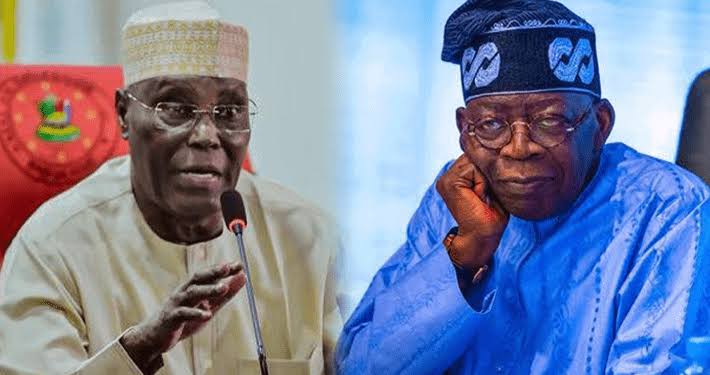
Former Vice-President Atiku Abubakar has accused President Bola Tinubu of adopting the principles of his proposed petroleum production subsidy plan but reducing it to a temporary 30-day petrol discount, which he described as an inadequate response to Nigeria’s worsening economic hardship.
Atiku, the presidential candidate of the African Democratic Congress (ADC) for the 2027 general election, made the allegation on Friday while inaugurating the party’s Presidential Campaign Council.
He argued that the Federal Government’s recently announced petrol discount at Nigerian National Petroleum Company Limited (NNPCL) stations failed to address the underlying problems affecting households, transport operators, farmers, traders and manufacturers.
The former vice-president maintained that Nigerians needed a sustainable economic intervention capable of reducing fuel costs over the long term rather than a short-term measure that would expire after one month.
Atiku also accused Tinubu’s administration of spending more than three years implementing policies that, according to him, had increased the cost of living, weakened purchasing power and placed additional pressure on businesses.
He cited rising food prices, expensive transportation, unreliable electricity and worsening insecurity as some of the difficulties confronting Nigerians.
Addressing the President directly, Atiku compared the government’s approach to a student who copied another student’s examination answer without understanding the subject and then claimed credit for original thinking.
“Bola, when I proposed targeted support to ease fuel costs, you called me ignorant of economic policy. Your government said it could not be done. Now, in a desperate and clumsy retreat, you have shamelessly embraced the principle you mocked. You owe me an apology,” he said.
He subsequently challenged the President to explain what would happen after the 30-day discount expired.
“But more importantly, you owe Nigerians an answer: what happens on day 31?” Atiku asked.
Atiku explains proposed production subsidy
The ADC presidential candidate said his petroleum production subsidy proposal was designed to support petroleum products refined locally and sold to Nigerians, with the objective of reducing costs while encouraging domestic refining.
He argued that the government’s temporary discount had adopted only part of the principle behind his proposal while leaving out what he described as the safeguards required to make the policy sustainable.
Atiku said his plan would involve restricting support to petroleum products refined in Nigeria and sold within the country. He also proposed a clearly defined financial ceiling, budgetary provisions and independent auditing to ensure transparency and accountability.
“Support petroleum products actually refined in Nigeria and sold to Nigerians. Cap the support. Put it in the budget. Audit it independently. Exclude imports. Show the public what it costs and what they save,” he said.
According to him, such an arrangement would provide more predictable relief for consumers while creating incentives for domestic producers to increase output.
He maintained that the proposal differed significantly from the temporary discount announced by the Federal Government, which he said offered no lasting solution to the financial difficulties experienced by households and businesses.
“My production subsidy proposal is a lasting, targeted plan. Yours is a temporary palliative dressed up as a solution,” Atiku said.
He further described the 30-day discount as a short-lived intervention that could provide temporary relief at filling stations but leave consumers facing the same economic pressures once it ended.
“Nigerians need lasting relief through a well-designed production subsidy that supports local refining and lowers fuel costs, not a ₦50 sweetener with an expiry date,” he said.
Questions impact of petrol discount
Atiku questioned whether the discount would translate into lower transportation fares and reduced operating costs for businesses.
He argued that petrol prices affect virtually every segment of the economy, including food production, distribution, manufacturing and retail trade.
According to him, farmers require fuel to move agricultural produce, traders depend on transportation to restock their businesses, and manufacturers need energy to operate machinery and generators.
He therefore called on the Federal Government to explain how it would ensure that transport operators passed the benefits of the discount on to passengers.
“Do not hide behind the word ‘discount.’ You say public transport operators come first. Will fares fall? Who will enforce that?” he asked.
Atiku also questioned how the measure would benefit Nigerians who did not purchase petrol directly but paid for its cost through higher prices of goods and services.
He argued that an effective economic relief programme must consider the wider impact of fuel prices on household expenditure, business operations and food affordability.
The former vice-president accused Tinubu of prioritising political messaging over a comprehensive response to the country’s economic challenges.
He also criticised the President for blaming previous administrations for the difficulties confronting Nigerians, insisting that the incumbent government must accept responsibility for the effects of its policies.
“The petrol price is your problem. The collapsing purchasing power is your problem. The shops closing under the weight of fuel and power costs are your problem,” he said.
“Take responsibility for the country you govern.”
Atiku says he offered Tinubu his economic plan
Atiku further claimed that he had offered to share his economic relief programme with Tinubu during his State of the Nation address on September 18, 2026.
According to him, the offer was made in the national interest, but the government proceeded to announce the 30-day petrol discount instead.
He accused the President and his economic team of failing to give adequate consideration to his proposal, arguing that the country needed practical measures capable of delivering sustained relief.
“I offered a plan because Nigerians’ welfare matters more to me than who gets the credit. You chose to mock it, then copied it badly,” he said.
Atiku described the discount as an inadequate response to the economic hardship Nigerians had experienced over the preceding three and a half years.
He questioned why the government expected citizens to welcome a temporary reduction in petrol costs after enduring prolonged increases in the prices of essential goods and services.
He also called for broader economic interventions, including affordable food, reliable electricity, employment opportunities, improved security and an environment that would enable businesses to grow.
“Fuel is only one part of the damage. We must make food affordable, restore reliable power, put people to work and let businesses grow. We must secure the roads and farms,” he said.
He added that economic growth announcements would have little meaning to families unable to afford basic necessities.
ADC campaign council inaugurated
The former vice-president made the remarks while inaugurating the ADC Presidential Campaign Council, charging its members to begin mobilisation across markets, motor parks, farms, campuses and communities ahead of the 2027 presidential election.
Atiku described members of the council as patriots and veterans of Nigeria’s democratic journey, urging them to approach the assignment with commitment and a clear understanding of the party’s policy proposals.
He said the council would be responsible for explaining the party’s economic plans to Nigerians, listening to their concerns and demonstrating how an ADC administration intended to address the country’s challenges.
Atiku urged campaign officials to focus on communicating practical solutions rather than relying on political slogans or the titles held by members of the council.
He also called on eligible voters to obtain their Permanent Voter Cards and participate in the 2027 general election.
According to him, the election would provide Nigerians with an opportunity to assess the performance of the incumbent administration and decide the country’s future direction.
Atiku demands electoral reforms
Beyond economic policy, the ADC presidential candidate called for electoral reforms to strengthen transparency and public confidence in the 2027 general election.
He advocated the immediate publication of polling-unit results, independent scrutiny of election technology and live broadcasts of state and national collation centres.
He also called for independent audits of election technology before and after elections, stronger protection for accredited party agents and observers, and an independent mechanism for investigating and prosecuting electoral offences.
Atiku maintained that political parties, civil society organisations and election observers should be allowed to verify results independently without being treated as threats to the electoral process.
“Democracy is about the people’s sovereignty, and the vote belongs to them. Let me state clearly: transparency is not a crime,” he said.
He further urged federal and state governments controlled by the All Progressives Congress (APC) to respect the constitutional rights of opposition parties to campaign freely across the country.
He warned against attempts to restrict opposition candidates from campaigning in any state, insisting that political competition should take place without intimidation or unlawful obstruction.
Calls on Tinubu to step down
Atiku concluded by calling on Tinubu to step down, arguing that a 30-day petrol discount could not compensate Nigerians for the economic hardship they had experienced under the current administration.
He accused the government of failing to demonstrate the capacity to restore affordability and improve living conditions, while urging Nigerians to judge the administration by its record.
“Thirty days cannot erase three and a half years of hardship. Nigerians have heard your excuses and endured your failed promises. They are ready to judge your record,” he said.
The Federal Government’s petrol discount and Atiku’s proposed production subsidy represent competing approaches to providing relief from fuel costs. While Atiku argues for targeted support linked to domestic refining, he has questioned the duration, implementation and wider economic impact of the government’s announced measure.
The debate is likely to remain part of the economic policy discussion ahead of the 2027 general election, particularly as Nigerians continue to demand measures that can reduce living costs, support businesses and improve household welfare.