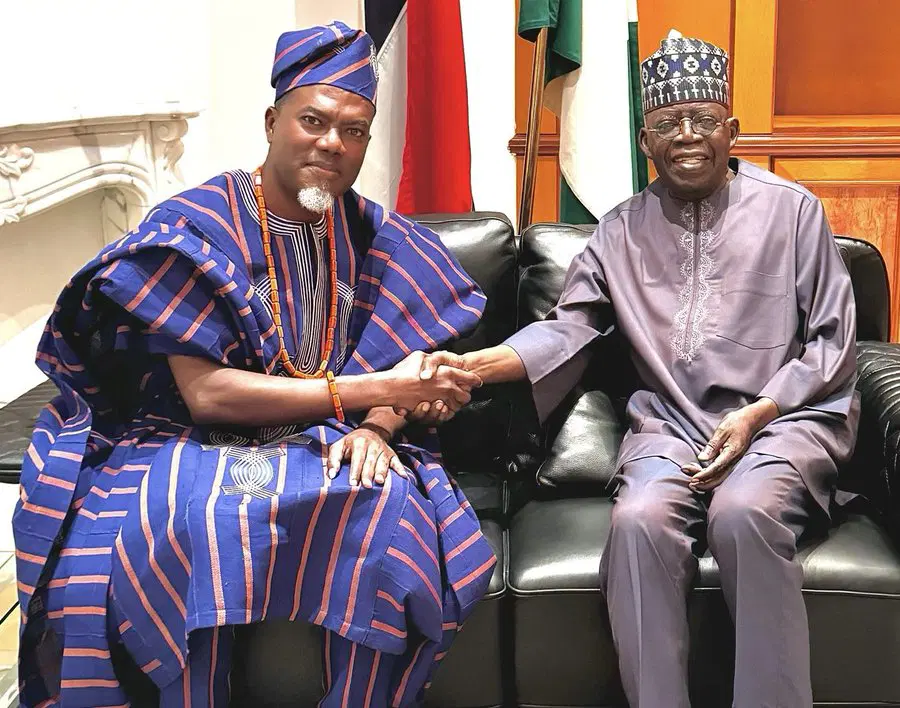
Omokri announced the development in a post on X on Tuesday, disclosing that the Mexican government had formally granted the diplomatic consent required for him to assume the position.
According to him, José Manuel Briseño Flores, Chargé d’Affaires of the Embassy of the United Mexican States in Abuja, delivered the diplomatic approval, known as agrément, to Babagana Wakil, Director of Protocol at Nigeria’s Ministry of Foreign Affairs.
The approval covers Omokri’s appointment as Ambassador Extraordinary and Plenipotentiary to Mexico, with concurrent accreditation to Guatemala, Honduras and Nicaragua.
Expressing appreciation over the development, Omokri said the Mexican diplomatic representative had formally communicated his acceptance by the government in Mexico.
“To God be the glory, the Chargé d’affaires of the Embassy of the United Mexican States in Abuja, Mr José Manuel Briseño Flores, today in Abuja delivered the agrément from the Government of the United Mexican States accepting me,” he wrote.
The approval represents a significant step in the process of deploying Omokri to represent Nigeria in Mexico and maintain diplomatic relations with the countries covered by his concurrent accreditation.
President Bola Tinubu had approved Omokri’s posting to Mexico in March as part of a broader exercise involving the appointment of 65 ambassador-designates and high commissioners to represent Nigeria in various countries and international missions.
However, despite the Nigerian government’s approval of the appointments, Omokri’s deployment to Mexico remained pending because the host country had yet to communicate its formal acceptance.
Under established diplomatic practice, a country cannot ordinarily appoint and send an ambassador to another country without first obtaining the receiving government’s consent.
The process is intended to ensure that the host country accepts the proposed representative before the appointment becomes effective for diplomatic purposes.
The formal consent, known as agrément, is therefore a crucial requirement in the exchange of ambassadors between countries.
In August, Nigeria’s Ministry of Foreign Affairs disclosed that Mexico and Japan were among the countries that had yet to communicate formal acceptance of two outstanding ambassadorial appointments.
The ministry said it was engaging the relevant authorities in the countries concerned and expressed confidence that the necessary approvals would be communicated in due course.
Mexico’s decision to grant Omokri’s agrément now clears the diplomatic approval hurdle associated with his posting, although the completion of any remaining administrative and accreditation procedures may still be required before he fully assumes his duties.
Omokri’s appointment attracted public attention partly because of his prominence in Nigeria’s political discourse and his outspoken support for Tinubu’s administration.
A former presidential aide and author, Omokri has remained an active commentator on Nigerian politics, governance and international affairs. His political interventions have frequently generated debate, particularly on issues involving the current administration and its critics.
His new diplomatic assignment will require him to represent Nigeria’s interests in Mexico and support cooperation between the two countries across areas such as trade, investment, education, culture and other bilateral engagements.
His concurrent accreditation to Guatemala, Honduras and Nicaragua will also extend his diplomatic responsibilities beyond Mexico, subject to the applicable arrangements with those countries.
Nigeria maintains diplomatic relations with countries across Latin America and other regions as part of its broader foreign policy objectives, including economic cooperation, international partnerships and the protection of its citizens abroad.
The approval of Omokri’s appointment comes amid the federal government’s efforts to complete the deployment of ambassador-designates announced by Tinubu.
Although the Nigerian government had approved the postings months earlier, the process depended in part on the individual receiving countries granting the required diplomatic consent.
With Mexico’s approval now communicated, Omokri’s long-pending appointment has moved closer to completion.
The Ministry of Foreign Affairs is expected to handle the relevant diplomatic procedures associated with his deployment and accreditation to the countries under his assignment.