The Federal Government has announced plans to phase out the policy separating Junior Secondary Schools (JSS) from Senior Secondary Schools (SSS), following alarming data showing that more than 20 million Nigerian pupils drop out of school before reaching the senior secondary level.
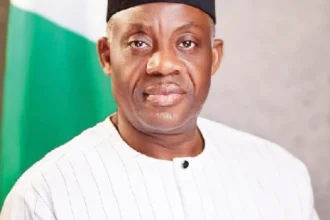
Minister of Education, Dr. Tunji Alausa, disclosed the decision on Tuesday in Abuja during the inauguration of the Universal Basic Education Commission (UBEC) Ministerial Implementation and Monitoring Committee.
According to the minister, the policy of separating junior and senior secondary schools—popularly known as the “disarticulation policy”—has failed to achieve its intended objectives and has instead contributed to high dropout rates, inadequate access to education and the inefficient use of educational infrastructure across the country.
Alausa explained that the government’s review of the education system revealed serious structural weaknesses, particularly in the transition of pupils from primary school to junior secondary school and eventually to senior secondary education.
He said one of the most disturbing findings was that over 20 million children fail to progress from primary education to junior secondary school, creating a significant gap in the country’s educational system.
“We have 20 million dropouts from primary school to JSS. Where are those students?” the minister asked.
He noted that another major challenge lies in the imbalance between the number of primary schools and junior secondary schools nationwide.
According to him, Nigeria currently has about 80,000 public primary schools but only around 15,000 junior secondary schools, resulting in a ratio of approximately one junior secondary school for every eight primary schools.
This disparity, he explained, has created enormous pressure on the available junior secondary schools, leading to overcrowded classrooms, overstretched facilities and limited opportunities for pupils seeking admission after completing primary education.
At the same time, many senior secondary schools across the country remain underutilised because fewer students successfully transition through the junior secondary level.
The minister cited Kaduna State and several other northern states as examples where the imbalance has become particularly evident, with junior secondary schools struggling to accommodate students while existing senior secondary facilities remain below capacity.
Describing the current arrangement as ineffective, Alausa said the Federal Government had concluded that maintaining separate administrative structures for junior and senior secondary schools no longer serves the best interests of Nigerian children.
“This disarticulation policy has failed,” he declared.
“We will phase it out. We can’t be creating positions because we want to create a director-level position for people while we harm our education system. It’s about doing what is best for every Nigerian child.”
According to the minister, the government intends to formally present the proposal to abolish the policy at the next meeting of the National Council on Education, the country’s highest policymaking body on education.
If approved, the move is expected to integrate junior and senior secondary education more effectively, improve the transition rate between educational levels and maximise the use of existing school infrastructure.
Alausa said the proposed reform forms part of the Tinubu administration’s broader agenda to improve access to quality education and reverse Nigeria’s growing out-of-school children crisis.
He acknowledged that previous efforts to address the country’s education challenges had produced limited results but expressed confidence that the current administration was determined to implement lasting reforms.
“The policy shift is aimed at expanding access and improving learning outcomes,” he said.
“We recognise that previous interventions have not adequately addressed the transition problem, but this government will not fail. We are fixing it.”
At the event, the minister also inaugurated the UBEC Ministerial Implementation and Monitoring Committee, which has been established to oversee the execution and completion of several education projects funded by the Universal Basic Education Commission.
The committee, chaired by Professor Rashid Aderinoye, has been assigned the responsibility of monitoring the implementation of UBEC-funded Smart Schools, Bilingual Schools and Alternative Schools across the country.
Its mandate includes ensuring that all ongoing projects are completed according to approved standards, formally handed over to state governments and opened for academic activities without unnecessary delays.
Alausa expressed concern that despite substantial investments by UBEC in constructing hundreds of schools nationwide, many of the facilities remain incomplete or have not admitted students years after completion.
He described the situation as an unacceptable waste of public resources and stressed that government investments in education must translate into improved learning opportunities for Nigerian children.
According to him, the monitoring committee will strengthen accountability and ensure that completed projects are put to effective use rather than remaining abandoned or underutilised.
Nigeria continues to face one of the world’s largest out-of-school children crises, with millions of school-age children—particularly those living in rural communities, conflict-affected areas and economically disadvantaged households—still lacking access to formal education.
Education experts have consistently argued that addressing the challenge requires more than constructing new classrooms. They maintain that governments at all levels must ensure that existing educational facilities are fully operational, adequately staffed, properly equipped and accessible to learners.
With the proposed abolition of the JSS-SSS separation policy and renewed efforts to complete abandoned education projects, the Federal Government says it hopes to remove structural barriers that have prevented millions of Nigerian children from progressing through the country’s education system and ultimately improve learning outcomes nationwide.