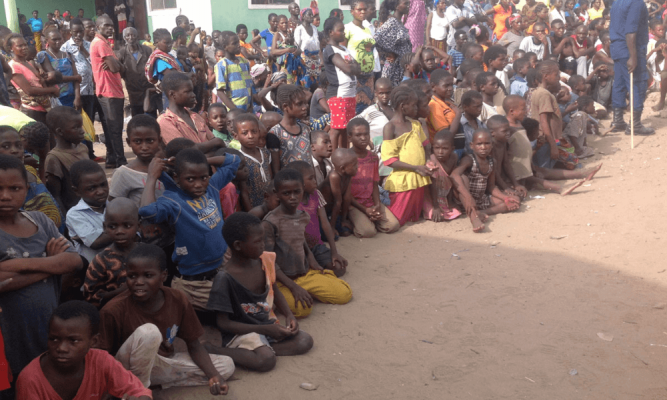
The Federal Government has sounded a renewed warning over the deepening crisis in Nigeria’s education sector, revealing that an estimated 15 million children are currently out of school across the country. The disclosure underscores the scale of the challenge facing policymakers and highlights the urgency of comprehensive reforms to reverse the trend.
The Minister of Education, Maruf Tunji Alausa, made the revelation during the 2026 Basic Education in Nigeria Bootcamp held in Jos, Plateau State. Speaking at the gathering of education stakeholders, development partners, and policymakers, the minister stressed that reliable and comprehensive data remains central to designing effective interventions.
According to Alausa, the government is intensifying efforts to address the crisis through a data-driven approach anchored on the expansion of the Digital National Education Management Information System (NEMIS). He explained that the initiative is designed to provide real-time tracking of learners and improve planning, monitoring, and evaluation across the education system.
Complementing this effort is the accelerated rollout of the Learner Identification Number (LIN), a unique identifier intended to capture and track individual students throughout their educational journey. The system, the minister noted, will help authorities identify out-of-school children, understand the underlying causes of exclusion, and deploy targeted interventions.
“Reliable data remains the backbone of effective education reform,” Alausa stated. “Without knowing where the children are and why they are out of school, meaningful solutions cannot be implemented.”
He disclosed that early results from the data-mapping exercise have already identified nearly one million out-of-school children, many of whom are being prepared for reintegration into formal education systems or alternative learning pathways. These pathways include non-formal education programmes, vocational training, and community-based initiatives aimed at reaching children in hard-to-access areas.
The minister outlined a multi-pronged strategy combining financial investment, infrastructure development, and teacher capacity building to tackle the crisis. Between January 2025 and January 2026, state governments accessed over N106 billion through matching grants provided by the Universal Basic Education Commission (UBEC), a key funding mechanism designed to support basic education nationwide.
In addition to funding, the government has prioritised teacher development as a critical component of reform. Alausa revealed that approximately N22 billion has been invested in training nearly 978,000 teachers across the country, with the aim of improving classroom delivery, learning outcomes, and overall education quality.
Infrastructure upgrades have also featured prominently in the government’s intervention efforts. More than 10,000 classrooms have been renovated within the review period, addressing issues of overcrowding and dilapidation that have long plagued public schools. Furthermore, about 7.8 million textbooks have been distributed to enhance learning resources and support curriculum delivery.
Recognising the unique challenges faced by children outside the conventional school system, the government has expanded its focus on the Almajiri and other non-formal education sectors. As part of this initiative, approximately 1,400 Tsangaya teachers have been trained to improve instructional quality within traditional Islamic education settings and facilitate integration with formal education structures.
The Minister of State for Education, Suwaiba Said Ahmad, highlighted additional reform initiatives, including LUMINA 2030 and EduRevamp. These programmes, she explained, are aimed at strengthening curriculum delivery, enhancing digital learning, and modernising the education system to meet global standards.
Ahmad noted that digital innovation is increasingly central to the government’s education agenda, particularly in bridging access gaps and ensuring continuity of learning in underserved communities. She emphasised that technology-driven solutions could play a transformative role in reaching millions of children currently excluded from the system.
The scale of the crisis has also drawn concern from state governments. The Governor of Plateau State, Caleb Mutfwang, represented at the event by Deputy Governor Josephine Piyo, warned that the growing number of out-of-school children poses significant social and economic risks.
According to the governor, the situation is closely linked to rising poverty levels, youth unemployment, and insecurity. He cautioned that failing to address the education gap could exacerbate existing challenges and undermine national development efforts.
“The consequences of this crisis extend beyond education,” the governor’s representative noted. “It affects economic productivity, social stability, and national security.”
Education experts at the bootcamp echoed these concerns, with some suggesting that the government’s estimate of 15 million out-of-school children may understate the true scale of the problem. One such expert, Titus Syengo, argued that the number could be as high as 18.5 million, based on broader assessments and field data.
Syengo described the situation as a national emergency, warning that Nigeria’s education crisis has far-reaching implications not only for the country but for the African continent as a whole. He stressed that Nigeria’s large population means that its education outcomes significantly influence regional development indicators.
“The magnitude of this challenge requires urgent, coordinated action,” he said. “If Nigeria fails to address it, the ripple effects will be felt across Africa.”
Stakeholders at the event emphasised the need for sustained political will, increased funding, and stronger collaboration between federal, state, and local governments. Development partners and civil society organisations were also identified as critical players in supporting implementation and ensuring accountability.
While the government’s renewed focus on data and targeted interventions has been widely welcomed, analysts note that structural challenges—including poverty, cultural barriers, insecurity, and inadequate infrastructure—continue to hinder progress.
In many parts of the country, especially in conflict-affected regions, access to education remains severely constrained. Displacement, school closures, and safety concerns have further compounded the problem, leaving millions of children without access to learning opportunities.
Despite these challenges, officials expressed optimism that ongoing reforms could yield measurable improvements over time. The integration of data systems, increased investment, and targeted programmes are expected to create a more responsive and inclusive education system.
As Nigeria grapples with one of the largest out-of-school populations in the world, the stakes remain high. The success or failure of current interventions will not only shape the country’s human capital development but also determine its long-term economic and social trajectory.
For policymakers, the message from the Jos bootcamp was clear: addressing the education crisis is no longer optional—it is an urgent national priority requiring decisive and sustained action.