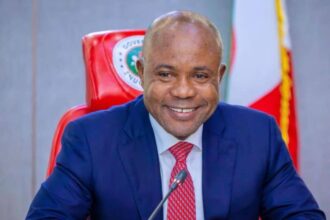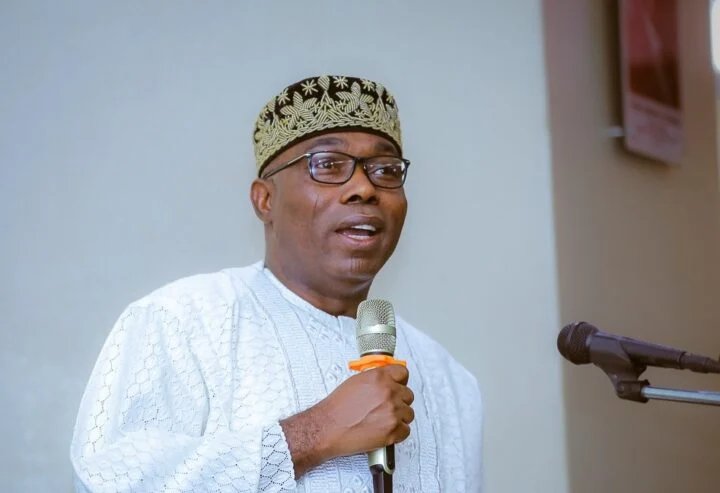
Presidential candidate of the Social Democratic Party (SDP), Adewole Adebayo, has promised to reduce the prices of petrol, cooking gas and aviation fuel, commonly known as Jet A1, to no more than N200 per litre if elected president in the 2027 general election.
Adebayo said his administration would introduce the proposed pricing regime within 12 months of assuming office, arguing that lower energy costs would help reduce the financial burden on households, businesses and other sectors of the Nigerian economy.
The SDP candidate made the pledge on Sunday in Abuja during an interview with the News Agency of Nigeria (NAN).
According to Adebayo, achieving the proposed reduction would require Nigeria to significantly increase domestic refining capacity and reduce its dependence on imported petroleum products. He said his administration would focus on rehabilitating the country’s existing refineries while also encouraging the development and operation of modular refineries across the country.
He argued that the age of Nigeria’s refineries should not be used as a reason to abandon them, pointing to older refineries in the United States that have continued to operate successfully for decades.
Adebayo said his administration would place petrol, cooking gas and Jet A1 under a pricing framework designed to ensure that their prices do not exceed N200 per litre.
“SDP will pick cooking gas, petrol and Jet A1; those three, we will put them under a regime where the price does not go past N200,” he said.
The presidential candidate said the policy would also involve restoring what he described as the original subsidy arrangement, under which about 450,000 barrels of crude oil would be reserved for domestic consumption.
Under his proposal, the crude would be refined locally, while other petroleum derivatives, including naphtha, heavy fuel oil, diesel and kerosene, would be sold. Revenue generated from those products, he explained, would help sustain the proposed domestic pricing arrangement.
Adebayo said the SDP would work with the National Assembly to establish the legal and financial framework required to channel revenue from the various petroleum products towards maintaining affordable prices for petrol, cooking gas and aviation fuel.
He maintained that Nigeria should focus on building adequate domestic refining capacity rather than relying heavily on imported refined petroleum products whose prices are exposed to international market fluctuations and other external pressures.
According to him, Nigeria already possesses two critical advantages needed to achieve energy self-sufficiency: abundant crude oil resources and existing refining infrastructure.
He argued that the country’s longstanding debate over petrol subsidy had distracted attention from what he considers more fundamental structural problems within the petroleum sector.
Adebayo also rejected the argument that removing petrol subsidy alone would solve Nigeria’s fiscal difficulties, describing such a position as a “red herring.”
He said Nigerians would not have to depend on conventional petrol subsidy under an SDP administration, arguing that subsidy should not be treated as a permanent government economic programme.
Beyond reducing energy costs, Adebayo outlined a broader transportation policy aimed at making movement more affordable for workers, students and other Nigerians.
He proposed combining cheaper petroleum products with expanded public transportation and rail services. Under the proposed system, workers and students would be able to access public transportation using employment and student identification cards.
He further proposed that employers contribute six per cent of workers’ salaries towards transportation costs.
Adebayo said the measures would significantly reduce the amount Nigerians spend on transportation while improving mobility and stimulating economic activity.
He also proposed a housing policy under which workers’ housing expenses would be limited to seven per cent of their salaries.
According to him, his broader social policy would combine affordable transportation and housing with free education and healthcare.
“The summary of it is that transportation costs cannot go more than six percent of your salary and housing costs should not be more than seven percent of your salary, education and healthcare should be free,” he said.
The SDP candidate also identified agriculture and food security as key priorities of his proposed administration.
He said strengthening the agricultural sector would be central to efforts to increase food production, improve food security and make essential food items more affordable to Nigerians.
Adebayo’s proposals form part of a broader economic agenda that seeks to reduce the cost of living through lower energy and transportation expenses, increased domestic production and expanded access to essential public services.
If implemented, the proposed policies would require substantial investment, effective regulation, coordination among government institutions and sustained domestic production capacity.
The 2027 election is expected to provide Nigerians with competing economic and social policy options as presidential candidates present their plans for addressing inflation, unemployment, energy costs, food insecurity and declining purchasing power.
For Adebayo and the SDP, the proposed N200 price ceiling on petrol, cooking gas and Jet A1 represents a central component of their economic vision, alongside affordable transportation, controlled housing costs, free education and healthcare, and increased investment in agriculture.
If you want, I can also produce 10 strong, newspaper-style headlines for this story.