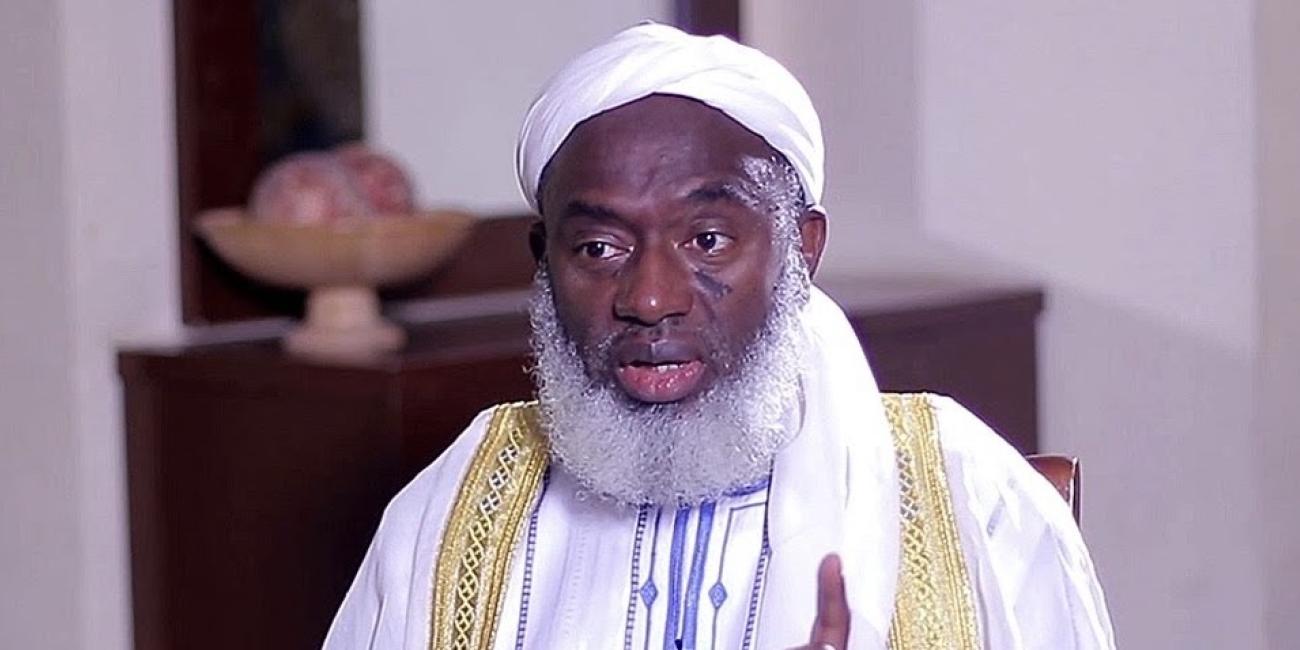
Islamic cleric Ahmad Gumi has distanced himself from alleged statements and materials circulating online linking him to support for banditry and violent criminal groups operating in Nigeria.
Gumi, in a press statement issued in Kaduna on Saturday, described the claims as false, manipulated and deliberately doctored by individuals and groups pursuing ethnic, political and sectional interests.
The cleric said several of his past interviews, lectures and public comments on insecurity in Nigeria had been deliberately distorted and taken out of context by internet content creators seeking sensational headlines, online traffic and public controversy.
According to him, some persons had intentionally edited video clips and written materials in ways that falsely portray him as sympathetic to armed groups responsible for killings, kidnappings and attacks across parts of the country.
“I hereby state unequivocally that any video clip, written statement, or message attributed to me, whether directly or by innuendo, suggesting support for, justification of, protection of, or advocacy for banditry in Nigeria or anywhere else does not emanate from me,” Gumi stated.
The cleric stressed that he has never supported criminality or violence and should not be associated with any form of advocacy for armed groups terrorising communities.
He explained that his previous interventions and public engagements on insecurity were often aimed at promoting dialogue, peacebuilding and finding sustainable solutions to the country’s security crisis.
Over the years, Gumi has remained one of the most controversial voices in discussions surrounding insecurity in northern Nigeria, particularly because of his involvement in mediation efforts and meetings with armed groups operating in forest areas.
However, the Islamic scholar insisted that his engagements were consistently misunderstood and sometimes intentionally misrepresented by critics and online commentators.
He said the latest circulation of false statements in his name was part of a wider campaign of misinformation targeted at damaging his reputation and misleading the public.
According to him, certain groups are exploiting Nigeria’s tense security environment to spread divisive narratives and deepen suspicion among ethnic and religious communities.
Gumi reaffirmed his loyalty and commitment to Nigeria, describing the country as a nation blessed with enormous human and natural potential despite its present challenges.
He expressed optimism that Nigeria would eventually overcome insecurity and emerge stronger through collective efforts and sincere leadership.
The cleric therefore urged Nigerians, media organisations and government institutions to ignore any misleading materials being circulated in his name.
He called on journalists and members of the public to verify information before sharing or reacting to controversial content attributed to him on social media and digital platforms.
Gumi also warned that individuals and organisations who continue to spread falsehoods against him after the release of his statement would face legal consequences.
According to him, enough damage had already been done through misinformation, and he would no longer tolerate deliberate attempts to malign his character or incite public hostility against him.
The cleric did not mention specific individuals or groups allegedly responsible for the fake materials but insisted that legal steps would be taken against anyone found culpable.
Observers say the statement reflects growing concern over the increasing spread of manipulated videos, false quotes and misinformation on social media, particularly around sensitive national security issues.
Nigeria has in recent years witnessed rising insecurity across several regions, including banditry, terrorism, kidnapping and communal violence, especially in parts of the North-West and North-Central zones.
Public debates around the causes of insecurity and possible solutions have often generated controversy, with different stakeholders advocating military operations, negotiations, community policing and economic reforms.
Gumi has previously argued that factors such as poverty, illiteracy, social injustice and weak governance contribute significantly to insecurity in the country.
In his latest statement, he again linked the persistence of violence and criminality to broader structural problems within Nigerian society.
According to him, ignorance, poverty and widespread injustice continue to create conditions that fuel insecurity and social instability.
The cleric called for comprehensive and long-term solutions rather than approaches focused solely on military action.
He stressed the importance of addressing the root causes of violence through education, economic empowerment, fairness and social inclusion.
Gumi also expressed sympathy for victims of insecurity across Nigeria, including families affected by kidnappings, killings and displacement.
He said he hoped victims of violence would find comfort in the collective determination of Nigerians and the international community to confront insecurity and restore peace to affected communities.
The cleric further appealed for unity among Nigerians in confronting the country’s security challenges, warning that misinformation and ethnic profiling could worsen tensions and distract from genuine solutions.
Analysts say public figures and religious leaders have increasingly become targets of misinformation campaigns, especially in the digital age where manipulated content can spread rapidly across multiple platforms.
The situation has prompted repeated calls for stricter fact-checking, responsible media practices and stronger legal frameworks against the deliberate spread of false information.
Meanwhile, reactions to Gumi’s statement have continued to emerge online, with supporters welcoming his clarification while critics insist that some of his past comments contributed to public misunderstanding about his position on armed groups.
Despite the controversies surrounding his interventions, Gumi maintained that he remains committed to peace, national unity and efforts aimed at ending insecurity in Nigeria.
He reiterated that any statement or publication portraying him as a supporter of banditry is entirely false and should be disregarded by the public.