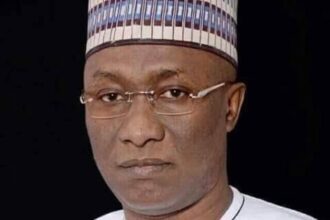
The Peoples Democratic Party (PDP) has taken a decisive step toward rebuilding its internal structure and restoring confidence among its members, following the emergence of Abdulrahman Mohammed and Samuel Anyanwu as substantive National Chairman and National Secretary, respectively.
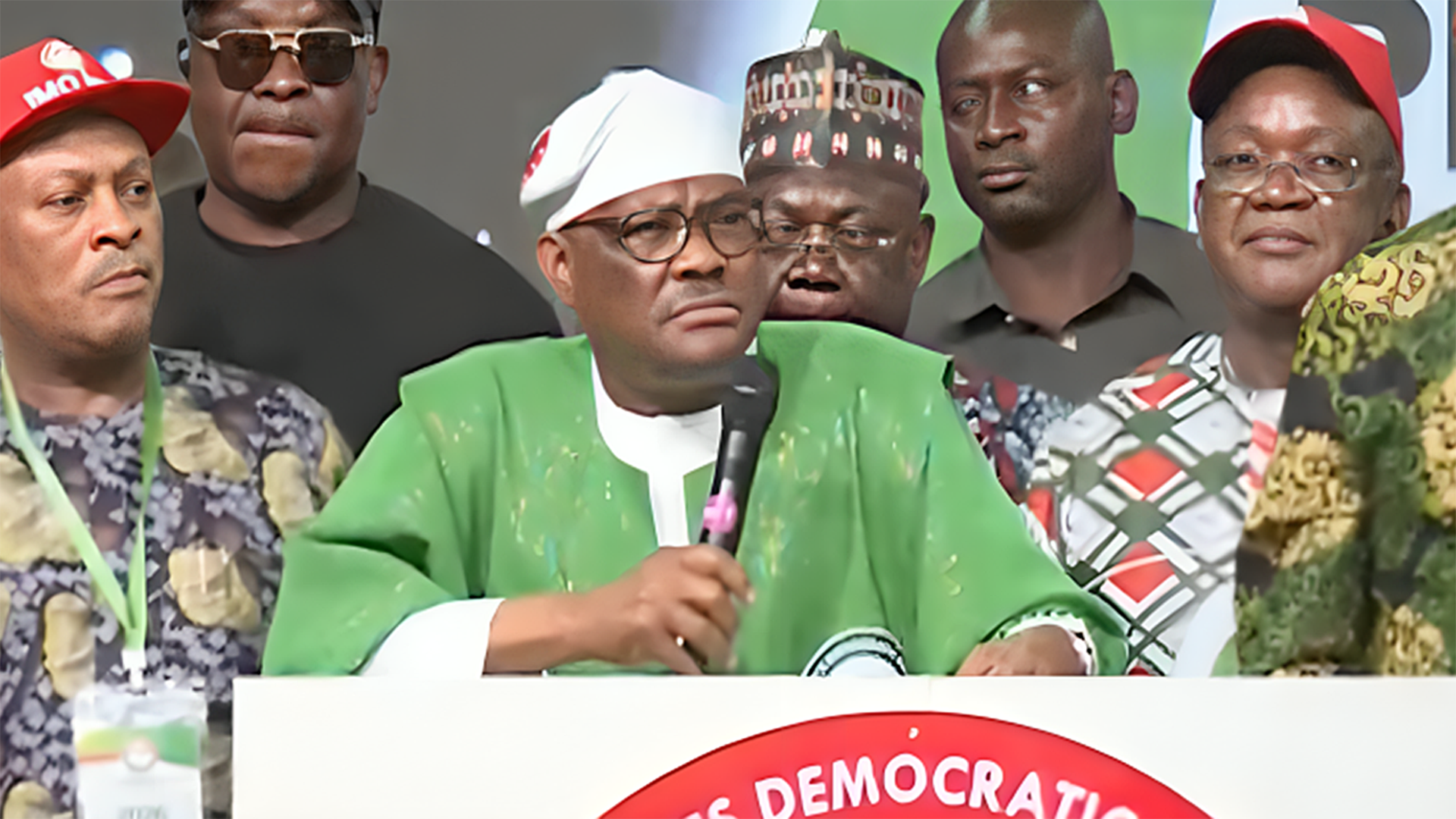
Their emergence came during the party’s 2026 national convention held at the Velodrome of the Moshood Abiola National Stadium, where party delegates gathered in large numbers to chart a new course for the opposition party ahead of the 2027 general elections.
Both Mohammed and Anyanwu were elected through a consensus arrangement, alongside 19 other members of the National Working Committee (NWC). The consensus model, party insiders say, was adopted to minimise internal friction and project unity after months of leadership disputes and factional tensions that had threatened the stability of the party.
The convention attracted several high-profile figures within the PDP, including former Senate President Bukola Saraki, former Jigawa State governor Sule Lamido, and former Kaduna State governor Ahmed Makarfi. Their presence underscored the importance of the gathering, widely seen as a defining moment in the PDP’s ongoing effort to reposition itself as a credible political force.
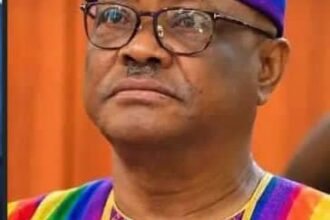
A central figure at the convention was the Minister of the Federal Capital Territory, Nyesom Wike, who is widely regarded as a dominant influence within the current power structure of the party. Addressing delegates, Wike struck a tone of optimism, declaring that the PDP had begun the process of healing from its internal crises.
According to him, the successful conduct of the convention signaled a turning point for the party. He reassured members that despite recent challenges, the PDP would remain a formidable contender in Nigeria’s political landscape and would certainly participate in the 2027 general elections.
“So many people have spoken here,” Wike said, referencing concerns raised by party stakeholders about the PDP’s future. “There were questions about whether the party would even be on the ballot in 2027. I have assured them that, by the grace of God, the PDP will be on the ballot.”
His remarks were met with loud applause from delegates, many of whom viewed the convention as an opportunity to reaffirm the party’s relevance after a period marked by legal disputes, defections, and leadership struggles.
Wike also emphasised the need for inclusiveness as the party moves forward, urging members to embrace unity and give all stakeholders a fair opportunity to contribute to the party’s rebuilding process. He commended delegates for their resilience, noting that many had remained loyal despite what he described as betrayal by some former leaders.
“I congratulate all of you who stood firm when the storm raged,” he said. “You showed resilience when it mattered most. Together, we are committed to rebuilding this party and making Nigeria a more prosperous country.”
The newly elected National Chairman, Abdulrahman Mohammed, echoed similar sentiments in his acceptance remarks, framing the convention as a moment of renewal rather than mere political routine. He stressed that the PDP must now move beyond internal divisions and focus on rebuilding trust among its members and supporters.
“Today, we choose a higher path,” Mohammed declared. “We choose inclusiveness over exclusion, unity over division, and renewal over decline.”
He acknowledged the difficult period the party had gone through, describing it as a test of its strength and resilience. According to him, the convention was not just about filling positions but about restoring order and redefining the party’s direction.
“The PDP has not come here to mourn itself,” he said. “We have come here to renew ourselves. This is a moment of reflection, responsibility, and transformation.”
Mohammed assured members that under his leadership, the party would belong to everyone, regardless of factional alignment, and pledged to create a more open and inclusive structure that accommodates diverse interests within the party.
Samuel Anyanwu, who emerged as National Secretary, is expected to play a key administrative role in implementing the party’s agenda and coordinating its activities nationwide, particularly as preparations begin for the next election cycle.
The Chairman of the Convention Planning Committee and former Abia State governor, Okezie Ikpeazu, also addressed delegates, revealing that over 2,000 accredited participants attended the event. He described the turnout as a strong indication of the party’s enduring appeal and organisational strength.
Ikpeazu emphasised that reconciliation would remain a priority even after the convention, noting that the party’s doors would remain open to aggrieved members willing to return and contribute to its growth.
In the months leading up to the convention, the PDP had been embroiled in a prolonged leadership crisis, with multiple factions laying claim to key positions within the party. Legal battles and conflicting decisions had further complicated the situation, raising concerns about the party’s ability to function effectively as an opposition force.
However, the successful conduct of the convention and the emergence of a new leadership team are being interpreted by many observers as a significant step toward stabilisation.
Political analysts note that the PDP now faces the critical task of translating this renewed sense of unity into concrete political strategy. With the 2027 general elections on the horizon, the party must not only consolidate its internal structure but also articulate a compelling vision that resonates with Nigerians.
For now, the mood within the party appears cautiously optimistic. Delegates left the convention with a sense of renewed purpose, hopeful that the decisions taken in Abuja would mark the beginning of a new chapter for the PDP.
Whether this momentum can be sustained will depend largely on the ability of the new leadership to manage internal dynamics, rebuild public trust, and present a credible alternative in Nigeria’s evolving political landscape.