Barely two weeks after urging Nigerians to “endure” the biting economic hardship under President Bola Ahmed Tinubu’s administration, former Edo State governor and serving All Progressives Congress (APC) senator, Adams Oshiomhole, has found himself at the centre of a public backlash following the circulation of a controversial video on social media.
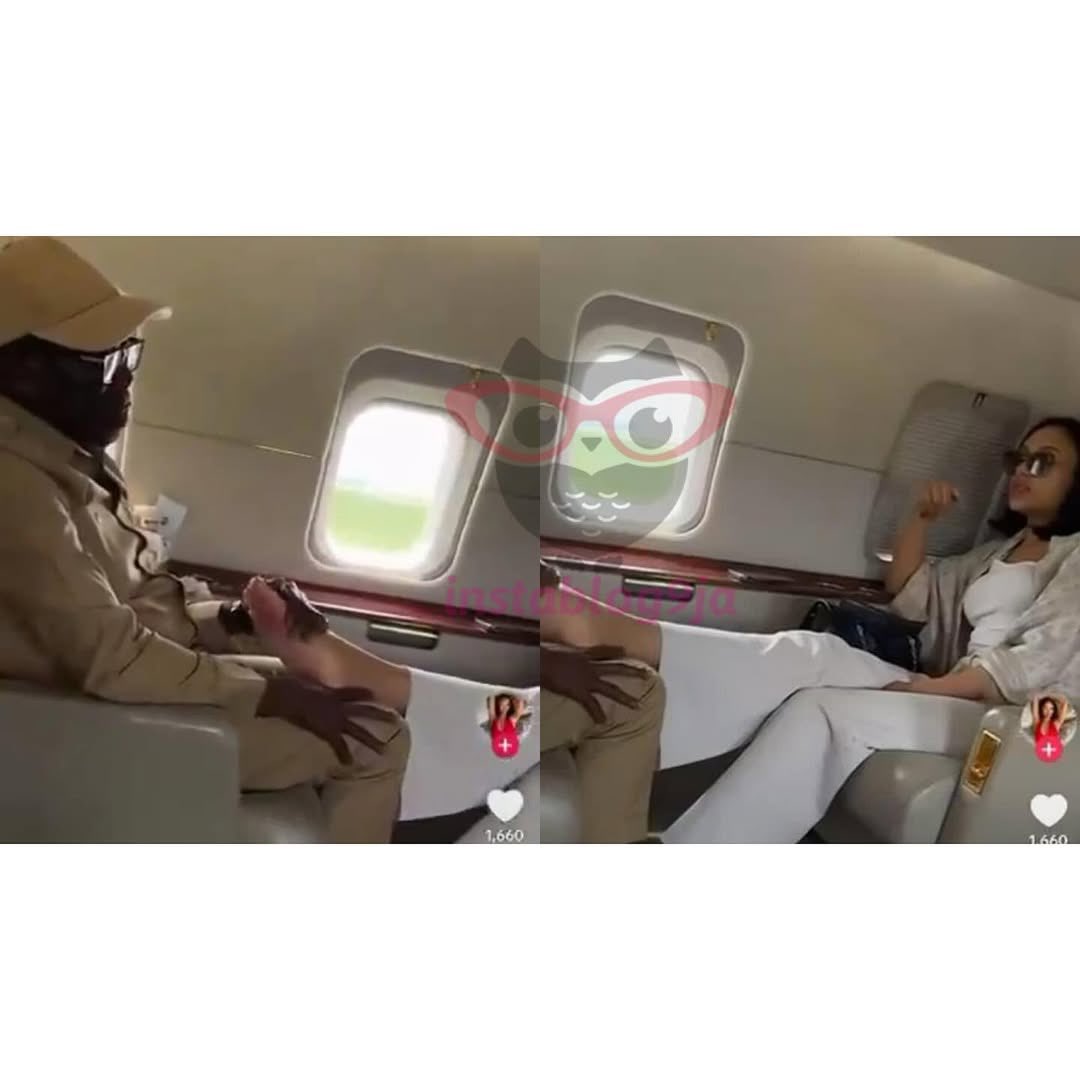
The short clip, which began trending late Monday on X (formerly Twitter), appears to show Oshiomhole seated comfortably inside a private jet while giving a foot massage to a woman identified as a South African explicit content creator known as Professional Sugar Baby. Though the senator has not publicly responded to the video as of the time of this report, the footage has ignited widespread outrage, with many Nigerians accusing the political elite of hypocrisy and insensitivity amid the country’s deepening economic crisis.
The controversy is particularly potent because it comes just 12 days after Oshiomhole defended the Tinubu administration’s economic reforms during a televised interview. In that appearance, the former national chairman of the APC acknowledged the severe impact of policies such as fuel subsidy removal and foreign exchange reforms but insisted they were unavoidable.
“These policies are painful, but necessary,” Oshiomhole said at the time, urging Nigerians to be patient and make sacrifices for what he described as long-term national stability and economic recovery. He argued that previous administrations had postponed difficult decisions, leaving the current government with no option but to act decisively.
However, for many Nigerians grappling with soaring food prices, high transportation costs, stagnant wages and widespread unemployment, the private jet video has been interpreted as a stark contradiction of that message. Critics argue that calls for sacrifice ring hollow when coming from leaders perceived to be living in comfort and excess, insulated from the hardships faced by ordinary citizens.
Social media users have been relentless in their criticism, with many juxtaposing screenshots of the video against clips of Oshiomhole’s recent interview. Some questioned how a senator asking Nigerians to “endure” hardship could afford private jet travel, while others described the episode as emblematic of a broader disconnect between Nigeria’s ruling class and the governed.
“This is the problem,” one X user wrote. “They tell us to tighten our belts while they loosen theirs.” Another commented, “Endure for who? Certainly not for those flying private jets and enjoying luxury.”
Beyond the immediate outrage, the episode has reopened long-standing debates about political privilege, accountability and the optics of leadership in times of national distress. Analysts note that while private jet travel is not illegal and public officials are entitled to personal lives, symbolism matters greatly in a country where more than half the population lives below the poverty line.
Nigeria’s current economic challenges have heightened public sensitivity to displays of wealth by political office holders. Inflation remains stubbornly high, the naira has lost significant value, and many households report being unable to afford basic necessities. Against this backdrop, critics argue that political leaders must exercise restraint and empathy, both in policy and in personal conduct.
Opposition figures and civil society groups have also weighed in, calling on public officials to lead by example. Some have urged the National Assembly to revisit long-standing demands for greater transparency around the use of public funds, allowances and privileges enjoyed by elected officials.
For supporters of Oshiomhole and the ruling party, the backlash is seen by some as exaggerated and politically motivated. They argue that personal moments captured on video should not distract from substantive policy debates or the difficult reforms being implemented by the government.
Nonetheless, the incident underscores a persistent challenge for Nigeria’s leadership: bridging the trust deficit between government and citizens. As economic reforms continue to test public patience, episodes that appear to highlight elite comfort risk undermining official appeals for sacrifice and shared national pain.
Whether the controversy will have lasting political consequences for Senator Oshiomhole remains to be seen. What is clear, however, is that in a climate of hardship and heightened public scrutiny, the actions and perceived lifestyle of political leaders are unlikely to escape intense judgment from a frustrated populace.
Watch video: