The conflict between the United States and Iran intensified on Monday as both countries exchanged military strikes amid stalled diplomatic efforts aimed at ending months of hostilities. The latest escalation comes as negotiations between Washington and Tehran remain deadlocked, with Iran insisting that any comprehensive peace agreement must also address Israel’s expanding military operations in Lebanon.
Despite weeks of indirect negotiations, multiple ceasefire discussions, and several rounds of military exchanges, both sides have yet to reach an agreement that would bring an end to the conflict, reopen the strategically important Strait of Hormuz, and establish a framework for addressing concerns over Iran’s nuclear programme.
The renewed exchange of fire coincided with an expansion of Israel’s military campaign in Lebanon. Israeli Prime Minister Benjamin Netanyahu announced that military operations would continue and deepen, directing the Israeli Defense Forces to intensify strikes against what he described as “terror targets” in southern Beirut and other parts of Lebanon.
Israel’s campaign is primarily aimed at weakening Hezbollah, the powerful Iran-backed militant and political organization operating in Lebanon. The United States has continued to support Israel’s military efforts against Hezbollah while simultaneously seeking a diplomatic breakthrough with Tehran that could reduce regional tensions and prevent a wider conflict.
However, Iranian officials have maintained that no meaningful progress can be made toward ending the broader war unless Israel halts its offensive in Lebanon. Tehran argues that the ongoing military operations represent a violation of previous understandings and undermine efforts to achieve regional stability.
Iran’s chief negotiator, Mohammad Bagher Ghalibaf, used social media to criticize both the United States and Israel, accusing them of undermining ceasefire efforts through continued military action.
According to Ghalibaf, the ongoing American naval blockade of Iranian ports and the escalation of military operations in Lebanon serve as evidence that Washington is not fully committed to honoring ceasefire arrangements.
Iran’s position was further reinforced by Foreign Ministry spokesman Esmaeil Baqaei, who stated during a weekly media briefing that Tehran had not resumed formal negotiations regarding its nuclear programme.
“We know when it is necessary to act on nuclear matters,” Baqaei told reporters.
He explained that Iran’s immediate focus remains bringing an end to ongoing military confrontations rather than engaging in detailed discussions over nuclear issues.
“No negotiations have taken place on the details of the nuclear file,” Baqaei said. “At this stage, our priority is ending the war.”
He reiterated Iran’s demand that a ceasefire in Lebanon must be established before any broader peace agreement can be considered.
“We insist that a ceasefire in Lebanon is an essential condition for any deal aimed at ending the war,” he stated.
Baqaei also accused the United States of violating existing ceasefire arrangements through continued military operations against Iranian targets.
The latest tensions followed a series of military actions over the weekend. The United States military confirmed that it conducted what it described as “self-defense strikes” against Iranian radar installations and drone-control facilities.
According to American officials, the strikes were carried out in response to the downing of a U.S. MQ-1 surveillance drone. The operation marked the third wave of American military action against Iranian targets within just over a week.
Shortly after the strikes, Iran’s Islamic Revolutionary Guard Corps announced that it had retaliated by targeting an airbase allegedly used by American forces involved in the operation.
Although Iranian authorities did not identify the location of the base, regional tensions rose sharply after the Kuwaiti military reported intercepting what it described as hostile missile and drone attacks within its airspace.
The exchange underscored the growing risk of the conflict spreading across the Gulf region, where several countries host American military facilities and strategic assets.
The current crisis traces its origins to February, when the United States and Israel launched coordinated air and missile strikes against Iran. Those attacks reportedly targeted military infrastructure and key leadership positions within the Islamic Republic, resulting in significant casualties among senior Iranian officials and military commanders.
The strikes marked a dramatic escalation in regional tensions and triggered a broader conflict involving multiple actors across the Middle East.
At the heart of the dispute remains Iran’s nuclear programme. Tehran has consistently maintained that its nuclear activities are intended solely for peaceful civilian purposes, including energy generation and scientific research.
However, the United States and several Western allies continue to express concerns that Iran may be seeking the capability to develop nuclear weapons.
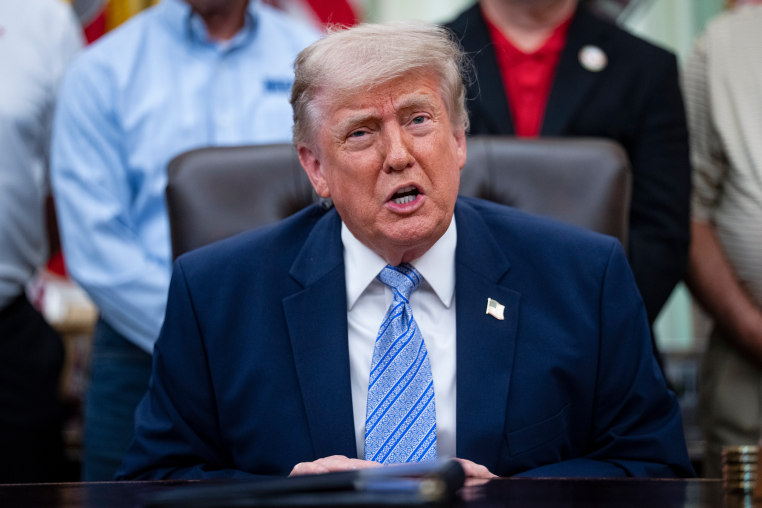
Former U.S. President Donald Trump, who remains actively involved in discussions surrounding the conflict, recently stated on social media that any proposed agreement with Iran must clearly guarantee that Tehran will never acquire a nuclear weapon.
“The deal under discussion states, very clearly, that Iran will not have a Nuclear Weapon,” Trump wrote.
Iran, however, has outlined its own conditions for future negotiations. Among them is the release of approximately $12 billion in frozen Iranian assets held abroad.
Iranian officials have also rejected earlier suggestions that their stockpile of enriched uranium would be eliminated as part of any agreement.
Meanwhile, the situation in Lebanon continues to deteriorate despite the existence of a formal truce between Israel and Hezbollah that began on April 17.
Both sides have repeatedly accused one another of violating the ceasefire, resulting in continued clashes, air strikes, and military operations.
Israeli forces have expanded their ground offensive into southern Lebanon and recently captured the historic Beaufort Castle, a strategic hilltop fortress that served as a military base during Israel’s occupation of parts of Lebanon in the 1980s and 1990s.
Prime Minister Netanyahu described the seizure of the stronghold as a significant military achievement and vowed to continue operations against Hezbollah.
Calling the development “a dramatic shift,” Netanyahu pledged that Israeli forces would continue targeting Hezbollah positions and infrastructure wherever necessary.
The widening conflict has drawn increasing international concern.
Diplomatic sources confirmed that the United Nations Security Council scheduled an emergency meeting on Monday to discuss the deteriorating situation in Lebanon and the broader regional implications of the escalating confrontation between Israel, Iran, and the United States.
As military operations continue and diplomatic efforts remain stalled, fears are growing that the conflict could evolve into a larger regional war involving multiple countries and armed groups.
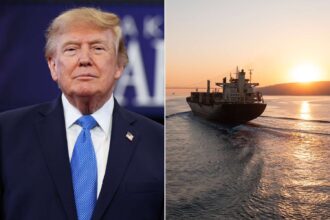
For now, negotiations remain at an impasse, with Iran insisting that peace in Lebanon must precede any broader settlement, while the United States continues to press for restrictions on Iran’s nuclear programme and the reopening of the Strait of Hormuz, a critical artery for global energy supplies.
With tensions rising on multiple fronts, the prospects for a swift resolution appear increasingly uncertain.