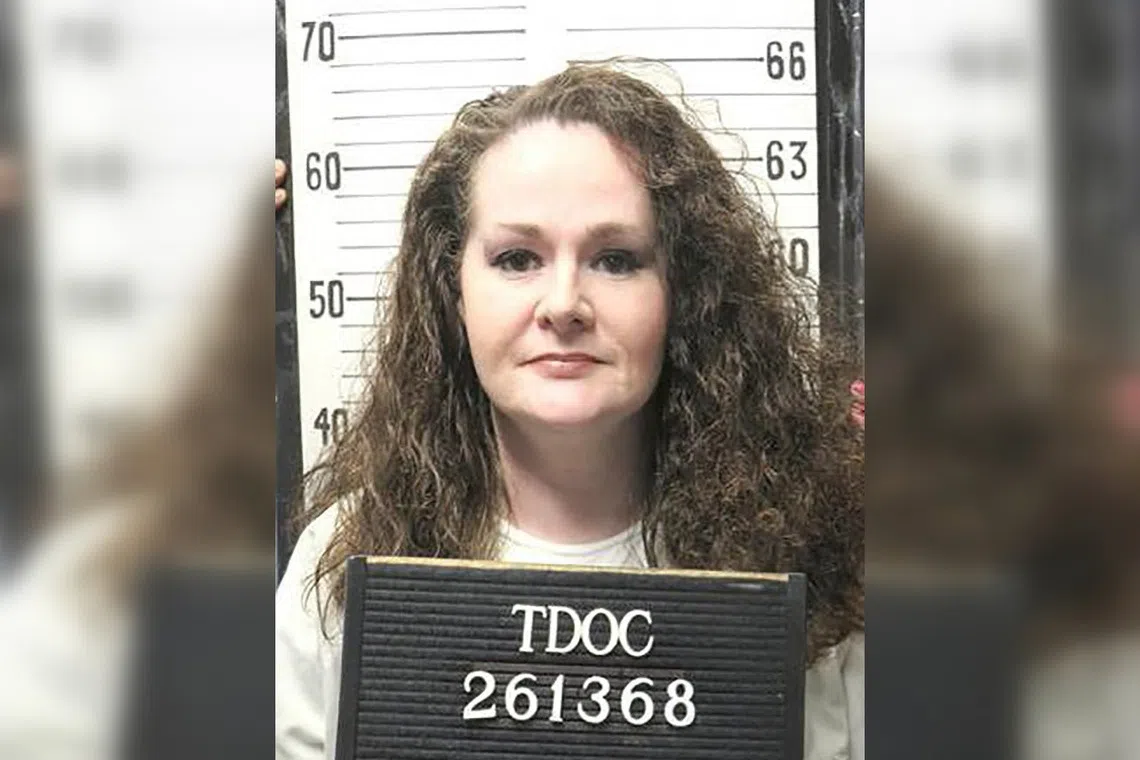
Pike was transferred to the Debra K. Johnson Rehabilitation Centre, the women’s prison where she had been held for about 30 years, her lawyers confirmed in a statement on Saturday.
Her return to the correctional facility follows a medical crisis during an attempted execution on September 30, when Tennessee authorities administered lethal injection drugs to carry out her death sentence for the 1995 killing of her classmate, Colleen Slemmer.
Pike reportedly survived two doses of pentobarbital, the drug used in the execution attempt. The incident left her in a critical condition and raised questions about the procedures employed by Tennessee officials during executions.
In their statement, Pike’s lawyers expressed appreciation to the emergency responders and medical personnel who treated her following the incident.
“She is grateful to the first responders and her medical team for their care in these extraordinary circumstances. She is continuing to receive medical care at the prison, and we will continue to track her recovery,” the lawyers said.
Although she has been discharged from hospital, Pike is still receiving medical attention as she continues her recovery.
Critical Condition Following Execution Attempt
Pike had been hospitalised since September 30, when officials attempted to execute her by lethal injection. Her condition reportedly deteriorated after the drugs were administered, leaving medical personnel to provide intensive treatment.
At one stage, she was placed on a ventilator, prompting serious concern among her legal representatives about whether she would survive.
Her attorneys subsequently reported that Pike regained consciousness and began communicating. She also reportedly started walking with assistance as her condition improved.
Her progress eventually allowed doctors to discharge her from hospital and return her to the prison facility, where medical personnel are continuing to monitor her recovery.
The circumstances surrounding the attempted execution remain unclear. Tennessee authorities have yet to provide a detailed explanation of what went wrong during the procedure or why the drugs failed to produce the intended outcome.
The incident has drawn attention to the practical and medical challenges associated with lethal injection, a method used by several American states to carry out death sentences.
Lawyers Raise Questions Over Intravenous Lines
Pike’s legal team has raised concerns about the administration of the execution drugs, particularly the placement of the intravenous lines intended to deliver the lethal injection into her bloodstream.
In a court filing, her attorneys alleged that the execution team may not have properly positioned the lines before administering the drugs.
“Apparently, at no point did any member of the execution team realise that the IV lines were not correctly placed,” the lawyers stated in the filing.
The allegation has intensified questions about whether procedural errors contributed to the failed execution.
Medical professionals and experts familiar with lethal injection procedures have examined whether improperly positioned intravenous lines prevented the pentobarbital from entering Pike’s bloodstream as intended.
However, the precise cause of the failure has not been officially established in the information made available. Tennessee authorities have not released a comprehensive account of the events or confirmed the explanation suggested by Pike’s lawyers.
The absence of a detailed official explanation has added to concerns about the reliability of the state’s execution procedures and the safeguards in place to prevent medical complications.
First Known Survivor of Lethal Injection Drugs
The Death Penalty Information Centre said Pike was the first known person to survive after receiving lethal injection drugs during an execution attempt.
The development has attracted attention because lethal injection is intended to cause death through the administration of drugs under a prescribed protocol. Pike’s survival has therefore raised questions about the execution process and the possibility of complications during the procedure.
The case is also likely to feature in broader discussions about transparency, accountability and medical oversight in the administration of capital punishment.
While the precise circumstances of the failed execution remain under investigation, the incident has prompted renewed scrutiny of how Tennessee prepares for and carries out executions.
Critics of capital punishment have long raised concerns about the potential for botched executions, while officials responsible for administering death sentences face questions about compliance with established procedures.
Pike’s case has added a significant development to that debate, although further findings are needed to establish exactly what happened during the September 30 attempt.
Tennessee Orders Review After Failed Execution
The failed execution has triggered administrative consequences in Tennessee, including a review ordered by Governor Bill Lee.
Lee postponed the state’s only other execution scheduled for the year and directed officials to examine the circumstances surrounding Pike’s case.
The decision followed concerns about the execution process and the need to determine why the attempt did not proceed as intended.
The state’s prison chief also resigned in the aftermath of the incident, adding to the pressure on Tennessee’s correctional authorities to account for what happened.
The review is expected to focus on the procedures followed during the attempted execution and the factors that may have contributed to its failure. The information provided so far, however, does not establish the review’s final findings or whether specific procedural changes will be introduced.
For now, Pike remains in state custody at the Debra K. Johnson Rehabilitation Centre, where she is receiving further medical care.
Her discharge from hospital marks a significant development in her recovery, but it does not resolve the questions surrounding the attempted execution.
As Tennessee examines the incident, the case has renewed attention on the safety, effectiveness and oversight of lethal injection procedures, as well as the responsibilities of officials involved in carrying out death sentences.