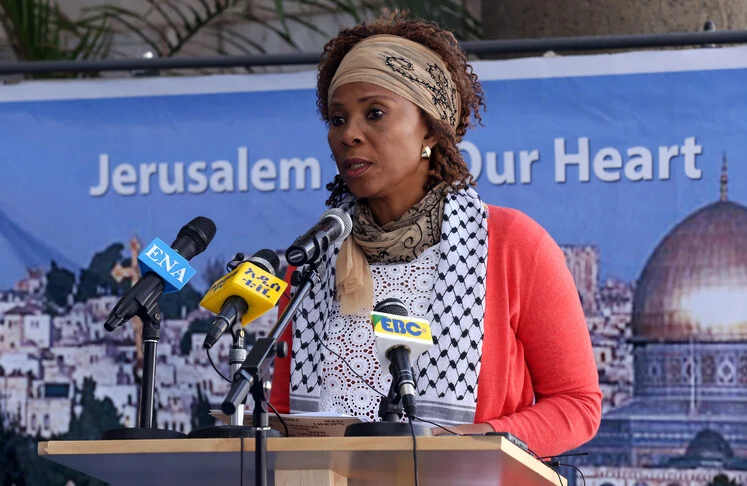
The United Nations Secretary-General, António Guterres, has announced the appointment of renowned Nigerian development expert and diplomat, Ahunna Eziakonwa, as his new Special Adviser on Africa, marking another significant milestone for Nigeria’s representation within the global organisation.
The appointment, announced on Friday, places Eziakonwa in one of the most strategic advisory positions within the United Nations system, where she will play a key role in shaping the organisation’s engagement with the African continent and advancing policies aimed at promoting peace, development, economic growth, and regional cooperation.
Eziakonwa succeeds Cristina Duarte of Cabo Verde, who has served in the role with distinction. In a statement issued by the United Nations, Secretary-General Guterres expressed appreciation for Duarte’s contributions and dedicated service to the organisation throughout her tenure.
“The Secretary-General is grateful for her commitment and dedicated service to the Organisation,” the statement noted, while also highlighting Eziakonwa’s extensive experience and proven leadership record across multiple areas of UN operations in Africa.
The appointment has been widely welcomed by development practitioners and policy experts who view Eziakonwa as one of the continent’s most accomplished international civil servants. With nearly three decades of experience within the United Nations system, she brings a wealth of expertise in humanitarian affairs, sustainable development, governance, peacebuilding, and international cooperation.
Currently serving as United Nations Assistant Secretary-General, Assistant Administrator, and Director of the Regional Bureau for Africa at the United Nations Development Programme (UNDP), Eziakonwa has been responsible for overseeing the organisation’s development programmes and strategic interventions across 46 African countries.
In that role, she has led efforts to support governments across the continent in implementing the United Nations Agenda 2030 and its Sustainable Development Goals (SDGs), while also advancing the objectives of the African Union’s Agenda 2063, the continent’s long-term blueprint for inclusive growth and sustainable development.
Since assuming leadership of the Regional Bureau for Africa in 2018, Eziakonwa has played a pivotal role in shaping UNDP’s approach to economic transformation, democratic governance, climate resilience, youth empowerment, and social inclusion across Africa.
Under her guidance, the organisation has expanded partnerships with governments, regional institutions, civil society groups, and private-sector stakeholders to address some of the continent’s most pressing challenges, including poverty, unemployment, inequality, insecurity, and the impacts of climate change.
The United Nations noted that her leadership has significantly contributed to strengthening development cooperation across the continent and improving the effectiveness of UNDP interventions in member states.
Eziakonwa’s career trajectory reflects an exceptional commitment to Africa’s development and stability. Her experience spans virtually every major area of the United Nations’ work on the continent, making her one of the most experienced African professionals within the multilateral system.
Over the years, she has served as United Nations Resident Coordinator, Humanitarian Coordinator, and UNDP Resident Representative in Ethiopia, Uganda, and Lesotho. These positions required her to coordinate complex development programmes, manage humanitarian responses during emergencies, and facilitate political engagement between governments, development partners, and international institutions.
Her tenure in these countries earned her recognition as a skilled diplomat and development strategist capable of navigating challenging political and humanitarian environments while maintaining a focus on sustainable development outcomes.
Before taking up her current position at UNDP, Eziakonwa served as Chief of the Africa Section at the United Nations Office for the Coordination of Humanitarian Affairs (UNOCHA) in New York. In that capacity, she oversaw humanitarian operations in 15 African countries, coordinating responses to conflicts, natural disasters, and humanitarian crises affecting millions of people across the continent.
Her humanitarian leadership was particularly valuable during periods of instability and emergency response, where effective coordination between governments, humanitarian agencies, and development partners was essential for saving lives and supporting vulnerable populations.
Eziakonwa also held senior leadership roles in Liberia and Sierra Leone during critical periods in the histories of both nations. Her work in these countries contributed to efforts aimed at post-conflict recovery, institution-building, and sustainable development following years of instability and civil unrest.
At the United Nations Headquarters, she further expanded her expertise by working in several departments responsible for peacekeeping, political affairs, and public information. Through these assignments, she contributed to policy development, political analysis, strategic communications, and peacebuilding initiatives relating to UN operations across Africa.
These experiences provided her with a comprehensive understanding of the political, economic, and security dynamics shaping the continent and strengthened her ability to bridge development, humanitarian, and peacebuilding efforts.
Prior to joining the United Nations, Eziakonwa worked with several African civil society organisations, where she developed a strong foundation in grassroots advocacy, community development, and citizen engagement. These early experiences helped shape her people-centred approach to development and governance.
Academically, Eziakonwa possesses an impressive educational background. She holds a Master’s Degree in International Affairs from Columbia University in New York, with a specialization in African economic and political development. She also earned a Bachelor of Arts degree in Pedagogy, English, and Literary Studies from the University of Benin in Nigeria.
Beyond her professional accomplishments, Eziakonwa is widely respected for her multilingual abilities and deep cultural understanding of Africa’s diversity. In addition to her native Igbo and English languages, she speaks fluent Yoruba and has a working knowledge of French, skills that have enhanced her effectiveness in engaging with diverse stakeholders across the continent.
Her appointment as Special Adviser on Africa is expected to further strengthen Africa’s voice within the United Nations and reinforce ongoing efforts to advance sustainable development, peace, and prosperity across the continent. For many Nigerians, the appointment is also a source of national pride, reflecting the growing influence and contributions of Nigerian professionals on the global stage.
As she assumes her new responsibilities, expectations remain high that Eziakonwa will leverage her vast experience and deep understanding of Africa’s challenges and opportunities to support the Secretary-General’s vision for a more peaceful, prosperous, and inclusive continent.