US President Donald Trump has predicted that the ongoing war between the United States and Iran will end “immediately” after the November midterm elections, while accusing Tehran of attempting to influence the outcome of the vote.
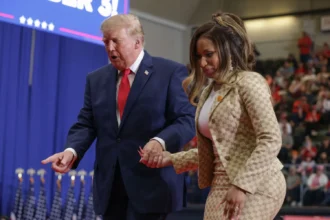
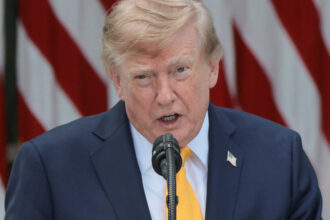
Trump made the remarks on Wednesday, September 9, while speaking to reporters at Joint Base Andrews before departing for the Republican midterm convention in Dallas.
The US president suggested that Iranian authorities were seeking to prolong the conflict in an effort to shape the political environment ahead of the elections and influence the composition of the next US Congress.
“I think the war is going to end immediately after the election,” Trump said, arguing that Iran was no longer in a position to sustain the conflict.
According to Trump, Iranian leaders were desperate to affect the election by encouraging Americans to elect what he described as a “weak group of people” who would subsequently allow Tehran greater freedom to pursue its nuclear ambitions.
“They can’t hold out any longer,” Trump said. “They’re desperate to try and affect the election so that we can get a nice, weak group of people in there, and leave them alone and let them have their nuclear weapon.”
The comments came amid renewed military tensions between Washington and Tehran, with reports of continued attacks involving commercial shipping and military vessels around the strategically important Strait of Hormuz.
Trump was also asked whether his administration was considering a return to formal diplomatic negotiations with Iran as a possible means of ending the conflict.
While he did not completely rule out negotiations, the president indicated that diplomacy was not currently a major priority for his administration.
“We’re not looking for it, to be honest,” Trump said.
He recalled that reaching a diplomatic agreement with Tehran had initially been one of his objectives but suggested that the situation had changed substantially since the conflict escalated.
“Originally, I wanted to make a deal. We’re so far down the line. We have very little country left,” he said.
Trump nevertheless acknowledged that negotiations could still take place under certain circumstances.
“Yes, a negotiation could possibly happen, but it’s not something we’re looking at,” he added.
His comments point to a continued reliance on military pressure rather than an immediate diplomatic initiative, despite the growing international concern over the conflict and its potential consequences for global energy supplies.
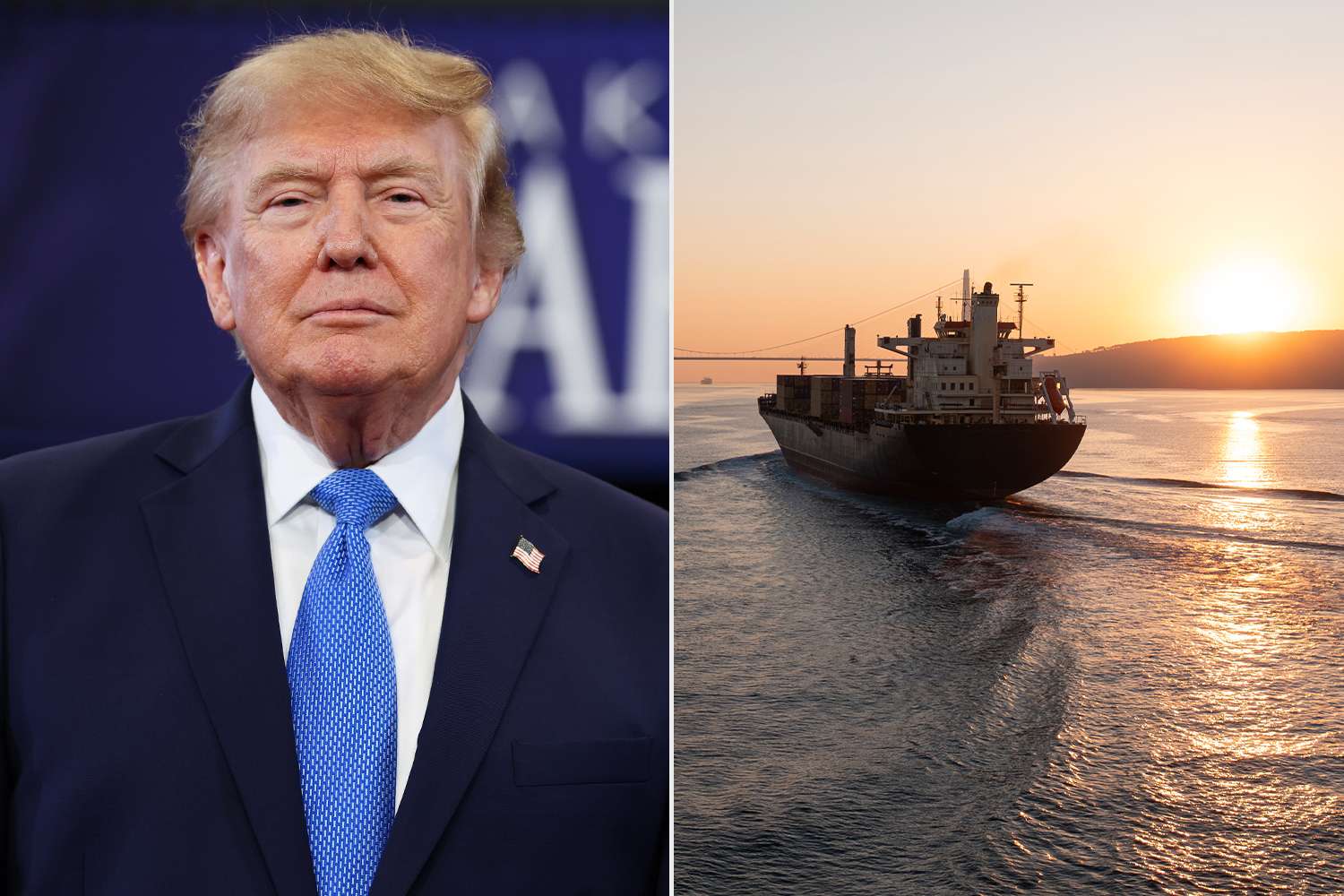
The latest escalation has also focused attention on the Strait of Hormuz, one of the world’s most important maritime routes for the transportation of crude oil and other energy products.
Reports from Tehran claimed that Iranian forces had targeted 10 commercial and naval vessels near the waterway, including two US ships and eight oil tankers.
The reported attacks were described as retaliation for earlier US military action against Iranian oil tankers.
Trump, however, presented the latest developments as part of a broader American counter-operation against Iranian military and maritime assets.
“We’ve knocked out nine of their ships,” he said.
He added that the attacks were being driven by American military action and warned that further operations could follow.
“I would say that the attacks are caused by us, and you’re going to see a lot more,” Trump said.
The escalation has raised concerns about the possibility of a wider conflict, particularly if attacks on commercial vessels continue or if military confrontations expand beyond the immediate areas of operation.
Any sustained disruption around the Strait of Hormuz could have consequences far beyond the Middle East because the waterway is a major artery for international energy supplies.
The conflict is also unfolding against a difficult domestic political backdrop for the Trump administration.
With the November midterm elections approaching, the president and his Republican allies are facing increased scrutiny over the economic consequences of the war, particularly rising energy prices and their potential impact on American households and businesses.
Recent polling cited by Reuters/Ipsos put Trump’s approval rating at 33 percent, reflecting significant public dissatisfaction as Americans contend with economic and geopolitical pressures.
The war has consequently become an important political issue ahead of the elections, with voters expected to assess the administration’s handling of the conflict alongside other domestic concerns.
Trump’s claim that Iran is attempting to influence the US elections adds another dimension to the political dispute.
His argument suggests that Washington views Tehran’s military strategy not only as a foreign policy challenge but also as an issue with potential implications for American domestic politics.
Iran has yet to accept Trump’s characterisation of its actions as an attempt to manipulate the US electoral process.
Meanwhile, the continuing military confrontation has left the prospects for a negotiated settlement uncertain.
Trump’s latest comments indicate that, although he remains open to the possibility of talks, his administration is currently prioritising military pressure over direct negotiations.
The president’s prediction that the conflict could end immediately after the midterm elections also leaves unanswered questions about what circumstances would bring about such an outcome and whether either side is prepared to de-escalate.
For Iran, the conflict has involved continued confrontation with the United States amid pressure over its military and nuclear programmes. For Washington, the stated objective remains preventing Tehran from acquiring capabilities that the US considers a serious security threat.
As military exchanges continue, the possibility of further attacks on shipping remains a major concern for international markets and governments.
A prolonged confrontation could place additional pressure on global oil prices, increase transportation costs and intensify inflationary pressures in economies already dealing with elevated energy costs.
Trump’s remarks therefore come at a critical moment, as the United States approaches a consequential midterm election and the conflict with Iran continues to generate both geopolitical and economic uncertainty.
While the president predicts that the war will end immediately after the election, his administration has not indicated that formal negotiations are imminent.
For now, the conflict remains defined by military confrontation, heightened tensions around the Strait of Hormuz and uncertainty over whether Washington and Tehran can find a path towards a lasting ceasefire.