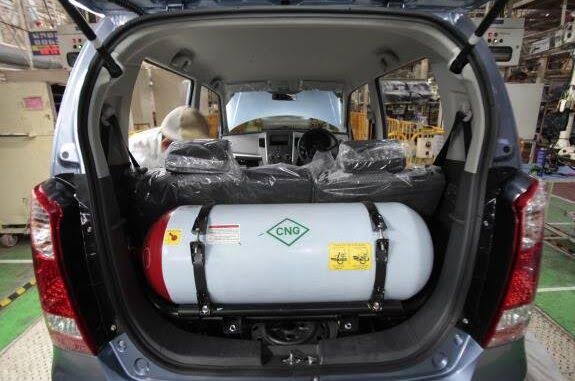
President Bola Ahmed Tinubu has announced a fresh collaboration between the Federal Government and state governors aimed at reducing transportation costs nationwide, with a particular emphasis on the use of Compressed Natural Gas (CNG) and electric vehicles.
The President said the initiative was designed to ensure that the benefits of lower fuel costs translate directly into cheaper transport fares for Nigerians, especially those who depend on public transportation for their daily movement.
Tinubu disclosed this in a statement issued from the Presidential Villa, Abuja, on Thursday, August 27, 2026, following discussions with members of the Nigeria Governors’ Forum.
According to the President, the governors had independently agreed to take immediate steps to reduce transportation costs within their respective states. He said the initiative would focus on exploiting the cost advantages associated with CNG-powered and electric vehicles.
“I am pleased with my discussion with the Governors’ Forum this afternoon. The Governors have, on their own initiative, resolved to take immediate measures to bring down the cost of transportation in their states, with a strong focus on leveraging the cost benefits of CNG and electric vehicles,” Tinubu stated.
The President said the Federal Government had already committed substantial resources to supporting Nigeria’s transition from petrol-powered transportation to cleaner and cheaper energy alternatives.
He pointed to the Presidential CNG Initiative as one of the major components of the administration’s energy transition programme, revealing that more than 120,000 vehicles had so far been converted to CNG nationwide.
He added that more than 100,000 additional conversion kits were currently being processed, while the government was continuing to expand conversion centres and CNG refuelling infrastructure across the country.
Tinubu said the government’s intervention was intended not only to reduce dependence on petrol but also to lower the operating costs of transportation and, ultimately, ease the financial burden on commuters.
He further disclosed that the Federal Government, through the Midstream and Downstream Gas Infrastructure Fund, was financing more than 100 gas-related projects across Nigeria.
The projects include 15 CNG mother stations and 86 daughter stations, which are expected to expand access to CNG and make refuelling more convenient for vehicle owners and transport operators.
The President recalled that in May, he commissioned four projects in Lagos, Abuja and Owerri as part of the broader effort to develop a nationwide CNG network.
Among the projects was a 15-station refuelling network in Lagos, as well as a CNG facility in Abuja capable of serving up to 1,000 cars and tricycles and 50 trucks and buses daily.
Tinubu said the government had also approved a further expansion of the refuelling network.
He disclosed that he had directed the rollout of an additional 500 CNG refuelling stations nationwide, on top of the 500 stations previously ordered by the Midstream and Downstream Gas Infrastructure Fund earlier in the year.
This, he said, would bring the total number of planned CNG stations under the programme to 1,000 across the country.
The President stressed that the transportation sector was critical to the success of the government’s economic reforms because the cost of moving people and goods has a direct impact on household expenses and the prices of essential commodities.
He noted that while the Federal Government controlled major aspects of the energy transition, intra-state transportation was largely under the influence of state governments.
“Intra-state transport is where Nigerians feel the cost most directly, and it is where the states hold the levers,” Tinubu said.
He expressed optimism that the decision by governors to act would help bring the benefits of the CNG programme closer to ordinary Nigerians.
To coordinate the implementation of the initiative, the President said the Federal Government and the states had agreed to establish a joint committee.
According to him, the committee would immediately begin working out measures to ensure that savings generated from cheaper energy sources are reflected in transportation fares.
A major component of the plan is the target date of October 1, 2026.
Tinubu said the government expects Nigerians to begin benefiting from lower transport fares from that date as the CNG and electric vehicle transition gathers momentum.
He explained that vehicles powered by CNG typically spend between 60 and 80 per cent less on fuel than comparable petrol-powered vehicles.
The President therefore insisted that the financial savings enjoyed by transport operators should not remain with the operators alone but should also benefit passengers.
“From October 1, our goal is that Nigerians begin to partake in those savings through lower transport fares,” he said.
He added, “We have agreed that cheaper fuel should result in cheaper fares!”
The announcement comes amid continuing concerns over the high cost of transportation and its contribution to the broader cost-of-living crisis in Nigeria.
Transport costs have become a major consideration for households, workers, students, traders and businesses, while higher logistics expenses have also contributed to increased prices of food and other commodities.
The administration believes that reducing the cost of operating commercial vehicles could have a wider multiplier effect on the economy by lowering the cost of moving people, agricultural produce, manufactured goods and other commodities.
The planned collaboration between the Federal Government and the governors is therefore expected to complement other measures aimed at cushioning the impact of economic reforms on Nigerians.
Tinubu called on all levels of government to work together to ensure that the anticipated benefits of the energy transition reach citizens.
“Each tier of government must keep doing its part and work together for the benefit of every Nigerian,” the President said.
He concluded the statement with the administration’s familiar slogan, “Nigeria First,” underscoring his call for coordinated action by the Federal, state and local governments.
The success of the initiative will ultimately depend on how quickly CNG infrastructure expands, how effectively conversion programmes are implemented and, crucially, whether transport operators pass the resulting savings on to commuters.
For Nigerians facing high transportation costs, the October 1 target represents an important test of whether the government’s investment in alternative fuels can produce tangible relief in their daily lives.