On Tuesday, 24 February, I visited Benin City in Edo State as part of my ongoing commitment to advancing critical sectors of national development — healthcare, education, and poverty reduction. These pillars remain central to building a stable, productive, and equitable society, and our collective progress depends on how deliberately we invest in them.
While in Benin, I paid a visit to the Philomena School of Nursing Sciences, one of the largest nursing institutions in the region. The institution continues to play a vital role in training young Nigerians who will serve in hospitals, clinics, and community health centres across the country. In a nation where the demand for quality healthcare services continues to rise, strengthening nursing education is not optional; it is strategic.
This was not my first time engaging with the school. Over the years, I have consistently visited educational institutions across Nigeria to encourage both staff and students in their pursuit of excellence, particularly in healthcare training. I firmly believe that the foundation of a resilient health system lies in the quality of its human capital. Doctors, nurses, laboratory scientists, and other health professionals must be trained in environments that foster discipline, competence, innovation, and compassion.
Healthcare education requires adequate infrastructure — well-equipped laboratories, modern teaching aids, reliable utilities, and conducive learning spaces. Without these, even the most dedicated students and lecturers are constrained. Recognising this reality, I have continued to support institutions that demonstrate seriousness of purpose and commitment to excellence.
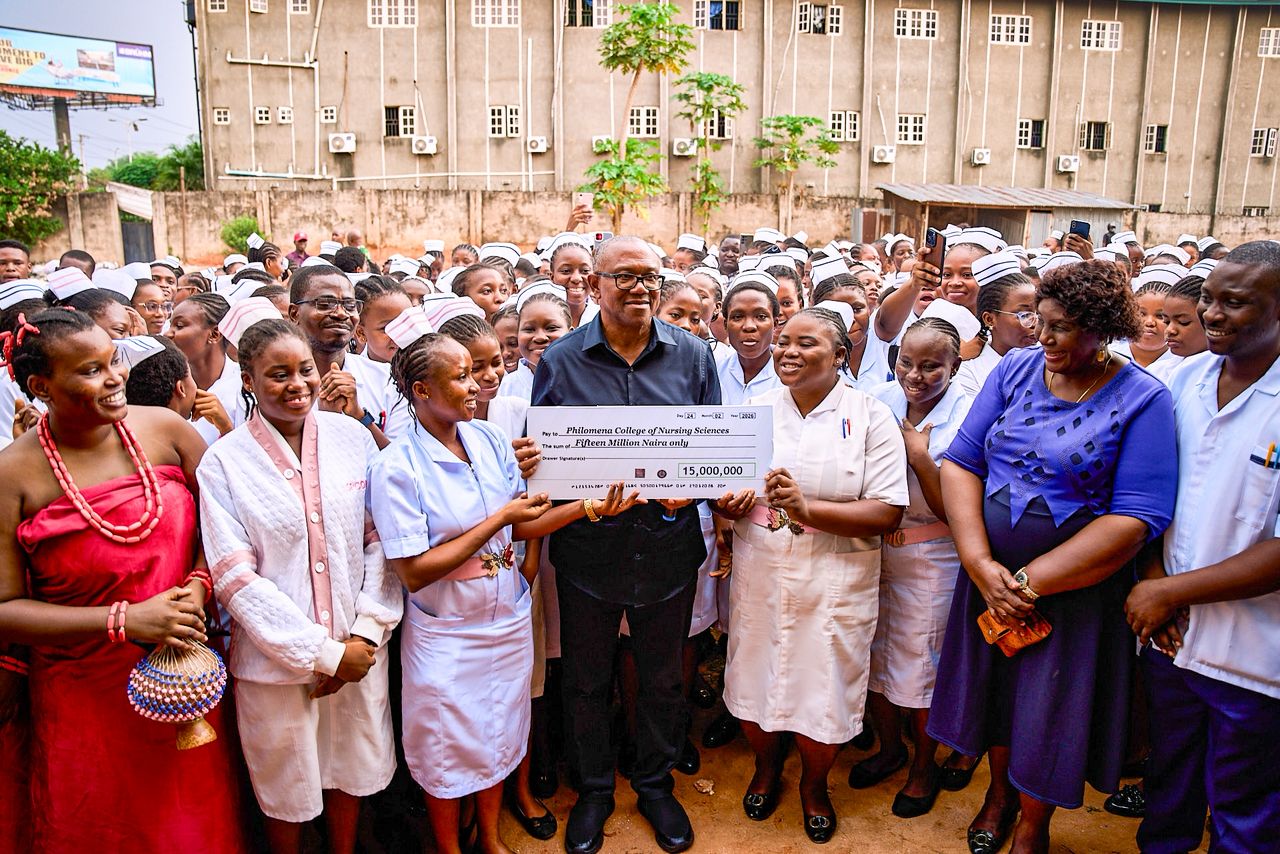
In further demonstration of my commitment to the Philomena School of Nursing Sciences, and in continuation of the support I have provided in the past, I donated the sum of fifteen million naira (₦15,000,000) to assist in improving the school’s facilities. This contribution is aimed at enhancing the learning environment and strengthening the practical training capacity of the institution.
Investment in healthcare training is an investment in national productivity. A healthy population is more economically active, socially stable, and resilient in times of crisis. Moreover, expanding and improving nursing education helps address workforce shortages and reduces the strain on existing medical personnel.
However, individual interventions alone cannot substitute for systemic reform. I therefore call on governments at all levels — federal, state, and local — to prioritise funding and policy frameworks that strengthen critical development sectors. Budgetary allocations must reflect the urgency of our challenges and the strategic importance of these sectors.
I also urge wealthy Nigerians and corporate organisations to recognise their responsibility in nation-building. Philanthropy and private-sector participation should be directed toward the foundational pillars of development: security, healthcare, education, and poverty reduction. These are not abstract ideals; they are measurable drivers of national transformation.
Security ensures social stability and investor confidence. Healthcare preserves human capital. Education equips citizens with knowledge and skills. Poverty reduction fosters dignity and social cohesion. Together, they form the architecture of a just and prosperous society.
If we are serious about transforming Nigeria, we must move from rhetoric to measurable action. By investing in people and institutions, we lay the groundwork for sustainable growth and shared prosperity.
A New Nigeria is Possible.
– PO