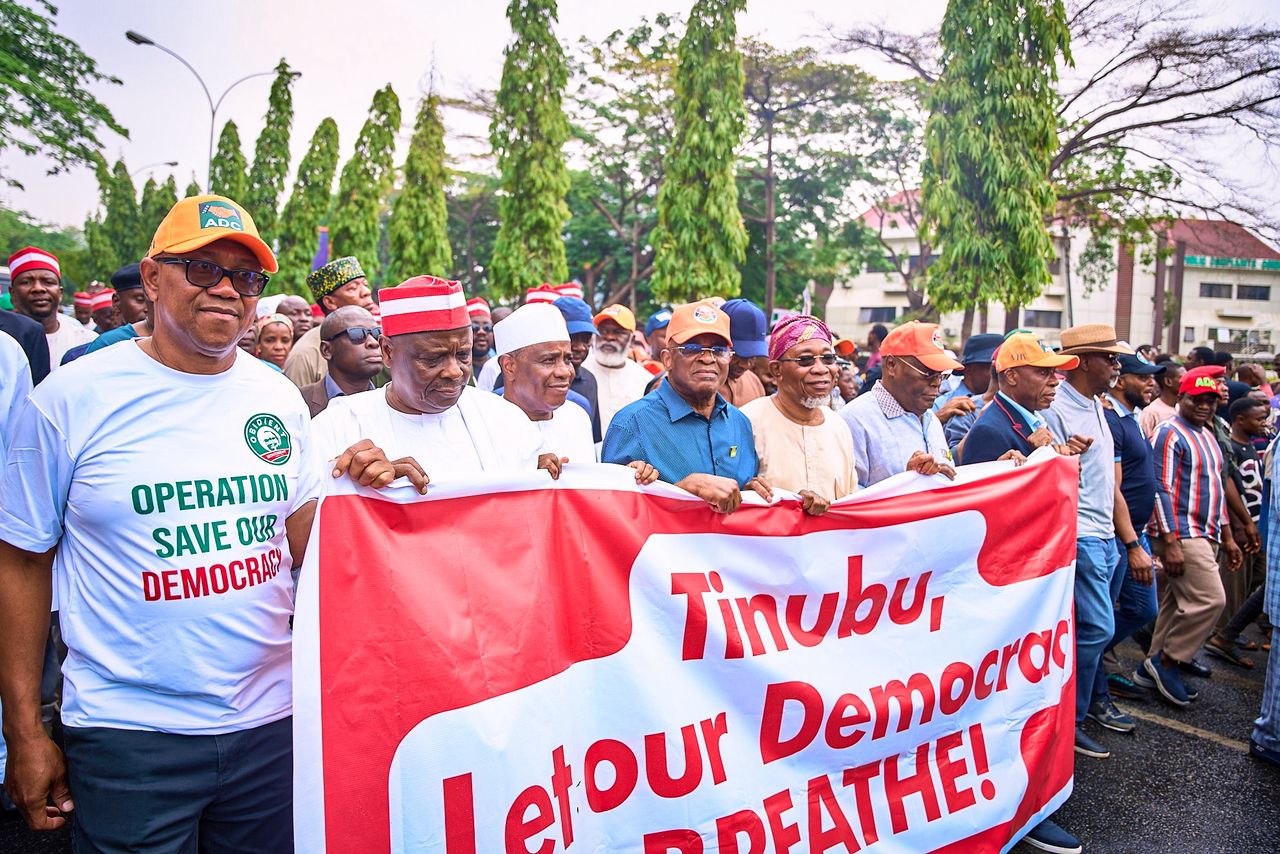
Peter Obi has expressed deep concern over the court’s decision to remand activist and former presidential candidate, Omoyele Sowore, in Kuje Prison, describing the development as troubling and potentially harmful to Nigeria’s democratic evolution.
In a statement reacting to the ruling, Obi noted that while the judiciary remains the constitutionally empowered arbiter of justice, every democratic society must remain vigilant to ensure that state institutions are never perceived to be deployed as instruments for suppressing dissent or narrowing the space for civic participation. According to him, the strength of any democracy lies not in its ability to silence critics, but in its willingness to tolerate, engage, and even protect divergent voices.
He cautioned that the increasing trend of detaining activists, journalists, and government critics under contentious circumstances risks eroding public trust in democratic institutions. Obi stressed that when citizens begin to perceive the state as hostile to opposition voices, it weakens the very foundation upon which constitutional governance is built.
A healthy democracy, he argued, does not survive by muting opposition or criminalising disagreement. Instead, it depends on the consistent protection of fundamental human rights, particularly freedoms of expression, association, and peaceful assembly. These rights, he noted, are not privileges granted at the discretion of the state, but constitutional guarantees that form the backbone of Nigeria’s democratic order.
Obi further observed that Nigeria is already grappling with significant national challenges, including widespread insecurity, economic hardship, inflationary pressures, unemployment, and growing social frustration among citizens. In such a fragile context, he warned that actions perceived as targeting dissenting voices could exacerbate tensions and further strain national cohesion.
He urged that all institutions of state, including the judiciary, should be mindful of the broader social and political environment when handling sensitive cases involving public figures, activists, and journalists. While emphasizing respect for judicial independence, he maintained that decisions should always reflect fairness, proportionality, and a commitment to strengthening public confidence in the justice system.
According to Obi, it is dangerous for any democracy to begin redefining citizen critics, activists, or journalists as enemies of the state. He stressed that such a shift in perception often marks the early stages of democratic backsliding, where legitimate calls for accountability are misconstrued as threats to national stability.
He warned that Nigeria’s current realities demand constructive engagement rather than coercive responses. Economic distress and security challenges, he said, require inclusive dialogue, reform-driven leadership, and a deliberate effort to rebuild trust between government and citizens. Incarcerating individuals who voice dissent, he argued, does not resolve underlying issues; rather, it risks deepening alienation and resentment.
Obi emphasized that nation-building is a collective responsibility that must include all segments of society, including critics and activists who often serve as the conscience of the nation. Their role, he noted, is essential in highlighting governance gaps and pushing for reforms that strengthen democratic accountability.
He called on relevant authorities to ensure strict adherence to the rule of law in handling Sowore’s case and any other similar matters. According to him, due process must be transparently followed, and the constitutional rights of all citizens, including those in opposition to government policies, must be fully protected at all times.
He further urged that security and judicial institutions remain strictly neutral and focused solely on the impartial administration of justice, rather than being influenced by political considerations or public pressure. For Obi, the credibility of these institutions is central to sustaining democracy and maintaining national stability.
Reiterating his broader democratic philosophy, Obi stated that Nigeria cannot aspire to build a “New Nigeria” while simultaneously undermining the very institutions and freedoms that define a democratic society. He stressed that meaningful national transformation requires consistency in upholding justice, fairness, and respect for civil liberties.
He concluded by reaffirming that democracy must be deepened through tolerance, accountability, and respect for constitutional freedoms, not weakened through the suppression of dissenting voices.