
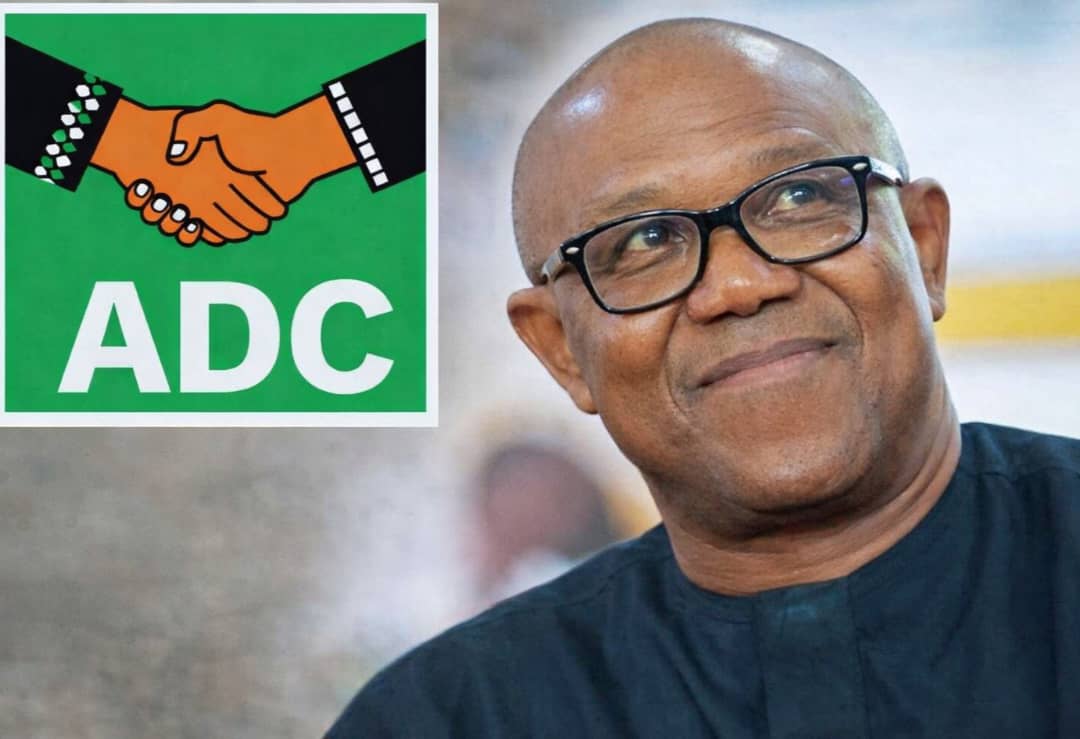
Former presidential candidate of the Labour Party (LP), Peter Obi, has once again publicly declared his intention to contest the 2027 presidential election, explicitly linking grassroots political support in the Abuja Municipal Area Council (AMAC) elections to his broader national ambition.
Obi made the declaration while campaigning in the Federal Capital Territory (FCT) for the African Democratic Congress (ADC) candidate contesting the AMAC poll. Addressing supporters, he urged them to mobilise votes for the party at the local government level, describing such support as central to his own political trajectory ahead of the next general election.
“You see this coming election, support us in AMAC; it will help me,” Obi told the crowd. “Your support in AMAC is critical to our journey. I am involved and contesting the coming election as number one. When I come back, you will see. I assure you.”
The remarks have further fuelled political debate over Obi’s next move following his defection from the Labour Party to the ADC. Since his entry into the party, Obi’s supporters, including members of the influential Obidient movement, have intensified calls for the ADC to adopt him as its presidential flagbearer for the 2027 election.
However, the party leadership has sought to manage expectations and tone down heated rhetoric. ADC spokesperson Bolaji Abdullahi recently cautioned supporters against statements that could divide the party or create internal tensions, stressing that unity and strategic organisation remain critical as the party positions itself ahead of future elections.
Despite these cautions, speculation continues to swirl around possible political alignments involving Obi. One of the most discussed scenarios is a potential Obi–Rabiu Kwankwaso presidential ticket, particularly after Kwankwaso, a former Kano State governor and leader of the New Nigeria Peoples Party (NNPP), declined to join the ruling All Progressives Congress (APC). The possibility of such a ticket has gained traction among sections of the opposition seeking a broad coalition to challenge the APC in 2027.
At the same time, supporters of former Vice President Atiku Abubakar have renewed calls for Obi to consider a vice-presidential role, similar to the arrangement proposed during the 2019 general election. Obi has firmly rejected such suggestions, reiterating that his political focus remains on contesting the presidency as the lead candidate.
Since indicating his intention to return to the ballot, Obi has consistently maintained that he would serve only a single term if elected. He has repeatedly assured supporters that he would not spend “a day beyond four years in office,” presenting the pledge as part of his commitment to leadership renewal and political accountability.
Beyond electoral mobilisation, Obi has also continued to position himself as a vocal critic of the current administration. In a post shared on his official X (formerly Twitter) account on Sunday, he painted a bleak picture of the country’s condition under the heading “A Distressing January for Nigeria.”
In the statement, Obi criticised President Bola Tinubu’s travel schedule, arguing that it reflected misplaced priorities at a time of deep national challenges. He noted that while leaders in other countries typically focus on domestic governance at the beginning of the year, Nigeria’s president spent much of January outside the country.
“While leaders in other nations prioritise domestic governance in January, Nigeria’s president prioritises international engagements over pressing national issues,” Obi wrote. He added that the president spent 23 days abroad across two trips, beginning the year outside Nigeria, returning on January 17, and departing again less than ten days later on January 26 for Türkiye, where he remained as of January 31.
Obi questioned the urgency of these trips, asking what national matters consistently warranted the president’s absence. He also suggested that when the president does return, it is often for partisan political activities rather than governance. According to him, the president appears to return mainly to “welcome defectors into the APC before he jets off again.”
The former Anambra State governor also highlighted worsening insecurity across the country, citing numerous killings and a surge in kidnappings and abductions. He said the victims included children, pregnant women, and nursing mothers, with abductors demanding large ransoms.
He further noted that insecurity has prevented farmers from returning to their farmlands, aggravating food shortages and deepening rural poverty. According to Obi, the persistent violence has not only threatened lives but also undermined food security and economic stability.
Education featured prominently in his critique. Obi described education as a cornerstone of national development but lamented that millions of Nigerian children remain out of school. He said that even those enrolled are frequently unable to attend due to insecurity and repeated industrial actions by teachers.
He described the situation in the Federal Capital Territory as particularly troubling. “This is especially tragic in Abuja, the seat of government, where schools remain shuttered,” Obi wrote. He contrasted the closure of schools with what he described as wasteful public spending on projects such as the renovation of a conference centre for the president and the construction of bus terminals.
According to him, the contrast raises serious questions about whether political leaders genuinely understand the importance of education to national progress.
Obi also drew attention to Nigeria’s persistent electricity crisis, pointing out that the national power grid collapsed twice in January alone. He said the repeated failures underscored the fragility of the country’s infrastructure and the absence of effective solutions.
In his concluding remarks, Obi said the cumulative effect of insecurity, economic hardship, failing infrastructure, and social dislocation presents a grim picture of the country. He accused much of the political class of prioritising power struggles and election calculations over addressing urgent national challenges.
“The collective impact of these events paints a grim portrait of a nation grappling simultaneously with insecurity, economic distress, failing infrastructure, and profound social upheaval,” he wrote. He added that instead of confronting these challenges directly, many political actors appear more focused on political rallies and defections.
Obi singled out the ruling APC, accusing it of concentrating on consolidating political power rather than engaging with failing institutions or addressing the daily struggles of Nigerians. He concluded with his now-familiar refrain, expressing optimism that “a new Nigeria is POssible.”
As political activities ahead of 2027 gradually intensify, Obi’s renewed declaration, coupled with his sustained criticism of the federal government, signals his intention to remain a central figure in Nigeria’s opposition politics and a key contender in the next presidential race.


One Comment
We are with Mr. Peter Obi all the way.
May God almighty continue to sustain him and all of us who look forward to a better society for all in Jesus Christ’s mighty name, Amen.