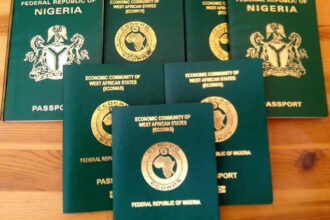
Nigerians spent more than N50 billion on applications for United States non-immigrant visas between 2023 and 2024, even as the number of visas granted declined significantly amid stricter immigration policies and heightened scrutiny of applicants by American authorities.
An analysis based on data from the United States Department of State and compiled by Intelpoint shows that a total of 201,200 non-immigrant visas were issued to Nigerian citizens during the two-year period. With the standard visa application fee standing at $185 per applicant, Nigerians collectively paid approximately $37.2 million in visa fees. At an average exchange rate of N1,360 to the dollar during the period, this translates to more than N50.7 billion spent on visa applications.
The figures highlight the enduring appeal of the United States as a destination for Nigerians despite growing difficulties in obtaining travel approval and increasing restrictions introduced by Washington in recent years.
Data from the report indicate that visa approvals fell sharply between 2023 and 2024. In 2023, a total of 113,900 non-immigrant visas were issued to Nigerians. However, that figure dropped to 87,300 in 2024, representing a decline of approximately 23 percent and a reduction of 26,600 visas within a single year.
Although updated figures for 2025 were not available at the time of reporting, industry experts and travel operators suggest that approval rates have continued to decline as U.S. immigration authorities implement tougher screening measures and more restrictive visa policies.
Business and tourism travel remained the dominant category of approved visas issued to Nigerians in 2024. According to the data, B1/B2 visas accounted for about 83 percent of all non-immigrant visas granted during the year. These visas are commonly used for business trips, tourism, family visits, and short-term travel purposes.
Student visas, classified under the F1 category, represented roughly seven percent of all approvals, reflecting the continued interest of Nigerian students in pursuing education opportunities in the United States. Exchange visitor visas, known as J1 visas, alongside other temporary travel categories, accounted for the remaining share of approvals.
Despite the decline in approvals, Nigeria remained one of the largest contributors to U.S. visa demand globally. The country accounted for approximately 0.8 percent of all non-immigrant visas issued worldwide in 2024, underscoring the strong desire among Nigerians to travel abroad for education, business, tourism, and family-related purposes.
Travel industry stakeholders argue that the appetite for international travel among Nigerians extends beyond economic considerations and reflects a deeply rooted cultural tendency toward mobility and exploration.
Former President of the National Association of Nigeria Travel Agencies, Susan Akporiaye, believes that the motivations driving Nigerians to travel are often misunderstood.
According to her, while economic factors play a role, Nigerians have historically shown a strong inclination toward movement and international engagement.
“People often assume it is purely because of economic conditions, but I see it differently,” Akporiaye explained. “Nigerians are naturally adventurous people. They enjoy travelling, exploring new places, and connecting with opportunities across the world. In many ways, we are like the Chinese of Africa because of our willingness to move and establish ourselves globally.”
She dismissed the widespread perception that most Nigerians who travel abroad fail to return home.
“There is a lot of emphasis on those who remain abroad, but the reality is that many more Nigerians travel and return than those who stay permanently. The percentage of people who do not return is relatively small compared to the number of travellers who come back home after their trips,” she said.
However, obtaining a U.S. visa has become increasingly difficult since Donald Trump returned to the White House in January 2025 and began implementing stricter immigration policies.
A series of changes introduced by the U.S. government have significantly altered the visa application process for Nigerians.
One of the most notable changes came in July 2025 when the U.S. Department of State announced that most non-immigrant and non-diplomatic visas issued to Nigerian citizens would be limited to single-entry permits valid for only three months. While existing visas remained unaffected, the new policy significantly reduced the flexibility previously enjoyed by Nigerian travellers.
The restrictions tightened further in August 2025 when visa applicants were required to disclose all social media usernames and accounts used during the previous five years as part of the DS-160 application process. U.S. authorities warned that failure to disclose social media activity could result in visa denial or future ineligibility.
Akporiaye noted that despite these developments, Nigerians continue to seek opportunities to travel abroad for a wide range of personal and social reasons.
“Nigerians travel for weddings, birthdays, conferences, religious events, and family gatherings,” she said. “This is not just about wealthy individuals. Ordinary Nigerians from different walks of life are constantly looking for opportunities to travel.”
Nevertheless, she acknowledged that the United States has become a less attractive destination compared to previous years due to increasingly stringent visa requirements and operational changes affecting applicants.
“The demand for U.S. travel has reduced compared to before,” she explained. “There are additional requirements, operational adjustments at the embassy, and concerns about visa cancellations or deportations. These factors naturally make people more cautious.”
Additional restrictions emerged in December 2025 when the U.S. Mission in Nigeria announced that Washington had expanded travel limitations affecting Nigeria and five other countries. The measures became effective from January 1, 2026, further increasing uncertainty among prospective travellers.
Travel consultant and executive at Travel and Tours Limited, Maureen Chimaobi, said the challenges faced by Nigerian applicants have intensified considerably over the past year.
According to her, first-time applicants now face particularly difficult odds when seeking approval.
“Last year marked a major shift,” Chimaobi said. “For first-time travellers especially, obtaining a U.S. visa has become extremely difficult. Even when applicants meet the requirements and complete the necessary procedures, approval is far from guaranteed.”
She noted that applicants continue to pay visa fees, schedule appointments, attend interviews, and provide documentation, only to encounter high rejection rates.
“You pay the application fee, book an appointment, prepare your documents, attend the interview, and still may not receive the visa,” she explained. “That uncertainty has become one of the biggest concerns among applicants.”
According to industry observers, the trend is influencing the travel decisions of many Nigerians, who are increasingly considering alternative destinations with more accessible visa processes.
Chimaobi believes that several countries still offer relatively favourable approval prospects, provided applicants can demonstrate financial stability and submit strong supporting documentation.
“In many countries, applicants still have a 70 to 80 percent chance of getting approval if their documents are complete and their financial records are convincing,” she said.
She identified the United Kingdom as one destination that continues to attract Nigerian travellers, although British authorities have also become more rigorous in their assessments.
At the same time, countries within the Schengen zone, including France, Germany, and other European nations, have become more selective than they were in previous years.
“France used to be considered one of the easier options, but that has changed,” Chimaobi noted. “Today, many Schengen countries have become increasingly cautious, especially when dealing with first-time travellers.”
As visa approvals continue to decline and immigration policies become stricter, Nigerians remain willing to spend billions of naira pursuing travel opportunities abroad. Industry experts say the trend reflects both the enduring appeal of international mobility and the determination of many Nigerians to seek educational, business, professional, and personal opportunities beyond the country’s borders.
However, they warn that unless approval rates improve and travel restrictions ease, more applicants may continue shifting their attention to destinations perceived as offering greater accessibility and a higher likelihood of visa success.