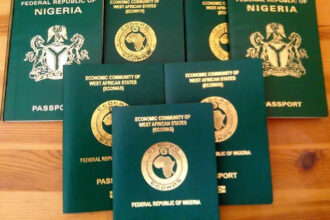
Nigerian passport holders can apply for electronic visas to travel to 54 countries and territories, according to a 2026 global passport evaluation by travel platform eVisas.io.
The assessment identified several destinations across Africa, Asia, the Middle East, the Caribbean and other regions where Nigerians can complete the visa application process electronically before travelling.
Among the destinations offering eVisas to Nigerian passport holders are the United Arab Emirates, South Africa, Singapore, Qatar, Malaysia, Mauritius, Rwanda and Thailand.
An electronic visa, commonly known as an eVisa, allows travellers to apply for travel authorisation online rather than submitting a traditional paper-based visa application through an embassy or consulate.
The platform explained that Nigerians also enjoy visa-free access to 26 destinations, while five other countries offer visas on arrival.
“For the remaining 125 countries, a traditional visa application is required before departure,” the platform stated.
The findings provide Nigerian travellers with a clearer picture of the different entry requirements they may encounter when planning international trips in 2026.
The 54 destinations identified as offering eVisas to Nigerians are spread across different regions of the world.
In Africa, the destinations include Angola, Burundi, Botswana, the Democratic Republic of Congo, Djibouti, Ethiopia, Gabon, Equatorial Guinea, Madagascar, Malawi, Mauritius, Namibia, Rwanda, Sierra Leone, South Africa, South Sudan, São Tomé and Príncipe, Uganda and Zambia.
Nigerian travellers can also apply electronically for visas to several Asian and Middle Eastern destinations. These include the United Arab Emirates, Bahrain, Bhutan, Cambodia, Hong Kong, Iran, Iraq, Kazakhstan, Kyrgyzstan, Lebanon, Malaysia, Maldives, Pakistan, Qatar, Singapore, Tajikistan, Thailand, Timor-Leste and Vietnam.
Other destinations on the list include Albania, Antigua and Barbuda, Anguilla, the Bahamas, Colombia, Cuba, Ecuador, Guyana, Moldova, Nicaragua, Papua New Guinea, Palau, Samoa, Suriname, Trinidad and Tobago and Tuvalu.
The availability of eVisas can simplify the travel planning process because applicants can submit relevant information and supporting documents electronically without necessarily making an initial physical visit to a diplomatic mission.
However, an eVisa does not necessarily mean automatic entry into a country. Travellers are generally expected to satisfy the specific conditions attached to the visa, including passport validity, purpose of travel, financial or accommodation requirements and other immigration conditions imposed by the destination country.
The evaluation therefore underscores the importance of Nigerian travellers checking the latest entry requirements before making travel arrangements, as visa policies and application procedures can change.
For Nigerians planning international travel, the distinction between visa-free entry, visa on arrival and an eVisa remains important. Visa-free destinations generally do not require travellers to obtain a visa before departure, although other entry conditions may apply. A visa on arrival is obtained after reaching the destination, while an eVisa must typically be applied for and approved before travel.
The 2026 assessment shows that although Nigerian passport holders still require traditional visas for a substantial number of countries, electronic visa arrangements provide an alternative route to travel for dozens of destinations.
With 54 countries and territories offering eVisa facilities, Nigerian travellers have a range of options for international travel without relying exclusively on conventional embassy-based visa applications.
Nevertheless, prospective travellers are advised to verify the specific requirements of their destination before booking flights, as approval of an eVisa remains subject to the immigration rules and assessment procedures of the individual country or territory.