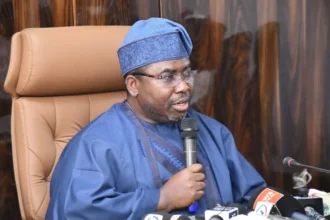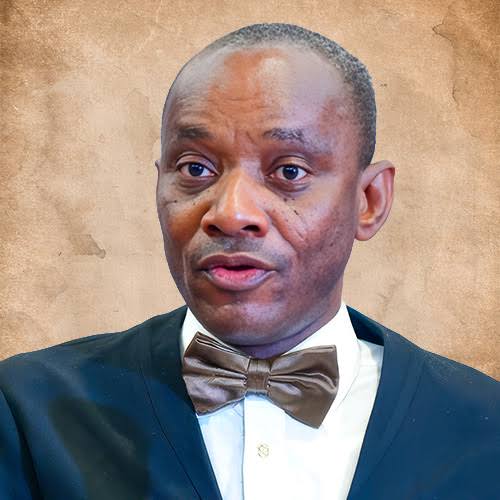
The Director of the Abuja School of Social and Political Thought, Sam Amadi, has stirred political debate after suggesting that many Igbos are more receptive to former Anambra State Governor and Nigeria Democratic Congress (NDC) presidential candidate Peter Obi than the incumbent governor, Chukwuma Soludo.
Amadi made the comment on Sunday in a post on X, amid an escalating disagreement between Soludo and Obi over the financial position of Anambra State when the former governor left office.
“At this moment the Igbos have no ear for a person called Soludo, even he has 100 degrees. Their ears are only for @PeterObi. Plain fact. The way he is going deepens the trust with PO,” Amadi wrote.
The statement was made in the context of the growing public exchange between the two former governors over loans, savings, unpaid obligations and other financial liabilities associated with previous administrations in Anambra.
The dispute intensified after the Anambra State Government challenged Obi’s repeated claim that he left office in 2014 without outstanding debts or unpaid financial obligations.
Obi has maintained that he did not leave behind unpaid salaries, pensions, gratuities or obligations to contractors whose projects had been completed and certified. He has also pointed to funds and assets he said were left for the succeeding administration.
The Soludo administration has disputed that account. The state government recently released what it described as public debt records relating to loans obtained during Obi’s administration, arguing that some of the obligations remained outstanding.
According to the figures presented by the Anambra State Government, eight external loan facilities associated with projects undertaken during the period were still outstanding, with the balance valued at about N127.4 billion as of June 30, 2026, based on the official exchange rate.
The state government has also disputed Obi’s position on salary, pension and gratuity arrears.
Commissioner for Information and Value Reorientation, Law Mefor, said the Soludo administration had cleared about N22 billion in inherited gratuity arrears owed to retired state and local government employees and teachers.
The government has further maintained that some legacy liabilities linked to previous administrations remained unresolved.
Obi, however, has rejected the allegations and challenged the Soludo administration to provide evidence supporting its claims. His camp has argued that the figures being cited by the state government require proper context, particularly regarding the nature of multilateral development loans and the financial position recorded during the handover.
The disagreement has consequently developed beyond a technical debate over Anambra’s debt profile, with political implications as the country approaches the 2027 general elections.
Amadi’s intervention has added another dimension to the controversy, particularly because of Obi’s political standing in the South-East and his emergence as the NDC presidential candidate.
While Amadi presented his view as a statement about the political mood among Igbos, his assertion represents his own assessment and should not be treated as evidence of the views of the entire Igbo population.
The continuing dispute between Obi and Soludo is expected to remain a subject of political discussion as both sides present competing accounts of Anambra’s financial records and governance legacy.
The controversy also highlights the broader political debate over how public debts, inherited liabilities, savings and development projects should be assessed when one administration hands over power to another.
The rewrite keeps Amadi’s statement clearly attributed while presenting the competing positions of Obi and the Anambra State Government without treating either side’s disputed claims as independently established. Current reporting on the debt dispute supports the figures and positions referenced above.