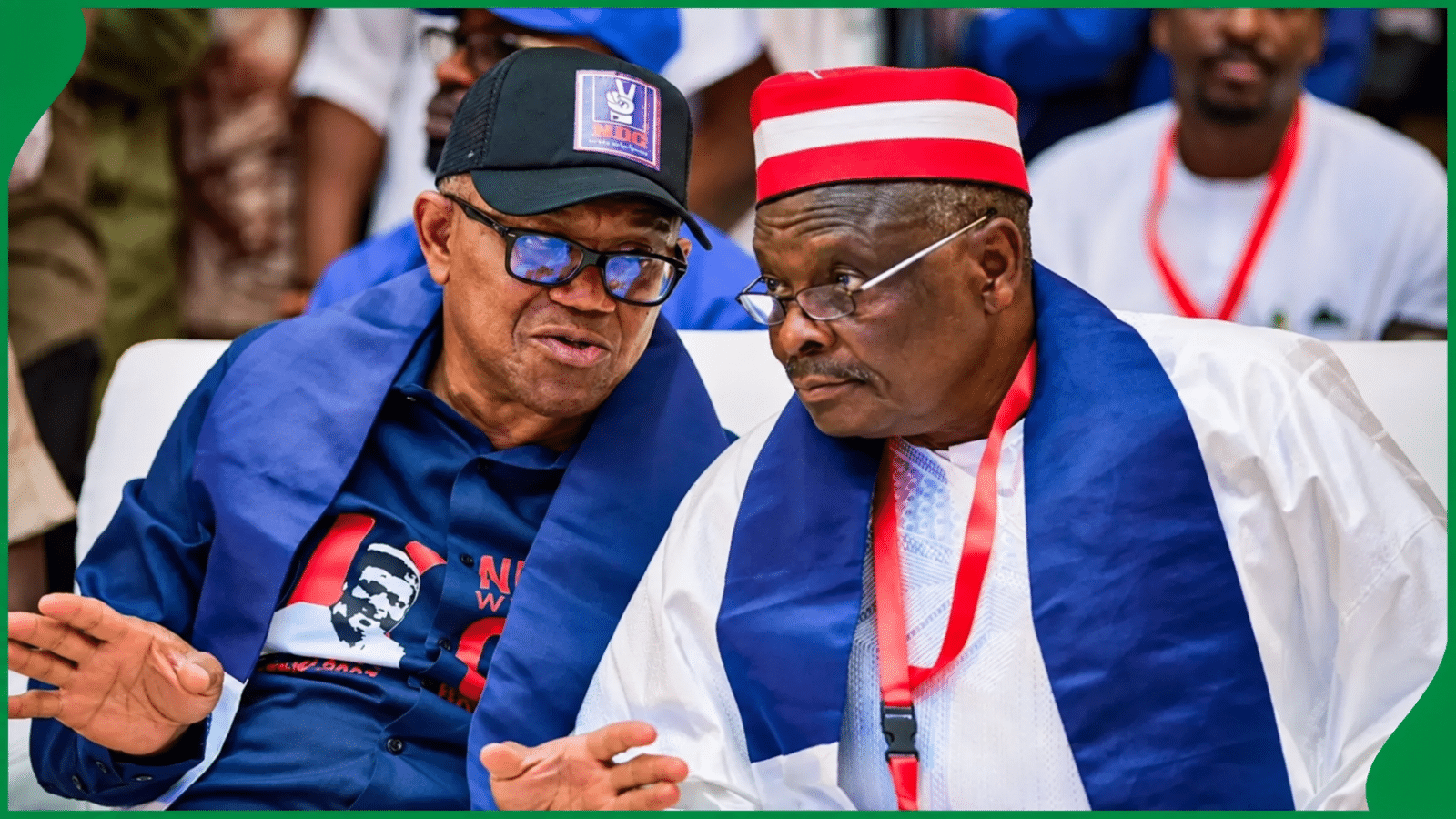
The Obi-Kwankwaso Movement, popularly known as the OK Movement, has demanded an immediate apology from the Nigeria Democratic Congress (NDC) over comments by the party’s National Chairman, Senator Moses Cleopas, regarding the movement’s recently unveiled 59-member Presidential Campaign Council.
The movement also rejected what it described as attempts to intimidate it, insisting that it remained an independent political organisation with its own leadership, structure and internal processes.
The National Secretary of the OK Movement, Saadatu Sani, made the position known in a statement issued in Abuja on Sunday.
The dispute followed the movement’s unveiling of the 59-member campaign council on Thursday as part of its mobilisation efforts for the NDC presidential candidate, Peter Obi, and his running mate, Rabiu Kwankwaso, ahead of the 2027 general elections.
The council comprises zonal and state coordinators as well as directors responsible for areas including mobilisation, women’s affairs, strategy and planning, security and intelligence, legal affairs, information technology and administration. John Ughulu, the movement’s Director-General, was named Director-General of the campaign council, while Sani serves as its secretary.
However, the NDC subsequently distanced itself from the structure.
In a statement issued on Saturday, Cleopas said the campaign council did not emanate from the party and urged members of the public and the media to disregard it. He also stated that no individual, candidate or support group was authorised to constitute or announce a campaign structure in the name of the NDC without prior approval from the party’s National Working Committee.
Responding, Sani described the NDC chairman’s position as unfortunate and argued that it reflected what the movement considered to be a misunderstanding of its independent character.
She urged Cleopas to familiarise himself with the party’s constitution and the relationship between the NDC and support organisations before making statements concerning the movement.
“The NDC national chairman is therefore called upon to withdraw the statements considered defamatory and to tender an immediate apology to the OK Movement and to our Director General, Hon. John Ughulu,” she said.
Sani said the movement would not engage in personal attacks or what she described as politics of intimidation and defamation.
She maintained that the OK Movement was established with a broader political objective and would continue to promote the interests and political aspirations of Obi and Kwankwaso.
The group said it recognised the constitutional and statutory authority of political parties within their areas of responsibility. However, it maintained that supporting the NDC’s presidential ticket did not automatically make the movement a subordinate structure of the party.
“We will campaign for the presidential and vice-presidential candidates of the party. We will campaign for candidates of the NDC Party across the country where the movement has resolved to support them,” Sani said.
“But we do not require the personal validation or approval of any individual before exercising our legitimate organisational functions.”
The OK Movement further claimed that it had established a nationwide grassroots network, including an internal database of approximately 2.5 million registered members and coordinators. The figure is a claim by the movement and was not independently verified in the reports reviewed.
Sani also rejected allegations concerning Ughulu’s involvement in the Lagos State primary, saying the movement welcomed the opportunity to place its position on record.
She said the group would continue to defend its members whenever their integrity was questioned while maintaining what she described as a commitment to educating Nigerians rather than engaging in abusive exchanges.
The disagreement has created a public dispute between the party and a support organisation campaigning for its presidential ticket, although both sides have expressed support for Obi and Kwankwaso.
The controversy comes as political organisations intensify preparations for the 2027 general elections and seek to establish nationwide campaign structures.