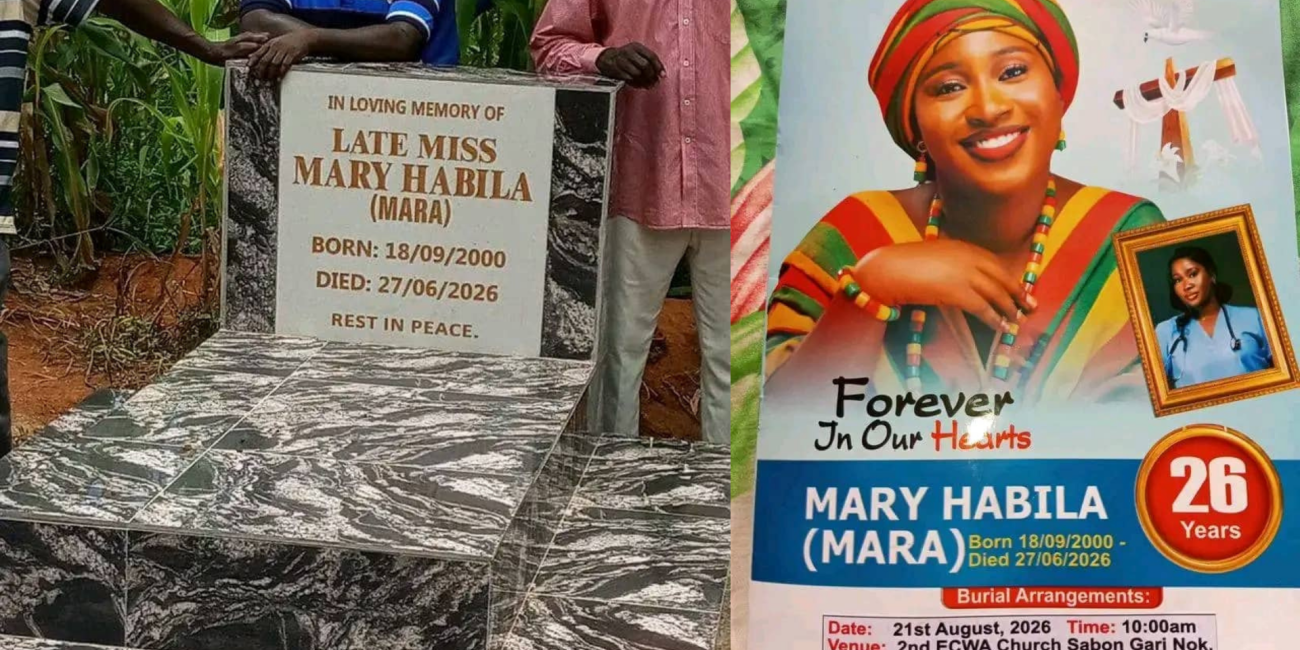
Mary Habila, the 26-year-old woman whose death at the Ebonyi State residence of Minister of Works, Senator David Umahi, triggered public controversy and calls for an independent forensic investigation, has been buried in Nok, Kaduna State.
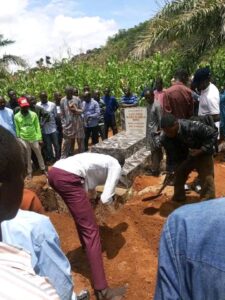
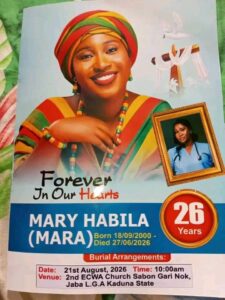
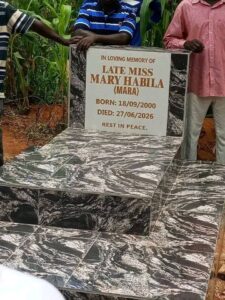
Habila was laid to rest quietly on Friday, August 21, 2026, nearly two months after her death. Her burial came amid an unresolved dispute over whether an autopsy should be conducted to determine the precise circumstances and cause of her death.
The controversy surrounding the case has involved Habila’s family, the minister, the police, legal representatives and the Southern Kaduna Peoples Union (SOKAPU), while civil society groups and concerned Nigerians have continued to demand greater transparency.
Habila died on June 27, 2026, at Umahi’s residence in Uburu, Ohaozara Local Government Area of Ebonyi State. Although Umahi acknowledged that the young woman died at his residence, he has consistently denied any wrongdoing or involvement in her death.
The circumstances surrounding the incident became a subject of intense public interest, particularly following conflicting accounts about Habila’s occupation and reports concerning the condition of her body after her death.
Umahi initially described Habila as a physiotherapist who had been seconded from David Umahi Federal University of Health Sciences to work with the Federal Ministry of Works. However, reports later indicated that she was a Community Health Extension Worker (CHEW).
The Nigeria Society of Physiotherapy reportedly stated that Habila’s name was not on its register of licensed physiotherapists, adding another layer to the controversy surrounding the case.
Public concern increased after photographs purportedly showing blood around Habila’s nose and mouth circulated on social media. Sources cited in reports also alleged that she had suffered injuries consistent with blunt force trauma.
However, those allegations have not been independently established, and there has been no publicly released forensic report confirming the precise cause of her death.
According to reports, sources alleged that Habila was bleeding from her nose and mouth when she was removed from Umahi’s residence. There were also claims that Umahi left the residence shortly after her death and left the handling of the matter to an aide and former Aide-de-Camp, Jonathan Bawado.
Umahi has denied wrongdoing and has maintained that he had no involvement in Habila’s death.
Police Demand Forensic Examination
The Ebonyi State Police Command initially insisted that a forensic autopsy should be conducted before Habila’s remains could be released for burial.
The position reportedly received support from the Ebonyi State Director of Public Prosecutions, J.U. Chukwu, who said the available evidence warranted a post-mortem examination.
According to the DPP, available information indicated that Habila had been found lifeless on the floor of her apartment, naked, with blood stains around her nose and mouth.
The DPP reportedly noted that an autopsy could provide important evidence in determining the cause of the young woman’s sudden and unexplained death.
The family initially resisted the proposed examination and requested that Habila’s remains be released for burial. However, it later agreed to an autopsy under the condition that the investigation be transferred from the Ebonyi State Police Command to the Nigeria Police Force Headquarters in Abuja.
The police subsequently took over the investigation, while Habila’s remains were reportedly transferred to the National Hospital in Abuja, where a forensic examination was expected to take place.
SOKAPU Takes Legal Action
The controversy escalated when SOKAPU instituted a ₦20 billion fundamental rights enforcement suit over Habila’s death.
The suit, reportedly filed at the Kaduna State High Court, named Umahi, the Attorney-General of Ebonyi State, the Ebonyi State Commissioner of Police and Habila’s father, Tanko Habila Wisdom, as defendants.
SOKAPU described Habila’s death as unexplained, controversial and unnatural and called for a fresh police investigation and an independent forensic autopsy.
The organisation also requested that the authorities complete a comprehensive investigation before the deceased’s remains were released for burial.
SOKAPU proposed that independent pathologists from Ahmadu Bello University Teaching Hospital, Zaria, the University College Hospital, Ibadan, and the National Hospital, Abuja, should participate in the examination.
The organisation argued that an independent team would help ensure credibility and reduce concerns about possible conflicts of interest.
The legal battle also produced allegations of intimidation. SOKAPU President Samuel Tabara Kato alleged that Umahi contacted him through WhatsApp after learning about the lawsuit and threatened legal action.
The allegations have not been independently established, while Umahi has continued to deny wrongdoing.
Umahi Defends Himself
Amid the controversy, Umahi said there had been calls for President Bola Ahmed Tinubu to remove him from office because of Habila’s death.
In a statement reported on August 3, the minister said Tinubu instead encouraged him to continue his duties.
Umahi questioned why he should be dismissed simply because an employee died while working with him.
He also described Habila as one of his best workers and said the incident had deeply affected him.
The minister accused some individuals of attempting to exploit the tragedy for political purposes and reiterated that he had no involvement in the circumstances surrounding Habila’s death.
Umahi also said he was willing to see the actual cause of death established through appropriate investigation.
Autopsy Dispute Continues
Although Habila’s family initially opposed an autopsy, it later agreed to the examination subject to conditions concerning the conduct and location of the investigation.
The transfer of the case to Abuja raised expectations that an independent forensic examination would finally provide answers to some of the questions surrounding the death.
However, the anticipated autopsy did not result in a publicly disclosed forensic report before Habila was buried.
A July 17 letter from Umahi’s counsel, Roy O. Nweze, SAN, reportedly sought confirmation from Habila’s father regarding whether he had consented to an autopsy.
The deceased’s lawyer subsequently informed the Inspector-General of Police that her father was willing to permit the examination, provided the investigation remained under the authority of Force Headquarters in Abuja.
Habila’s remains were subsequently reportedly deposited at the National Hospital in Abuja.
Burial Brings New Phase
Habila’s burial in Nok has now brought an end to the prolonged wait by her family for her remains, but it has not necessarily resolved the questions surrounding her death.
The deceased’s father eventually withdrew from the legal proceedings and opposed the proposed autopsy, effectively removing the family’s support for the examination.
As a result, Habila was buried without a publicly disclosed forensic report establishing the precise cause of her death.
The circumstances surrounding her final hours remain the subject of conflicting accounts and allegations.
Umahi has maintained that he did nothing wrong, while those calling for further investigation have argued that an independent forensic examination was necessary to settle the matter.
With Habila now laid to rest, attention is likely to shift to whether the police or other relevant authorities will continue investigating the circumstances of her death and whether any findings will eventually be made public.
For the Habila family and members of the public who have followed the controversy, the central question remains unanswered: what exactly caused the death of the 26-year-old woman at the residence of the Minister of Works?
Until credible investigative findings are released, the circumstances surrounding Mary Habila’s death are likely to remain a matter of public concern.