Founder and President of Dangote Group, Aliko Dangote, has announced plans to construct a ₦550 million student hostel at the Federal University of Technology, Owerri, in Imo State, as part of efforts to support education and address accommodation challenges facing students of the institution.
The billionaire businessman also donated ₦25 million to the students through the university’s Student Union Government, reinforcing his long-standing commitment to youth development and education in Nigeria.
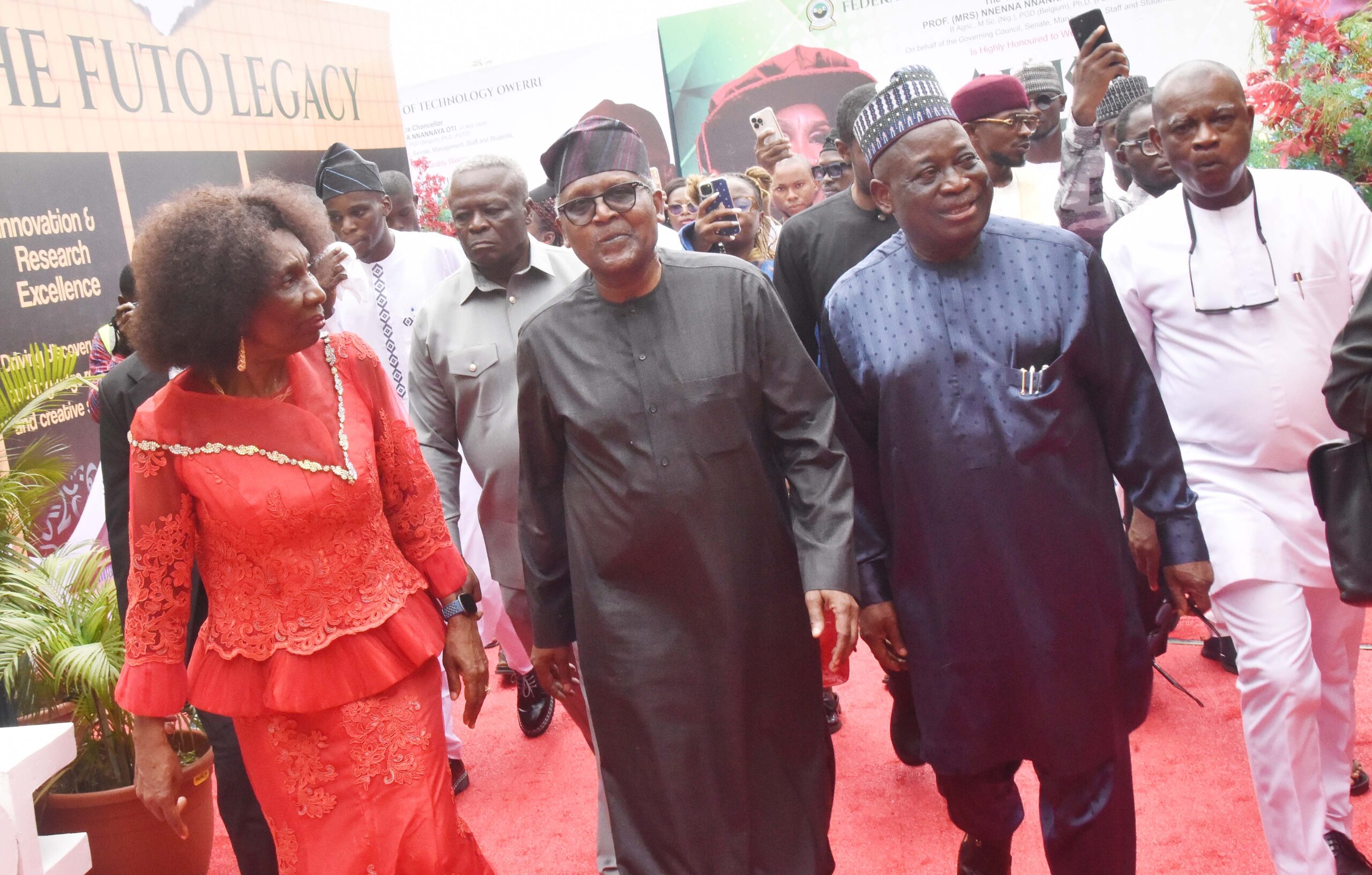
Dangote made the announcement during a visit to the university over the weekend, where he delivered a public lecture titled “Enterprise, Leadership and Service to Humanity.” His visit drew a large audience of students, faculty members, and stakeholders eager to hear insights from one of Africa’s most successful entrepreneurs.
The proposed hostel project, when completed, is expected to significantly ease the pressure on existing student accommodation facilities within the university. Like many higher institutions across Nigeria, FUTO has struggled with limited hostel space, forcing a large number of students to seek housing off-campus under often challenging conditions. Dangote’s intervention is therefore seen as both timely and impactful, with the potential to improve student welfare and enhance the learning environment.
In his lecture, Dangote reflected on his journey into business, recounting how he began as a small-scale trader dealing in commodities such as bagged cement and other imported goods. He explained that while trading proved profitable, he eventually recognised the limitations of an economy heavily dependent on imports. This realisation, he said, led him to adopt a strategy of backward integration—shifting from importation to local production.
According to him, the decision to invest in manufacturing was driven by a desire to create jobs, reduce dependence on foreign goods, and add value to Nigeria’s abundant natural resources. He emphasised that importing finished products has broader economic consequences, describing it as a practice that exports wealth and jobs to other countries while deepening domestic challenges.
“Importing finished goods into Nigeria is, in effect, importing poverty, inflation, and unemployment,” he said. “At the same time, it creates prosperity and opportunities in the countries where those goods are produced. That is why we must rethink our approach and focus on producing what we consume.”
Dangote stressed that industrialisation remains a critical pathway for economic transformation, arguing that sustainable development can only be achieved when countries invest in local production capacity. He urged Nigerian entrepreneurs and investors to take the lead in building industries, rather than waiting for foreign investors to drive development.
He pointed to Asia as a compelling example, noting that many of the continent’s economic success stories were built on strong domestic investment. According to him, countries such as China achieved rapid industrial growth not by relying on foreign capital, but by mobilising local resources and talent.
“Asia was developed by Asians,” he said. “They invested in their own economies and built their own industries. They did not sit back and wait for outsiders to come and do it for them. That is the mindset we must adopt if we are serious about transforming Nigeria and Africa.”
Turning his attention to the students, Dangote expressed confidence in the potential of Nigerian youths, describing them as highly talented, innovative, and capable of competing globally. He cited examples from his own businesses, particularly the Dangote Refinery and Fertiliser plants, where young Nigerian engineers have demonstrated exceptional competence.
He revealed that many of these engineers, after receiving training within his organisation, have been recruited by companies in the Gulf region, where they are treated as expatriates and offered competitive remuneration. This, he said, underscores the global value of Nigerian talent and the need to create opportunities that will retain such skills within the country.
“We face significant economic and social challenges, but we also sit on enormous opportunities,” Dangote said. “We have a young and energetic population, vast natural resources, and an entrepreneurial spirit that is unmatched. If we harness these effectively, we can transform our economy.”
He emphasised the role of entrepreneurship as a powerful tool for national development, noting that when young people are equipped with the right skills, mentorship, and access to funding, they can become job creators rather than job seekers. Such a shift, he argued, would help diversify Nigeria’s economy, reduce unemployment, and drive sustainable growth.
Dangote encouraged the students to cultivate a mindset of innovation and adaptability, urging them to embrace continuous learning in a rapidly changing global environment. He noted that the ability to solve problems and create value is what distinguishes successful individuals and economies.
Drawing further lessons from global trends, he highlighted China’s emphasis on engineering and technical education, which he said has played a major role in positioning the country as a global manufacturing hub. By prioritising skills development in science and engineering, China was able to build a workforce capable of driving industrial expansion.
He urged Nigerian students, particularly those in technical fields, to take their studies seriously and seek opportunities to apply their knowledge in practical ways. According to him, the future belongs to those who can innovate, create, and adapt to new challenges.
The visit and donations by Dangote have been widely praised by members of the university community, who described the gesture as a significant contribution to education and student welfare. The hostel project, in particular, is expected to have a lasting impact, providing safe and affordable accommodation for generations of students.
University officials also commended Dangote for taking time to engage directly with students, noting that his lecture provided valuable insights into entrepreneurship, leadership, and national development.
As Nigeria continues to grapple with economic challenges, including unemployment and industrial underdevelopment, Dangote’s message resonated strongly with his audience. His emphasis on self-reliance, local investment, and youth empowerment reflects a broader call for a shift in mindset—one that prioritises production, innovation, and long-term growth over short-term gains.
For the students of FUTO, the visit was more than just a lecture; it was an opportunity to hear firsthand from a business leader whose journey embodies resilience, vision, and impact. With the promise of improved infrastructure and a renewed call to action, the event is likely to leave a lasting impression on the institution and its students.