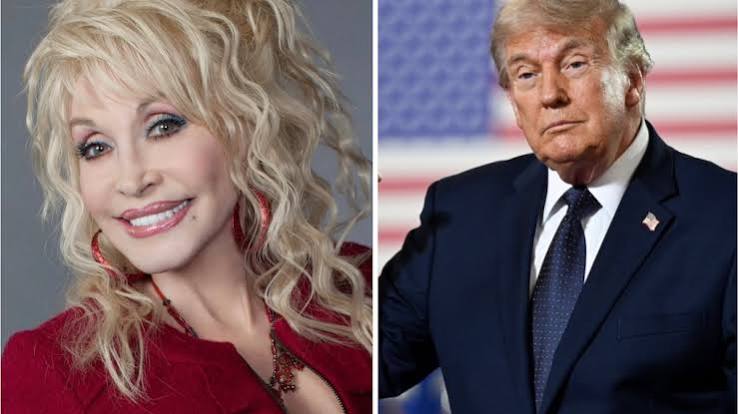
Country music icon and global entertainer Dolly Parton has died at the age of 80, bringing an end to the extraordinary life and career of one of the most influential figures in American popular culture.
Parton’s death was announced on Tuesday, August 25, 2026, by her nephew, Bryan Seaver, in an emotional video shared through her official social media accounts. Seaver, who served as Parton’s head of security for more than two decades, said the family was experiencing a mixture of pride, grief and sadness following her death.
The circumstances and cause of her death were not immediately disclosed. Reports said she died in Nashville, Tennessee.
Parton’s passing has triggered an outpouring of tributes from fans, musicians, entertainers and political leaders around the world, with many celebrating not only her extraordinary musical achievements but also her philanthropy, business success and enduring influence on generations of people.
Trump orders flags lowered
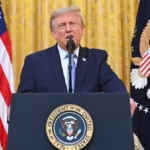
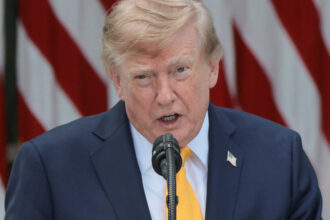
US President Donald Trump paid tribute to Parton following the announcement of her death, describing her as one of the greatest country singers and saying her death represented “a true loss for millions of people.”
Trump subsequently ordered American flags to be flown at half-staff across the United States for a week in her honour. The presidential proclamation directs the flags to remain at half-staff at federal buildings, military installations and US diplomatic facilities around the world until sunset on September 1, 2026.
“There has never been anyone like her, and never will,” Trump said in his tribute.
The decision represents an unusually significant national honour for a private citizen and reflects the enormous cultural impact Parton had across the United States and beyond.
From poverty to global stardom
Parton’s remarkable journey began in humble circumstances in rural Tennessee.
Born on January 19, 1946, she grew up in a large family in the Great Smoky Mountains region. She was one of 12 children and was raised in a poor household, with her father working as a sharecropper before eventually acquiring a small farm.
Despite the family’s financial difficulties, Parton’s childhood was surrounded by music. She later credited her mother with introducing her to traditional songs and storytelling, while her father’s strong work ethic influenced her approach to life and business.
Her musical talent became evident at an early age. As a child, she performed on local radio and television programmes before making appearances at Nashville’s Grand Ole Opry.
After graduating from high school in 1964, Parton moved to Nashville and began pursuing songwriting and recording opportunities.
She released her debut album, Hello, I’m Dolly, in 1967. That same year, she joined The Porter Wagoner Show, where established country musician Porter Wagoner became an important mentor in the early stages of her career.
The partnership helped introduce Parton to a wider audience and established her as one of the emerging voices in country music.
A songwriter behind timeless hits
Parton eventually embarked on a successful solo career, producing songs that would become standards of American music.
Among her most famous compositions was “I Will Always Love You”, written after her professional separation from Wagoner. Parton recorded the song in 1974, and it later achieved extraordinary global success when Whitney Houston recorded it for the 1992 film The Bodyguard.
Parton was also responsible for “Jolene”, another song that became synonymous with her career.
Her catalogue eventually expanded to thousands of compositions, with her work crossing the boundaries of country, pop, gospel and bluegrass.
She sold more than 100 million records globally and earned 11 Grammy Awards during a career spanning more than six decades. She became widely known as the “Queen of Country Music” and remained one of the genre’s most recognisable personalities.
Success beyond music
Parton’s influence was not confined to recording studios and concert stages.
In 1980, she made her film debut in the comedy 9 to 5, starring alongside Jane Fonda and Lily Tomlin. She also wrote and performed the movie’s title song, which became one of her biggest hits and earned an Academy Award nomination.
Her acting career continued with appearances in films including The Best Little Whorehouse in Texas, Steel Magnolias and Joyful Noise.
She also became a successful entrepreneur. Her business interests included television productions, merchandise, food products and Dollywood, the Tennessee theme park that became one of the region’s major tourist attractions.
Parton’s ability to combine entertainment with business helped establish her as one of the most commercially successful artists in American history.
A lasting philanthropic legacy
Perhaps one of Parton’s most enduring legacies is her philanthropy.
Through the Dollywood Foundation, she established the Imagination Library, a programme that provides free books to children and promotes early childhood literacy.
The initiative grew into an international programme, distributing millions of books to children and reflecting Parton’s longstanding belief in the transformative power of education.
She also contributed to medical research, disaster relief and other charitable causes. During the COVID-19 pandemic, she donated $1 million to support vaccine research at Vanderbilt University Medical Center.
Her humanitarian contributions earned her numerous honours, including the Carnegie Medal of Philanthropy. She was also recognised for her broader contributions to American culture and society.
Parton’s charitable philosophy was rooted in a simple belief that wealth should be used to help others.
“I just give from my heart,” she once said, explaining her approach to philanthropy.
Final years
Parton continued working well into her later years, maintaining an active presence in music and entertainment even after reaching her 80th year.
Her official website was still announcing new projects and musical achievements shortly before her death. On August 19, 2026, it reported that she had received 82 new global sales certifications across 14 countries, highlighting the continuing international demand for her music.
Her death also came about 17 months after the passing of her husband, Carl Dean, whom she married in 1966. Dean died in March 2025 at the age of 82.
Parton’s death therefore marks not simply the loss of a celebrated singer but the end of an era for American entertainment.
From a poor childhood in Tennessee, she became a songwriter, recording artist, actress, entrepreneur, philanthropist and cultural institution whose work reached audiences across generations.
Her songs will continue to be performed, her films watched and her philanthropic programmes will continue to benefit children and communities.
For millions around the world, Dolly Parton’s legacy will extend far beyond her music—a testament to talent, perseverance, generosity and the extraordinary possibilities that can emerge from the humblest beginnings.