Afrobeats superstar David Adeleke, popularly known as Davido, has defended his decision to use one of the world’s biggest sporting stages to highlight Nigeria’s worsening insecurity, insisting that the continued abduction of schoolchildren is a humanitarian crisis that should never be ignored in the name of protecting the country’s international image.
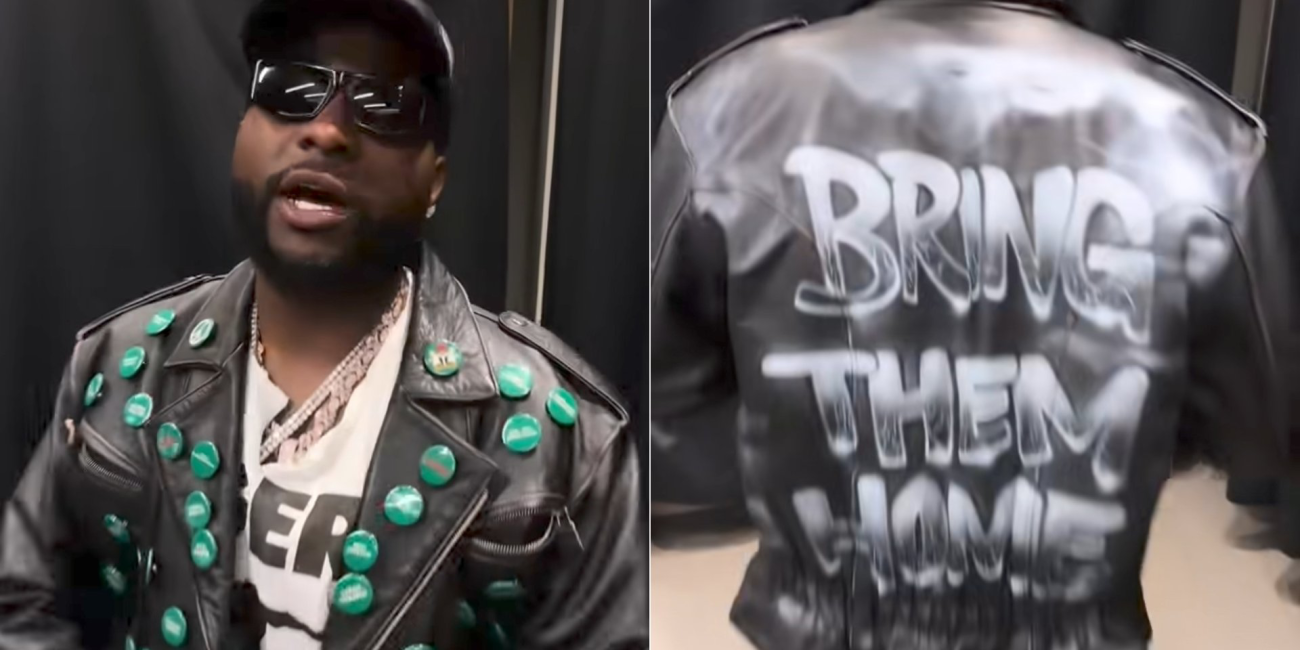
The award-winning singer made the clarification following criticisms that trailed his appearance at the FIFA 2026 World Cup Countdown Concert in Los Angeles, where he performed wearing a jacket emblazoned with the inscription “Bring Them Home” alongside the names of the 46 abducted pupils and teachers from Oyo State who remain in captivity.
His symbolic protest drew global attention to the plight of the victims and reignited conversations about the persistent wave of kidnappings targeting schools across Nigeria.
Although many Nigerians applauded the singer for using his international platform to advocate for the safe return of the victims, others accused him of portraying the country negatively before a global audience.
Responding to the criticisms during an interview with the BBC’s Focus on Africa, Davido maintained that he had no regrets over his actions, arguing that the lives of innocent children were far more important than concerns about national image.
According to him, remaining silent while schoolchildren continue to languish in captivity would amount to ignoring a national tragedy.
“A lot of people do not want to talk about what goes on in my country simply because you want to protect the image,” Davido said.
“But there is no image to protect if little kids are being kidnapped.”
The singer stressed that although he was honoured to represent Nigeria during the FIFA World Cup Countdown Concert, he believed the occasion also presented an opportunity to draw international attention to one of the country’s most pressing humanitarian challenges.
He explained that public figures have a responsibility to use their influence to advocate for meaningful causes beyond entertainment.
“As much as I was happy to do the World Cup, we also have to understand that there are things going on back home in our country, which we have the power to let the world know through our own means,” he said.
Davido noted that every individual possesses a unique platform through which they can contribute to social change, adding that music and live performances constitute the tools available to him.
“When I say our own means, where is our power? My power is in music, performances. We have the students that have been missing still not found. So yeah, I used my platform to project what’s really going on,” he stated.
His remarks have further amplified public conversations surrounding insecurity in Nigeria, particularly the recurring abduction of students from educational institutions by armed criminal groups.
Over the past decade, Nigeria has witnessed numerous attacks on schools, with hundreds of pupils abducted across different states by armed groups demanding ransom or pursuing other criminal objectives.
The latest incident involving the abduction of pupils and school officials in Oyo State has generated widespread outrage across the country, with civil society organisations, human rights advocates and concerned Nigerians repeatedly demanding urgent government intervention.
The victims were reportedly abducted from communities in Oriire Local Government Area of Oyo State, throwing families into uncertainty and renewing concerns over the safety of children in schools.
The incident has also revived painful memories of previous mass abductions, including the 2014 kidnapping of the Chibok schoolgirls, which drew global condemnation and inspired the international “Bring Back Our Girls” campaign.
Davido’s decision to wear the “Bring Them Home” jacket was widely interpreted as a continuation of that advocacy, aimed at ensuring that the plight of the missing schoolchildren remains in public consciousness until they are safely reunited with their families.
The singer’s protest attracted considerable international media attention, with many observers describing it as one of the most prominent examples of celebrity activism on the issue since the Chibok campaign.
Meanwhile, Oyo State Governor Seyi Makinde has repeatedly assured residents that his administration remains committed to securing the release of the abducted pupils and school officials.
During a recent engagement with protesters in Ibadan, the governor declared that he was prepared to make personal sacrifices if necessary to ensure the safe return of the victims.
Makinde also assured residents that every available security resource was being deployed to facilitate their rescue, expressing confidence that Oyo State would not experience a tragedy similar to the prolonged captivity of the Chibok schoolgirls.
According to the governor, the state government has continued to collaborate with security agencies while exploring every lawful option capable of securing the freedom of those still being held.
The demonstrations held in Ibadan reflected growing frustration among residents, parents and civil society organisations over what many described as the slow pace of rescue efforts.
Families of the abducted pupils have continued to appeal to both the federal and state governments not to relent until every victim is safely rescued.
The Take It Back Movement also criticised the handling of the situation by both the Federal Government and the Oyo State Government.
The group described the prolonged captivity of the schoolchildren as a serious indictment of Nigeria’s security architecture, arguing that governments have a constitutional responsibility to protect lives and property.
According to the movement, the continued detention of innocent children demonstrates the urgent need for stronger security measures and more coordinated rescue operations across the country.
The organisation further called on security agencies to intensify efforts aimed at locating the victims while urging political leaders to treat the matter as a national emergency.
Davido’s intervention has once again highlighted the growing role of celebrities in shaping public discourse on governance, insecurity and social justice.
In recent years, Nigerian entertainers have increasingly used their platforms to advocate for reforms, support humanitarian causes and draw international attention to domestic challenges affecting millions of citizens.
For Davido, however, the issue extends beyond activism or public relations.
He insisted that influential Nigerians have a moral obligation to speak for those who have no voice, particularly vulnerable children whose lives have been disrupted by violence.
His latest comments reinforce his belief that silence is not an option when innocent lives are at stake and that global visibility should be used not only to celebrate Nigeria’s culture and creativity but also to call attention to issues requiring urgent action.
As calls continue for the rescue of the abducted pupils, Davido maintained that he would continue to use his music, performances and international influence to advocate for their freedom, expressing hope that sustained public attention would increase pressure on authorities to ensure the victims are safely returned to their families.