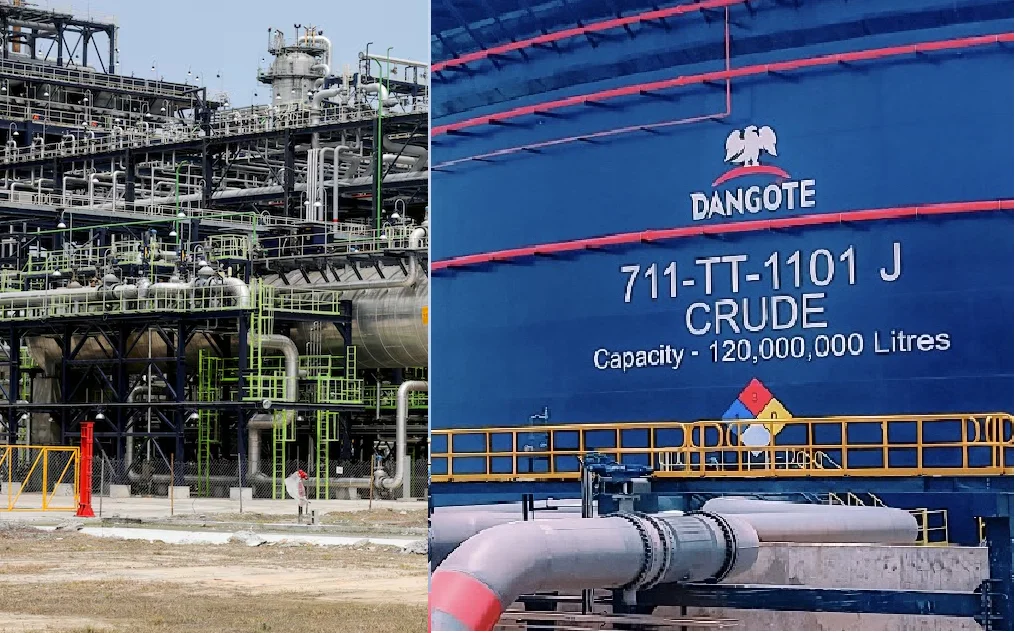
The Dangote Petroleum Refinery has announced another reduction in its nationwide gantry price for Premium Motor Spirit (PMS), commonly known as petrol, lowering the price from ₦1,175 per litre to ₦1,125 per litre.
The latest adjustment, confirmed on Thursday, represents a ₦50 per litre decrease and comes amid a sustained decline in global crude oil prices following easing geopolitical tensions in the Middle East.
Confirming the development, the spokesperson for the Dangote Group, Anthony Chiejina, said the refinery had implemented the new pricing structure for marketers purchasing fuel directly from its facilities.
“It is true our petrol gantry price was reduced by ₦50 per litre,” Chiejina said.
The latest reduction is expected to provide some relief to fuel marketers and could eventually lead to lower pump prices for consumers if the savings are passed on across the distribution chain.
In addition to reducing the ex-depot price of petrol, the refinery also announced a downward review of its coastal supply pricing. The cost of petrol supplied through coastal channels fell from ₦1,495,215 per metric tonne to ₦1,428,165 per metric tonne, reflecting the refinery’s broader response to changing market conditions.
Industry observers attribute the latest price adjustment to the significant drop in international crude oil prices, which have retreated to levels recorded before the recent Middle East crisis.
Global benchmark crude oil prices are currently trading between $69 and $73 per barrel, representing a notable decline from the higher prices witnessed during the period of heightened tensions involving Iran, Israel, and the United States.
The easing of crude oil prices has reduced production costs for refiners, creating room for adjustments in refined petroleum product prices.
This is the second reduction announced by the Dangote Refinery within a relatively short period.
On June 16, the refinery reduced its gantry price by ₦75 per litre, a move that triggered a wave of price adjustments by filling stations across Nigeria as marketers reviewed their pump prices downward.
With the latest ₦50 reduction, the refinery has now slashed its petrol gantry price by a cumulative ₦125 per litre within two weeks, reflecting the impact of improved global oil market conditions.
The earlier reduction prompted several fuel marketers to lower their retail prices, offering modest relief to motorists and businesses that depend heavily on petrol for transportation and power generation.
Despite these reductions, retail petrol prices remain relatively high across many parts of the country.
In Abuja and neighbouring areas, pump prices currently range between ₦1,241 and ₦1,305 per litre, depending on the filling station and location.
While consumers have welcomed the recent reductions, many Nigerians believe the retail price of petrol should fall much further in line with declining international crude oil prices.
Motorists, transport operators, manufacturers, and small business owners have continued to express hope that pump prices will eventually return to between ₦800 and ₦900 per litre, levels recorded before global oil prices surged following the escalation of tensions involving Iran, Israel, and the United States earlier this year.
The high cost of petrol has remained one of the major drivers of inflation in Nigeria, contributing to rising transportation fares, increased production costs, and higher prices for goods and services.
Many businesses, particularly small and medium-sized enterprises that rely on petrol-powered generators because of unreliable electricity supply, have struggled to cope with rising energy costs.
Economic analysts say any sustained decline in fuel prices could help moderate inflation, reduce operating expenses for businesses, and improve household purchasing power.
However, they caution that the extent of any reduction at the retail level will depend on several factors, including transportation costs, exchange rate movements, distribution expenses, and the pricing strategies of independent marketers.
As Africa’s largest single-train refinery, the Dangote Petroleum Refinery continues to play an increasingly significant role in Nigeria’s downstream petroleum sector.
Since commencing fuel production, the refinery has influenced domestic fuel pricing through periodic adjustments that reflect developments in the international oil market.
Industry stakeholders will be closely monitoring whether the latest reduction in the refinery’s gantry price leads to another nationwide decrease in pump prices in the coming days.
For many Nigerians grappling with the high cost of living, a substantial reduction in petrol prices would provide welcome relief and potentially ease pressure on transportation, food distribution, and other sectors heavily affected by fuel costs.