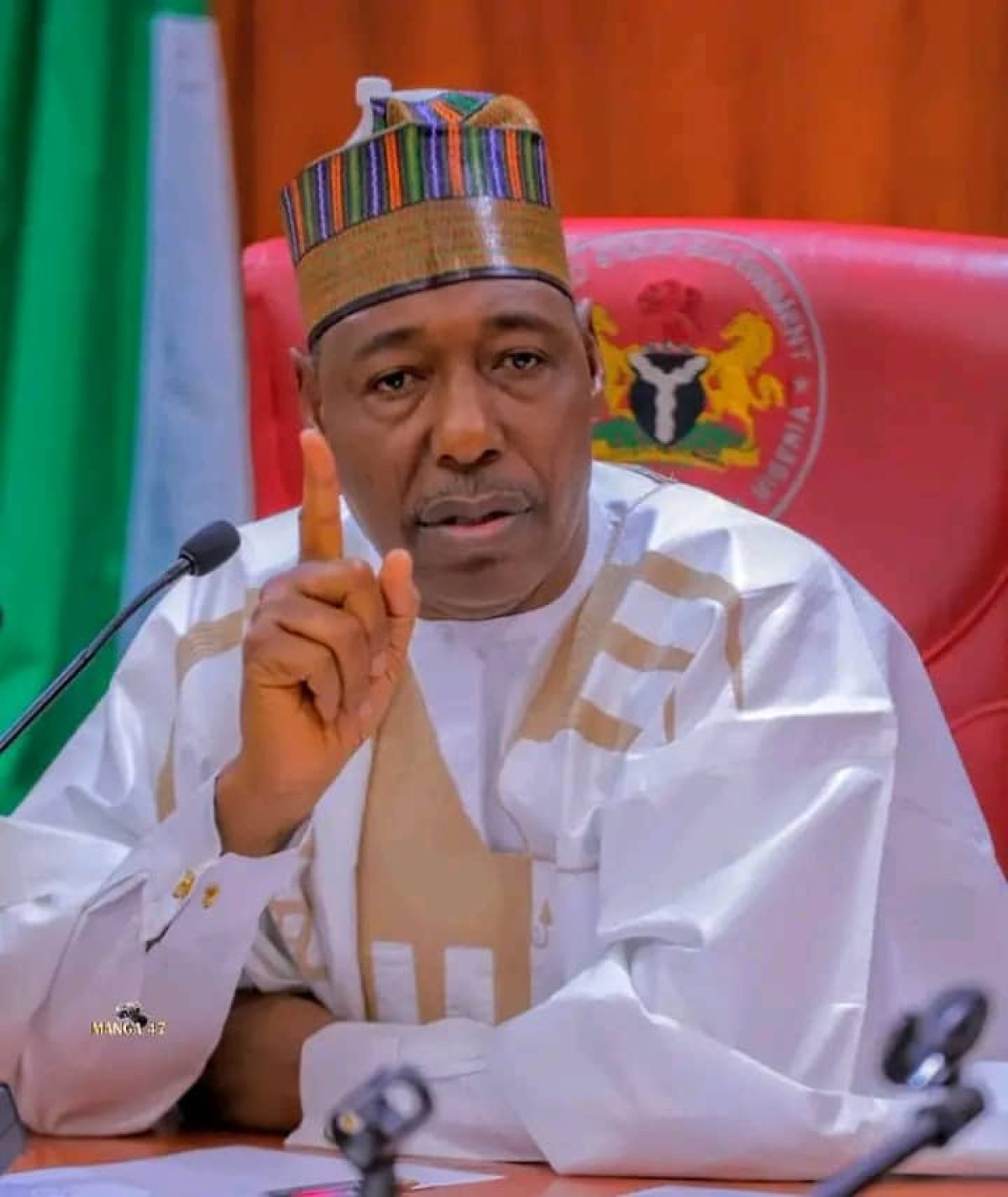
Zulum said the losses, alongside other security concerns, informed the state government’s decision to ban scrap metal trading.
The governor made the disclosure on Saturday, October 17, 2026, while addressing scrap metal operators. He urged them to submit proposals outlining how they could continue their businesses without undermining security or damaging public infrastructure.
He explained that the ban was introduced in the overall interest of the state and was not intended to deprive operators of their means of livelihood.
According to him, the government has no personal interest in shutting down their businesses but is determined to protect public assets and address security threats associated with scrap metal scavenging.
“It is deeply concerning to me if one person loses his livelihood for whatever reason in Borno. Believe me, there is nothing I stand to gain from banning scrap metal trade rather than addressing the serious security concerns associated with your activities,” Zulum said.
The governor cited the destruction and theft of electricity infrastructure as one of the major consequences of the activities of metal scavengers.
“We spent more than N3 billion to connect an electricity distribution line from Damaturu to Maiduguri, but unfortunately, we lost all the wires to the metal scavenging activities,” he said.
Zulum also expressed concern over the dangers faced by scavengers, particularly those operating in communities where security conditions remain unstable.
“Before the ban, hundreds of your members were killed in the process of scavenging for metals in the villages that are not yet safe for civilian activities,” he added.
The governor further disclosed that security intelligence available to the government indicated that insurgents were allegedly using scrap metal dealers to dispose of stolen materials.
“We have security intelligence that even the insurgents use your platforms to sell looted metals. So, no responsible government will ignore such intelligence just to be politically correct,” he said.
He maintained that the government could not overlook credible security concerns merely to avoid taking measures that might be unpopular with some business operators.
In a move to reduce the economic impact of the restriction on legitimate traders, Zulum granted a waiver allowing operators to evacuate scrap metal stocks accumulated before the ban from designated locations.
The concession is intended to provide relief to genuine businesses affected by the restriction while the government considers measures that could allow the trade to continue under conditions that protect public infrastructure and address security risks.
The governor urged operators to cooperate with the government by proposing workable arrangements that would enable them to earn a living without facilitating the sale of stolen materials or exposing their members to danger.
The state government’s position highlights the challenge of balancing livelihoods in the informal scrap metal sector with the need to safeguard critical infrastructure and prevent the possible use of commercial activities to support criminal or insurgent networks.