The African Democratic Congress (ADC) has criticised the administration of President Bola Ahmed Tinubu over the rising cost of petrol, saying the increase, with prices reaching as high as ₦1,470 per litre in some locations, is deepening economic hardship for millions of Nigerians.
The opposition party said the latest increase in the price of Premium Motor Spirit (PMS) was having a wider effect on the cost of living, particularly transportation, food, electricity, education and other essential services.
The ADC made its position known in a statement issued in Abuja on Tuesday by its National Publicity Secretary, Bolaji Abdullahi. The party argued that the impact of petrol prices could not be considered in isolation because fuel costs affect the movement of people and goods and, consequently, the prices of many other commodities and services.
According to the party, Nigerians are being confronted with rising household expenses at a time when many incomes have not increased at a comparable rate.
“President Tinubu has turned the petrol pump into an instrument of punishment for everyday Nigerians,” the ADC said, adding that food, transportation, electricity, education and other necessities were becoming increasingly difficult for ordinary citizens to afford.
The party also drew attention to reported increases in private school fees, which it said had risen by between 30 and 40 per cent in some cases.
The ADC argued that the reported increases were placing additional pressure on parents who are already dealing with higher transportation costs, food prices, rent and other household expenses.
“Parents are not earning 40 per cent more. Their salaries have not risen with the prices of fuel, food, rent, transportation, and school fees,” the party said.
The opposition party, however, said it did not intend to blame private school proprietors for increasing their charges. It argued that school owners were themselves operating under difficult economic conditions, with rising expenditure on fuel, electricity, taxes, salaries, rent and other operational costs.
According to the ADC, the situation has therefore created pressure across different segments of society, affecting parents, workers, businesses and service providers.
“Parents, workers, and businesses are all casualties of Tinubu and the APC’s economy,” the party said.
The ADC further described the current petrol price as a major economic burden, arguing that the consequences extend beyond what motorists pay at filling stations.
“At ₦1,470 per litre, petrol is no longer simply a commodity. It is a Tinubu Tax,” the party said, using the expression to criticise what it regards as the consequences of the administration’s fuel pricing policy.
The party alleged that some families were being forced to reduce food consumption, withdraw children from school, postpone medical treatment and scale down or close businesses because of increasing operating costs.
It also questioned whether the economic reforms being implemented by the Federal Government were delivering sufficient relief to households.
“A reform that continuously makes the people poorer is not working,” the ADC said. “An economic policy that produces impressive figures at government briefings but hunger in Nigerian homes is a failure.”
The party maintained that the government’s economic policies should be assessed not only through macroeconomic indicators but also by their effect on household purchasing power and the ability of citizens to meet basic needs.
The ADC also criticised what it described as extravagant spending by public officials, arguing that government should demand sacrifices from those in positions of authority alongside the wider population.
“When parents must choose between feeding their children and educating them, the government has failed spectacularly in its most basic responsibility,” the party said.
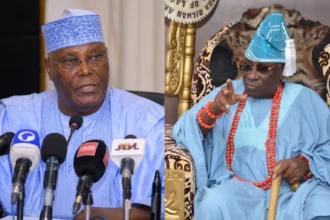
The latest criticism comes amid broader political debate over the consequences of petrol subsidy removal and the direction of Nigeria’s economic reforms. Former Vice President Atiku Abubakar, who is the ADC’s presidential candidate for the 2027 election, has separately criticised the current petrol price and called for greater accountability over subsidy savings, Federation Account deductions and oil revenues.
On the 2027 presidential election, the ADC said Nigerians would have an opportunity to decide whether to continue with the present economic direction or support its alternative proposals.
The party reiterated Atiku’s proposal to reintroduce a form of petrol subsidy as part of a strategy it says would reduce fuel costs and ease pressure on transportation, food prices and production.
The ADC has previously advocated measures aimed at reducing the cost of fuel, including changes to taxes and regulatory charges affecting the downstream petroleum sector.
The party said its proposed approach was based on the argument that economic reforms should ultimately improve citizens’ welfare rather than place disproportionate pressure on households.
“Unlike Tinubu and APC, we recognise that economic reform must serve the people, not sacrifice them,” the ADC said.
The opposition party also warned the Federal Government against interpreting Nigerians’ ability to endure economic difficulties as acceptance of current policies.
“Our resilience must not become an excuse for continued cruelty,” the statement said.
The ADC called on President Tinubu to take urgent measures to address the rising cost of living, warning that businesses, families and workers were under increasing pressure.
“Nigeria cannot be an oil-producing country whose citizens see every visit to a filling station as punishment,” the party said.
The ADC’s comments add to the growing political debate over petrol prices, subsidy policy and the broader economic consequences of reforms introduced by the Tinubu administration. While the party has presented the rising pump price as evidence of worsening hardship, its statements are political assessments of government policy and should be distinguished from independently measured economic indicators and official government explanations.
As petrol prices continue to influence transportation, production and household expenditure, the issue is expected to remain a significant subject of public and political debate ahead of the 2027 general elections.