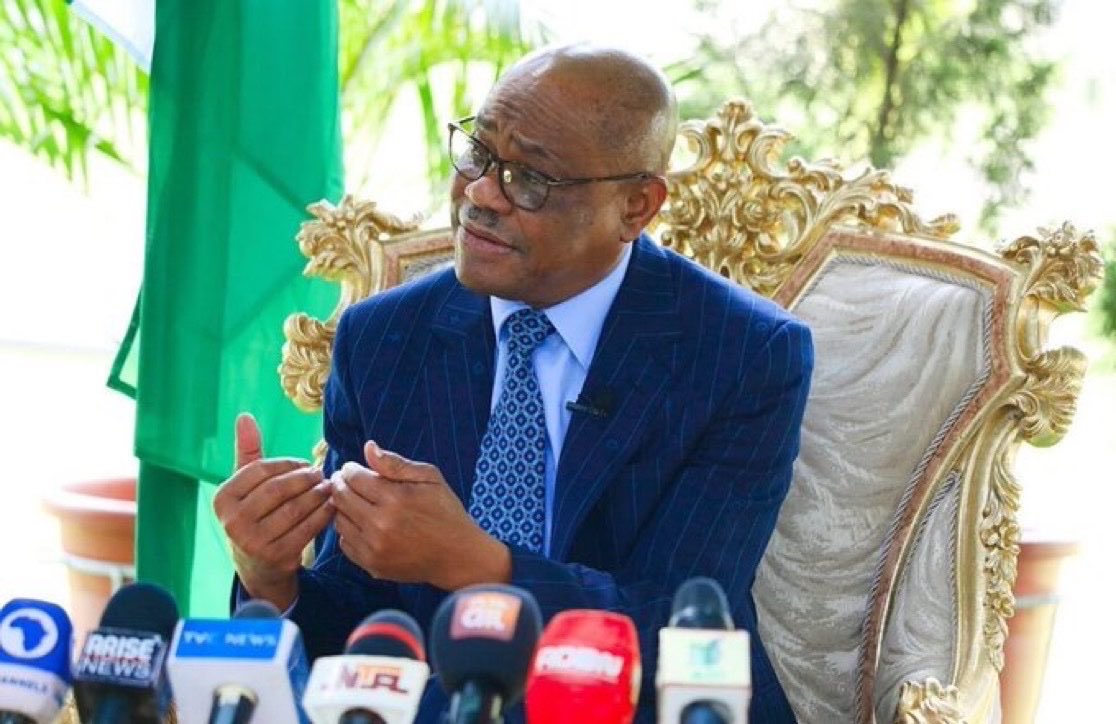
Human rights organization Amnesty International has issued a strong condemnation of remarks made by the Minister of the Federal Capital Territory, Nyesom Wike, describing his comments as reckless, dangerous, and inconsistent with democratic norms.
The controversy stems from a statement made by Wike during a live television appearance, in which he suggested that he could respond violently to a journalist and television host, Seun Okinbaloye . “If there’s anyway to break the screen, I would have shot him,” the minister said—remarks that have since sparked widespread criticism from civil society groups, media stakeholders, and members of the public.
In its reaction, Amnesty International expressed grave concern over what it described as a troubling endorsement of violence by a senior government official. The organization warned that such language, particularly when used by individuals in positions of authority, carries significant risks, including the normalization of violence and the potential encouragement of attacks against journalists.
According to Amnesty International, statements of this nature undermine the principles of free expression and press freedom, which are essential pillars of any democratic society. The group emphasized that journalists play a critical role in holding power to account and must be able to carry out their duties without fear of intimidation or harm.
“What Wike said carries the danger of normalizing violence and encouraging the targeting of journalists simply for doing their job,” the organization noted. It added that such rhetoric is especially concerning when it originates from a member of Nigeria’s federal cabinet, whose words and actions are expected to reflect the highest standards of responsibility and restraint.
The rights group also pointed out that the minister’s remarks may constitute a violation of Nigeria’s broadcasting standards. It referenced the role of the National Broadcasting Commission (NBC), which is mandated to regulate content aired on television and ensure compliance with established codes of conduct.
Amnesty International argued that the NBC has a duty to enforce these standards and address any breaches, particularly those involving language that could incite violence or threaten public safety. The organization called for a thorough review of the incident and appropriate action to uphold the integrity of the broadcasting framework.
Beyond regulatory concerns, the group framed the issue as a broader question of accountability and leadership. It stressed that public officials must be mindful of the influence their words carry, especially in a country where journalists and media practitioners have, at times, faced threats, harassment, and violence.
Allowing such statements to go unchallenged, Amnesty International warned, could create a dangerous precedent, signaling that threats against journalists are acceptable or inconsequential.
The organization therefore called on Wike to take immediate responsibility for his remarks by publicly withdrawing the statement and issuing an unreserved apology. It emphasized that such a step is necessary not only to address the immediate controversy but also to reaffirm a commitment to democratic values and respect for the rule of law.
“This level of violent intent coming from a senior government official is both unlawful and unacceptable,” the group stated, urging swift corrective action.
The incident has reignited conversations about the safety of journalists in Nigeria and the broader climate for press freedom. Media advocacy groups have long highlighted the challenges faced by journalists, including intimidation, censorship, and, in some cases, physical attacks.
In this context, statements perceived as threatening can have a chilling effect, discouraging journalists from pursuing sensitive stories or holding powerful figures accountable. Amnesty International cautioned that such an environment is detrimental to transparency and good governance.
Observers note that the reaction to Wike’s comments reflects a growing sensitivity to issues of accountability in public discourse. In an era where statements made on live television can quickly spread across digital platforms, public officials are increasingly being held to account for their words as well as their actions.
The expectation, analysts say, is that leaders must model responsible communication, particularly when addressing issues involving the media and public engagement.
While Wike has not yet issued a formal response to the criticism at the time of reporting, the pressure from human rights organizations and civil society is likely to keep the issue in the public spotlight.
For Amnesty International and other advocacy groups, the matter goes beyond a single statement. It is about reinforcing the principle that violence—whether physical or verbal—has no place in democratic governance.
The organization reiterated its call for all public officials to uphold the rights of journalists and to foster an environment where freedom of expression is protected and respected.
As the debate continues, the incident serves as a reminder of the delicate balance between political expression and responsible leadership. In a democratic society, words matter—and when spoken by those in power, they carry consequences that extend far beyond the moment in which they are uttered.