A public affairs analyst, Dr. Ambrose Igboke, has cautioned that the growing tendency among political actors to justify questionable conduct with the phrase “all is fair in politics” poses a serious threat to Nigeria’s democratic process and national stability ahead of the 2027 general elections.
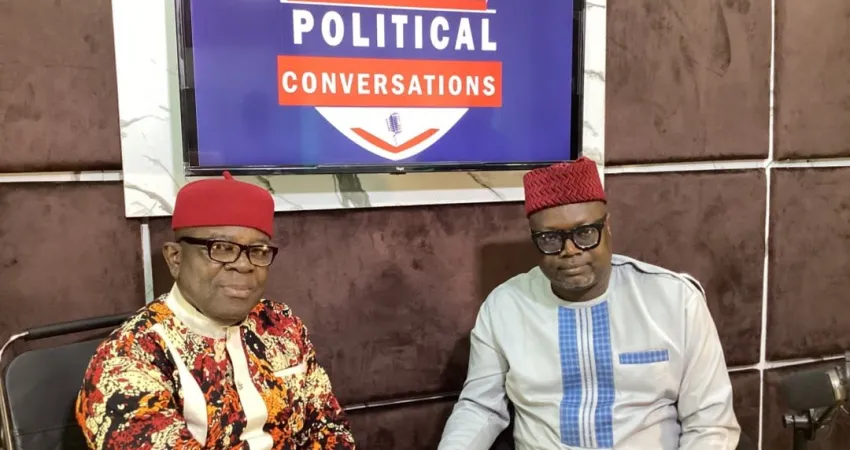
Igboke, who is the Chairman of the Guild of Public Affairs Analysts of Nigeria (GPAN), Enugu State Chapter, expressed the concern during an interview on Freedom Square TV – Political Conversations, hosted by Dr. Uchenna Cyril Anioke.
According to him, careless political rhetoric can embolden supporters and party loyalists to engage in acts of violence, intimidation, electoral manipulation and other unlawful activities during the electioneering period. He warned that such statements, especially when made by influential political figures, could be interpreted as tacit approval for misconduct.
The analyst argued that Nigeria’s democratic system remains fragile and vulnerable because the country is still grappling with the transition from mere civil rule to a truly institutionalised democracy. He explained that while elections are held periodically, the culture of democratic accountability, respect for the rule of law and protection of opposition rights has not been fully entrenched.
“Democracy is not just about conducting elections,” he said. “It is also about the strength of institutions, the protection of dissenting voices, adherence to constitutional principles and the willingness of political actors to submit to the rules of the game.”
Igboke stressed that political leaders must recognise the enormous influence their words carry in a highly polarised political environment. He noted that supporters often take cues from the language and behaviour of their leaders, making it imperative for those in positions of authority to avoid statements capable of inflaming tensions.
Referring to President Bola Tinubu, he acknowledged that the President, like every other politician, has a constitutional right to seek re-election, campaign for votes and pursue political victory. However, he maintained that the office of the President imposes responsibilities that transcend partisan interests.
He stated that as Commander-in-Chief of the Armed Forces, the President has a duty to guarantee the safety, rights and political freedoms of all citizens, including opposition politicians, candidates and their supporters.
“The President must not be seen merely as a political contestant,” Igboke said. “He is the custodian of the constitutional order and must ensure that every political actor operates in an atmosphere of security, fairness and equal opportunity.”
The analyst warned against allowing partisan calculations to overshadow the obligations of leadership, arguing that public confidence in the electoral process depends largely on the neutrality of state institutions and the perception that those in power will not use the machinery of government to gain unfair advantage.
He further emphasised that political competition in a democratic society should be driven by ideas, policies, programmes and effective mobilisation rather than coercion, intimidation, vote-buying or manipulation of electoral procedures. According to him, elections should provide citizens with an opportunity to compare competing visions for governance rather than become contests of force.
Igboke also expressed concern over what he described as the persistent failure of successive administrations to effectively prosecute electoral offenders. He said the lack of accountability has contributed significantly to the culture of impunity surrounding elections in Nigeria.
He attributed the problem to several factors, including poor investigation, inadequate evidence gathering, reluctance of witnesses to testify and alleged political interference in the prosecution process. He argued that until electoral crimes attract swift and credible sanctions, politicians may continue to violate electoral laws without fear of consequences.
The GPAN chairman called for stronger institutional mechanisms to deter electoral misconduct, including improved investigation of election-related offences, protection for witnesses and greater independence for agencies responsible for electoral enforcement.
He urged political parties, candidates, security agencies, electoral officials and civil society organisations to work collectively to safeguard the integrity of the 2027 elections. He warned that any action capable of undermining public trust in the electoral process could have far-reaching consequences for national cohesion and democratic stability.
Igboke appealed to political leaders across party lines to exercise restraint in their public utterances and conduct, stressing that the period before, during and after elections is often delicate and requires responsible leadership.
He concluded that Nigeria’s democratic future depends not only on the conduct of elections but also on the commitment of political actors to respect democratic norms, uphold the rule of law and place national interest above partisan advantage.