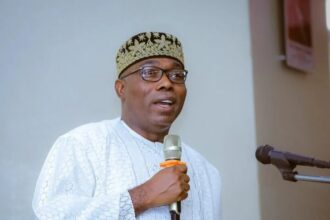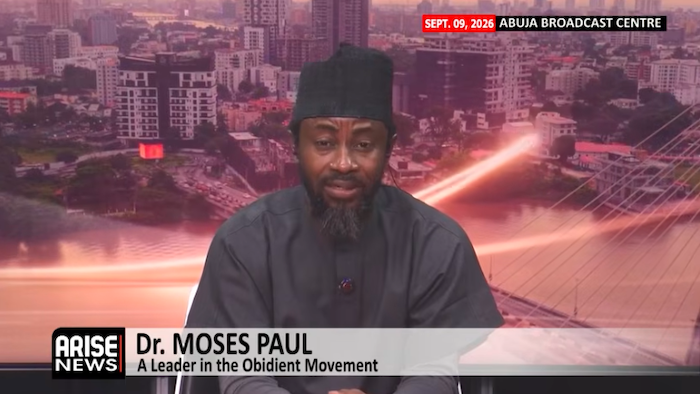
Dr. Moses Paul, a prominent leader in the Obidient Movement, has said the right of Peter Obi, presidential candidate of the Labour Party, to visit communities and families affected by violence in Benue State should not depend on the goodwill or approval of those currently in power.
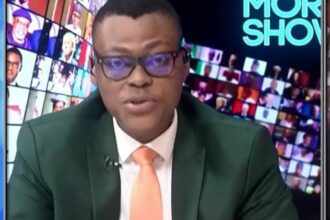
Paul made the statement during an interview on ARISE News on Wednesday while reacting to the controversy surrounding Obi’s recent attempt to visit Yelwata, where scores of people were reportedly killed in attacks.
The Obidient Movement leader said the incident raised broader concerns about the state of democracy in Nigeria, particularly the ability of political leaders and citizens to freely engage with communities affected by insecurity.
According to him, it was disturbing that access to citizens, especially victims of violent attacks, could become subject to the discretion of incumbent political authorities.
He argued that a democratic society should guarantee citizens and political leaders the freedom to move, engage communities and express solidarity with people affected by crises without unnecessary political interference.
“And so it becomes very worrisome where, and how do we build democracy where the access to citizens, particularly those who have been slaughtered, killed, you know, without any roadblock, are now dependent upon the goodwill of incumbent authorities,” Paul said.
He described the situation as deeply troubling, arguing that the controversy should not be viewed merely through the lens of political rivalry between Obi and the authorities in Benue State.
Paul said the central issue was the right of a presidential candidate to interact with Nigerians, particularly at a time when communities were experiencing serious insecurity and loss of lives.
“But the bigger issue is also that a presidential candidate whose rights are guaranteed to receive, to engage, to be questioned, have now become an issue,” he said.
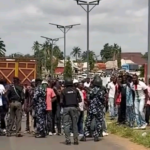
The comments followed reports that Obi’s convoy was obstructed while he was attempting to enter Makurdi during his visit to Benue State.
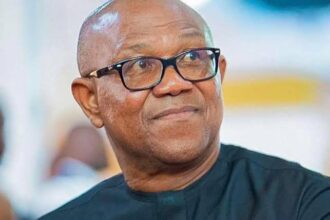
The former Anambra State governor had reportedly travelled to the state to sympathise with victims and families affected by the violence in Yelwata.
The incident subsequently generated political controversy, with supporters of Obi accusing individuals linked to the state government of attempting to prevent the visit, while the Benue State Government denied responsibility for the alleged obstruction.
The police later announced that suspects had been arrested in connection with the incident and said investigations were ongoing.
For Paul, however, the immediate political disagreement should not distract Nigerians from what he described as the larger democratic question.
He said every Nigerian should be concerned when access to communities affected by violence becomes a matter of political negotiation.
“That’s the bigger picture for me, you know. And this is why every Nigerian should be concerned, particularly about what is going on, you know, with the Benue state government,” he said.
Paul maintained that Obi’s decision to visit the victims should be understood as an act of leadership and solidarity rather than an attempt to exploit the tragedy for political advantage.
He challenged other presidential candidates to similarly visit communities affected by insecurity and engage directly with victims, saying such engagement should form part of the national political conversation.
“The question or the debate should be challenging other presidential candidates, you know, to do the same, even if for politics,” he said.
According to him, political competition should encourage leaders to demonstrate greater concern for Nigerians facing hardship rather than create circumstances in which access to affected communities becomes controversial.
“This is the kind of, you know, debates that we should be having, because how do you understand the sovereigns of Nigeria when you cannot even, you know, visit with them and see what’s going on?” Paul asked.
He argued that political leaders should be able to travel to communities experiencing insecurity, listen to residents and understand their circumstances directly.
For him, such engagement is particularly important because presidential candidates are seeking the mandate to govern the entire country and should therefore be able to interact with Nigerians across political, ethnic, religious and geographical boundaries.
Paul also urged Nigerians to focus on the human cost of violence rather than allowing political disagreements to dominate public discussions about attacks on communities.
He said the deaths and suffering of innocent citizens should remain at the centre of the national conversation.
“We need to get down to the crux of the matter, which has to do with the value of the human lives that are involved whenever we have altercations,” he said.
He stressed that disagreements within political parties should not be allowed to overshadow the plight of victims of violence.
According to him, political disputes are inevitable, but they should not be permitted to interfere with humanitarian gestures or the broader responsibility of leaders to respond to citizens in distress.
“Internal political parties’ issues will always be there, but this has completely nothing to do with that,” he said.
Paul’s position reflects the wider debate triggered by Obi’s disrupted visit to Benue, with political actors and civil society voices questioning whether the incident represents a broader challenge to political freedom and democratic participation.
The controversy has also renewed discussions about the constitutional rights of Nigerians to freedom of movement and peaceful association, as well as the responsibility of security agencies to protect citizens and political actors regardless of their affiliations.
Beyond the immediate dispute, Paul argued that the incident should prompt Nigerians to examine the quality of democratic practice in the country ahead of the 2027 general elections.
He suggested that democracy should provide space for competing political voices to engage citizens freely, particularly in communities affected by insecurity, poverty and other social challenges.
The Obidient Movement leader maintained that political differences should not become a justification for restricting legitimate engagement between leaders and citizens.
He further argued that visiting victims of violence should be regarded as a humanitarian responsibility rather than an activity that automatically carries partisan implications.
Paul’s comments come amid heightened political activity ahead of the 2027 elections, when political tensions are expected to intensify across the country.
He therefore called for restraint among political actors and greater emphasis on the protection of human life.
The central message of his intervention, he said, was that Nigerians should not lose sight of the victims whose suffering prompted Obi’s visit in the first place.
Rather than allowing political disagreements to define the conversation, Paul urged Nigerians and political leaders to focus on the security crisis, the protection of citizens and the need to prevent further loss of lives.
He maintained that the ability of political leaders to reach Nigerians, listen to their grievances and show solidarity with communities affected by violence is fundamental to democratic governance.
According to him, Nigeria’s democracy will be strengthened when political competition produces greater engagement with citizens rather than barriers to such engagement.
He said the Benue controversy should therefore serve as an opportunity for Nigerians to demand a political culture in which human lives, constitutional freedoms and national unity take precedence over partisan interests.