The Christian Association of Nigeria (CAN) has cautioned politicians, political parties and their supporters against invoking the name of Jesus Christ to promote partisan interests as the country prepares for the 2027 general elections.
CAN President, Archbishop Daniel Okoh, issued the warning in a statement on Wednesday while reacting to recent comments by Precious Oruche, popularly known as Mama Pee, in which she referenced Jesus Christ while making a political argument concerning Labour Party figure Peter Obi and the 2027 elections.
Okoh said political debates could naturally generate strong emotions and disagreements, but Christians and other Nigerians must exercise restraint and responsibility when bringing religious beliefs into political arguments.
According to him, the name of Jesus Christ carries sacred significance for Christians and should not be turned into a political instrument or used to promote one politician against another.
He said the growing intensity of political discussions ahead of the 2027 elections made it necessary to remind Christians that political loyalty should never override their reverence for Christ.
“I believe this is an appropriate moment to remind all of us, especially Christians, to exercise restraint in the way we invoke the name of Jesus Christ in political debates,” Okoh said.
He stressed that Jesus Christ should not be portrayed as a political candidate, campaign slogan or instrument for attacking political opponents.
“Jesus Christ is not a political candidate, a campaign slogan or a weapon to advance one politician against another. His name is sacred and should not be dragged into partisan contests in ways that elevate human beings, however popular or admired, to a place that belongs to God alone,” he stated.
The CAN president’s intervention comes at a time when political activities are gradually intensifying ahead of the 2027 general elections, with politicians and supporters increasingly engaging in public debates over potential presidential candidates, political alliances and the direction of the country.
Okoh acknowledged that Nigerians have the constitutional and democratic freedom to support candidates of their choice or criticise political leaders and their policies.
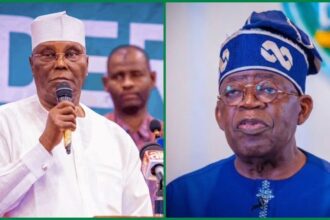
He specifically noted that citizens were free to support Peter Obi, former Vice President Atiku Abubakar, President Bola Tinubu or any other candidate participating in the political process.
However, he warned that political allegiance should not become so intense that supporters begin to attribute to politicians a status that, from a Christian perspective, belongs exclusively to God.
“We are free to support Peter Obi, Atiku Abubakar, Bola Tinubu or any other candidate. We are equally free to criticise them. But our political loyalty must never become so intense that we begin to speak of politicians in terms that diminish the reverence due to Christ,” he said.
Rather than making religious references central to political arguments, Okoh urged politicians and their supporters to concentrate on issues that directly affect Nigerians.
He identified competence, character, policies, performance and the future of the country as the issues that should dominate political campaigns and public debates ahead of the 2027 elections.
“Let us argue about competence, character, policies, performance and the future of Nigeria. Let us disagree passionately if necessary, but let us leave Jesus Christ out of our partisan quarrels,” he said.
The CAN president’s position underscores the distinction between a citizen’s religious convictions and the use of religious symbols or sacred figures for partisan political mobilisation.
While acknowledging the right of Christians to participate actively in politics, he cautioned against turning political figures into objects of excessive admiration or presenting them as saviours capable of solving all of the country’s problems.
Okoh further warned Nigerians against portraying politicians as messianic figures, regardless of their popularity or political appeal.
He maintained that electoral contests should not be allowed to diminish the sacredness of the Christian faith or encourage the elevation of politicians to a spiritual status.
“No politician is the Messiah. No political party represents the salvation of the human spirit that Christ epitomises. And no electoral victory is worth compromising the honour due to His name,” he stated.
The statement reflects CAN’s call for moderation as political competition ahead of 2027 becomes more pronounced.
Nigeria’s elections have historically generated intense political, ethnic, religious and ideological debates, making the tone of political communication an important issue for political actors, religious organisations and civil society groups.
Okoh therefore urged politicians, their supporters and Nigerians generally to ensure that political disagreements do not degenerate into disrespect for religious beliefs or sacred values.
The CAN president appealed to all stakeholders to approach the forthcoming electoral season with responsibility, restraint and respect.
“As we approach another crucial electoral season, I urge politicians, their supporters and all Nigerians to conduct our political conversations with responsibility, restraint and respect for what we hold sacred,” he said.
His comments are likely to add to ongoing discussions about the role of religion in Nigerian politics, particularly in a country where faith remains an important part of public life and political mobilisation.
For CAN, however, political participation and religious devotion should not be confused. Christians can participate fully in democratic processes, campaign for candidates, challenge government policies and debate national issues, but such activities, Okoh argued, should not involve using the name of Jesus Christ as a partisan political weapon.
With the 2027 elections approaching, the CAN president’s message is ultimately a call for issue-based political engagement, reminding Nigerians that political candidates should be judged by their competence, character, policies and performance rather than being presented as religious or messianic figures.