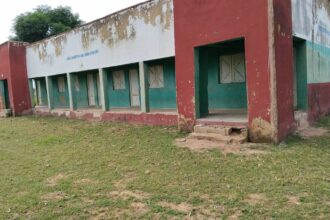
Civil society organisation Tracka has called on the Economic and Financial Crimes Commission (EFCC) and the Independent Corrupt Practices and Other Related Offences Commission (ICPC) to investigate the construction and equipping of a N296.4 million Information and Communication Technology/Computer-Based Test (ICT/CBT) centre at Claretian University in Imo State.
The organisation raised concerns over the use of public funds to finance a project located within a private university, questioning the rationale behind the expenditure at a time when many public institutions across Imo State continue to face serious infrastructure and service-delivery challenges.
According to Tracka, the facility was commissioned in November 2025 at Claretian University and equipped with 40 HP laptops. The organisation said the project was financed with N296.4 million in public funds through a constituency project facilitated by Senator Ezenwa Onyewuchi, who represents Imo East Senatorial District.
The project has now come under scrutiny following Tracka’s demand that Nigeria’s anti-corruption agencies examine how the funds were approved, awarded and utilised.
Tracka’s intervention centres on the question of whether it is appropriate for public resources to be used to establish and equip facilities on the premises of a privately owned tertiary institution.
In a statement, the organisation said the ICT/CBT centre was commissioned in November 2025 following the release of N296.4 million in public funds under a constituency project associated with Senator Onyewuchi.
The organisation argued that the location of the project raises important accountability concerns, particularly given the pressing needs of public schools, healthcare facilities and roads across the state.
“This raises a critical accountability question: Why was N296.4 million in public funds used to construct and equip a facility within a private university when public schools, health facilities, and roads across Imo State continue to face serious infrastructure and service-delivery challenges?” Tracka asked.
The group said it was not merely questioning the existence of the ICT facility but seeking clarification on the circumstances under which public funds were committed to a project situated on private institutional premises.
Checks reportedly carried out on Govspend, a public payments tracking platform, also confirmed the payment highlighted by Tracka, adding another dimension to calls for greater transparency surrounding the project.
Tracka subsequently urged the EFCC and ICPC to conduct a comprehensive investigation into the project.
The organisation wants the anti-corruption agencies to examine the procurement process, source of funding, contract award, implementation and beneficiaries of the project.
It also asked the agencies to determine the justification for locating the publicly funded facility within a private university and whether the arrangement complied with relevant laws, regulations and public expenditure guidelines.
“We call on the ICPC and EFCC to investigate the project, including its procurement process, funding source, contract award, implementation, beneficiaries, and justification for locating a publicly funded facility in a private institution,” the organisation said.
Tracka stressed that its demand was based on the principle that public funds must be managed transparently and deployed in ways that serve the broader public interest.
The controversy has also drawn attention to the broader debate surrounding constituency projects in Nigeria. Constituency projects are intended to address developmental needs identified within the constituencies represented by lawmakers, with funding coming from the national budget.
Over the years, however, civil society organisations and public accountability advocates have repeatedly raised questions about the selection, location, cost and implementation of some constituency projects.
Tracka’s concern in the Imo case is focused particularly on the relationship between public funding and private institutional ownership.
While a project located within a private institution could potentially provide public benefits depending on the terms of access and implementation, Tracka believes the circumstances should be independently examined to establish whether the expenditure was justified and whether the wider public stands to benefit from the facility.
The organisation therefore wants investigators to determine who owns the facility, who controls its use, who has access to it and whether members of the surrounding community or students from public institutions can benefit from the infrastructure.
Questions concerning the procurement process are also central to Tracka’s demand. An investigation could establish the contractor involved, the original project scope, the amount approved, the amount actually disbursed and whether the equipment supplied corresponds with the specifications for which the funds were released.
The group also wants clarification on whether the N296.4 million covered only construction and equipment or included other components of the project.
Such details, Tracka argued, are necessary to determine whether the expenditure represents value for money.
The demand for investigation comes against the backdrop of increasing public interest in government spending and the need for stronger monitoring of projects funded through the national budget.
Civil society organisations have increasingly relied on public expenditure databases, budget documents and field verification to identify projects they believe require further scrutiny.
In this case, Tracka’s reference to Govspend provides a basis for its claim that the payment was made, while the organisation is asking the EFCC and ICPC to go beyond confirming the payment and establish whether the entire process complied with applicable financial and procurement rules.
Tracka maintained that public expenditure should be transparent, properly documented and directed towards projects that provide demonstrable benefits to citizens.
“Public funds must be spent transparently and in the public interest,” the organisation said.
The group also called for relevant authorities to explain how the project was conceptualised and approved, why Claretian University was selected as its location and what arrangements exist to ensure that the facility serves a public purpose.
The investigation being requested by Tracka would potentially cover the entire life cycle of the project, from budgetary allocation and procurement to construction, equipment supply and commissioning.
It would also provide an opportunity for the relevant authorities and those connected with the project to explain its objectives and demonstrate how the expenditure benefits the public.
For now, Tracka’s allegations and questions do not in themselves establish wrongdoing. Any determination of financial misconduct, procurement violations or corruption would depend on the findings of competent investigative authorities.
The organisation’s call, however, highlights the importance of accountability whenever substantial public resources are committed to projects located on privately owned premises.
As the demand for investigation gains attention, the EFCC and ICPC face calls to determine whether the N296.4 million project was properly conceived, transparently executed and consistent with the principles governing public expenditure.
The case could also reignite the wider conversation about constituency projects and whether lawmakers should prioritise projects in public institutions and communities where infrastructure deficits are most acute.
Tracka insists that the central issue is accountability and the responsible use of taxpayers’ money. It is now asking the relevant authorities to provide answers and establish whether the project delivered appropriate value for the N296.4 million committed to it.