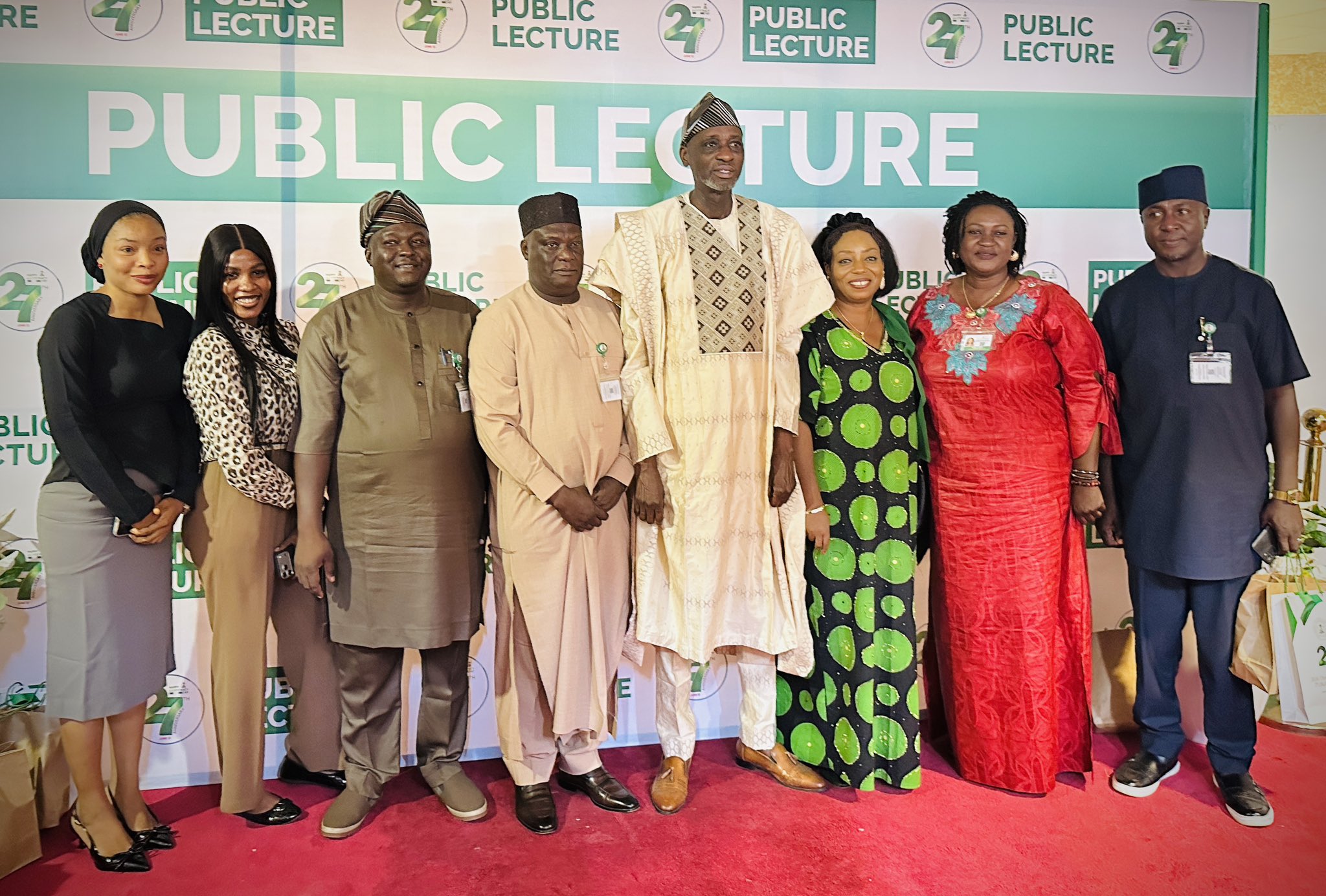
The Director-General of the National Institute for Policy and Strategic Studies (NIPSS), Professor Ayo Omotayo, has called for stronger institutions, accountable leadership and greater citizen participation as critical pillars for sustaining and deepening democracy in Nigeria.
Professor Omotayo made the call while delivering the keynote address at the 2026 Democracy Day Public Lecture held on Thursday, June 11, at the State House Conference Centre, Presidential Villa, Abuja.
The event formed one of the major highlights of activities marking Nigeria’s 27 years of uninterrupted democratic governance and brought together top government officials, policymakers, members of the diplomatic community, civil society organisations, students, youth groups and other stakeholders committed to the country’s democratic development.
The Vice President of the Federal Republic of Nigeria was represented at the occasion by the Secretary to the Government of the Federation (SGF), Senator George Akume, who joined participants in reflecting on Nigeria’s democratic journey and prospects for the future.
In his opening remarks, Senator Akume described Democracy Day as an important national occasion that offers Nigerians the opportunity to assess the country’s democratic progress, celebrate achievements and renew their commitment to building a stronger nation.
According to him, the annual observance provides a platform for citizens and leaders alike to reflect on the sacrifices that made democratic governance possible and to evaluate the work that still needs to be done to strengthen democratic institutions.
Also speaking at the event, the Head of the Civil Service of the Federation, Mrs Didi Esther Walson-Jack, emphasized that sustaining democracy requires continuous commitment, responsible leadership and strong public institutions.
She noted that Nigeria’s 27 years of uninterrupted democratic rule should inspire citizens to take greater responsibility for nation-building and the consolidation of democratic values.
According to her, democracy is not merely a political system but a continuous process that demands accountability, transparency and public trust.
Mrs Walson-Jack described governance as a sacred responsibility and urged Nigerians at all levels to contribute positively toward strengthening institutions and fostering national unity.
Delivering the keynote address, Professor Omotayo stressed that Democracy Day represents much more than a public holiday on the national calendar.
He described June 12 as a powerful symbol of courage, sacrifice and resilience, noting that countless Nigerians paid significant personal costs in the struggle to secure democratic governance for the country.
The NIPSS Director-General paid tribute to those who lost their lives during the pro-democracy movement and called on Nigerians to honour their memory by defending democratic principles and promoting good governance.
As part of the ceremony, he observed a one-minute silence in honour of the heroes and heroines who sacrificed for the restoration and sustenance of democracy in Nigeria.
Professor Omotayo acknowledged the considerable progress recorded since the return to democratic rule in 1999, noting that the country has witnessed important gains in political stability, institutional development and governance.
He highlighted the strengthening of democratic institutions, the successful conduct of multiple electoral cycles and reforms aimed at improving governance and economic performance as some of the major achievements recorded over the years.
The NIPSS Director-General also referenced ongoing economic reforms, including the removal of fuel subsidy and other policy initiatives designed to reposition the economy and promote sustainable growth.
According to him, despite the challenges associated with major reforms, such measures are often necessary to place the nation on a stronger economic footing and secure long-term prosperity.
However, Professor Omotayo cautioned that significant challenges continue to threaten Nigeria’s democratic and developmental aspirations.
He identified insecurity, poverty, unemployment, corruption and emerging cyber threats as some of the major obstacles confronting the country.
According to him, these challenges require urgent, coordinated and sustained responses from government institutions, the private sector, civil society and citizens.
The Director-General warned that insecurity remains one of the greatest threats to national development, as it undermines economic activities, discourages investment and weakens public confidence in governance.
He also expressed concern over the growing levels of poverty and unemployment, particularly among young people, stressing that addressing these issues is essential for national stability and social cohesion.
Professor Omotayo further emphasized the importance of combating corruption and strengthening accountability mechanisms across public institutions.
He argued that the future of Nigeria’s democracy depends largely on the ability of leaders and institutions to uphold integrity, transparency and the rule of law.
According to him, democracy flourishes when public officials are accountable to the people and when institutions function independently and effectively.
He therefore called for renewed commitment to ethical leadership, responsible governance and national unity.
The NIPSS Director-General stressed that democracy should not be viewed as a destination but as a continuous journey that requires constant nurturing and active participation from citizens.
He urged Nigerians to remain engaged in the democratic process and contribute meaningfully to national development through constructive participation and civic responsibility.
Professor Omotayo also reaffirmed the commitment of NIPSS to supporting Nigeria’s democratic growth through policy research, leadership training and strategic studies.
He noted that the institute would continue to provide evidence-based recommendations and capacity-building programmes aimed at strengthening governance and promoting sustainable development.
According to him, institutions such as NIPSS have a critical role to play in generating ideas and solutions capable of addressing complex national challenges.
In his vote of thanks, the Permanent Secretary, General Services Office (GSO), Dr Ibrahim Kana, mni, expressed appreciation to President Bola Ahmed Tinubu for facilitating the Democracy Day lecture and creating a platform for meaningful national dialogue.
He commended the selection of Professor Omotayo as keynote speaker, describing him as a respected scholar and strategic thinker whose contributions continue to enrich policy discussions in Nigeria.
Dr Kana also acknowledged the presence of students and members of the National Association of Nigerian Students (NANS), emphasizing the vital role of young people in shaping the future of the country.
He described Nigerian youths as indispensable stakeholders in the democratic process and urged them to remain actively involved in efforts aimed at promoting good governance and national development.
The 2026 Democracy Day Public Lecture ultimately provided an important forum for reflecting on Nigeria’s democratic journey, evaluating achievements, confronting existing challenges and exploring pathways toward a more prosperous and stable future.
Participants left the event with renewed optimism about the country’s democratic prospects and a shared commitment to strengthening the institutions and values necessary for Nigeria’s continued progress.