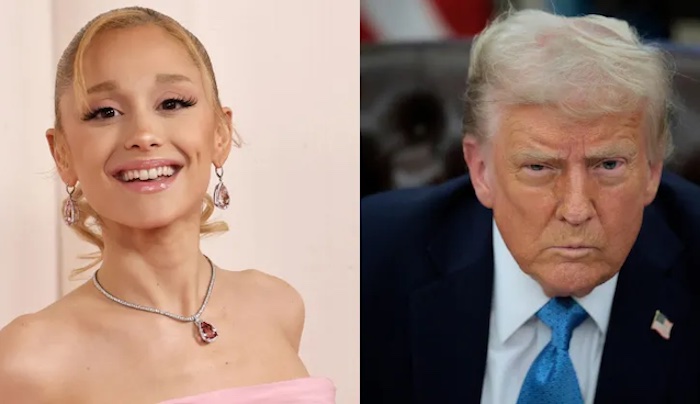
Global pop sensation Ariana Grande has publicly demanded that the White House stop using her music in videos promoting President Donald Trump’s policies after one of her songs was featured in a controversial social media post highlighting immigration enforcement operations.
The dispute erupted after the White House shared a video on TikTok showcasing the administration’s immigration crackdown. The clip featured footage of federal immigration agents arresting and handcuffing individuals during enforcement operations, accompanied by Grande’s 2024 hit song “Bye.” The video was captioned with a message praising the administration’s border security efforts and quickly generated widespread reactions online.
Grande, a Grammy Award-winning singer and Academy Award-nominated actress, did not hide her displeasure. Taking to the comment section of the White House TikTok account, she issued a strongly worded rebuke.
“Please do not ever use my music in relation to this barbaric, inhumane, heinous nonsense,” the singer wrote, condemning both the use of her song and the policies being promoted in the video.
The comment quickly gained attention across social media platforms, with supporters praising Grande for taking a public stand against the administration’s immigration policies. However, reports later emerged that her comment was no longer visible on the White House post, prompting further controversy. Sources close to the singer confirmed that Grande had indeed posted the message and had not deleted it herself.
According to individuals familiar with the matter, Grande’s team immediately began efforts to have the song removed from the White House video. Those efforts appear to have been successful, as the TikTok clip eventually remained online without the original audio track. Several media outlets reported that the sound was removed shortly after the singer publicly objected to its use.
The White House, however, was quick to push back against Grande’s criticism.
Responding to the singer’s remarks, White House spokesperson Abigail Jackson defended the administration’s immigration enforcement actions and accused Grande of directing her outrage at the wrong target.
“We’ll say this one last time: what’s actually barbaric, inhumane, and heinous are the criminal illegal aliens who have injured and murdered innocent American citizens,” Jackson said in a statement.
The exchange marks the latest chapter in the increasingly tense relationship between the Trump administration and prominent figures in the entertainment industry. Since returning to office for a second non-consecutive term, President Trump’s administration has maintained a highly active social media presence, frequently using short-form videos, trending music, and viral content to promote government policies and political messaging.
Many of these videos have focused on immigration enforcement operations, border security initiatives, military actions, and high-profile law enforcement activities. Administration officials argue that the content helps communicate policy achievements directly to the public, particularly younger audiences who consume news primarily through social media platforms.
Critics, however, contend that the strategy often blurs the line between government communication and political propaganda. The use of popular songs by major artists has become a particularly contentious issue, especially when musicians object to having their work associated with political causes or policies they oppose.
Grande is far from the first artist to challenge the administration over the use of copyrighted music in politically charged content. Over the years, numerous musicians have objected to the use of their songs at political rallies, campaign events, and social media promotions without their consent. Recent reports indicate that several artists have criticised the White House for incorporating their music into videos connected to controversial policy issues, particularly immigration enforcement.
The controversy also reflects Grande’s long-standing criticism of Trump and his policies. The singer has been vocal on a range of political and social issues, including immigration rights, racial justice, voting participation, and LGBTQ advocacy. Last year, she drew attention after sharing a social media post asking voters whether their lives had improved since Trump returned to office, a move that generated significant political discussion online.
Her opposition to current immigration enforcement practices has also been well documented. In previous public appearances and online statements, Grande has expressed solidarity with immigrant communities and criticised policies she believes negatively affect vulnerable populations.
The latest dispute comes at a time when immigration remains one of the most polarising issues in American politics. Supporters of the administration argue that strict enforcement measures are necessary to protect national security and uphold immigration laws. Opponents, meanwhile, contend that some enforcement tactics are excessively harsh and can separate families, disrupt communities, and create humanitarian concerns.
As debate over immigration policy continues, social media has become an increasingly important battleground where political leaders, activists, celebrities, and ordinary citizens compete to shape public opinion. Grande’s intervention demonstrates the growing willingness of public figures to challenge government messaging directly through the same digital platforms used to promote those policies.
The incident has also reignited broader conversations about artists’ rights and the extent to which governments, political organisations, and public officials can use copyrighted music in online content. Legal experts note that the rules governing music usage on social media platforms are often complex, involving licensing agreements between platforms, record labels, publishers, and content creators.
For Grande, however, the issue appears to be less about copyright and more about principle. Her objection focused squarely on the association of her music with policies she strongly opposes, making clear that she does not want her artistic work used to endorse or promote immigration enforcement actions.
While the White House has stood by its immigration policies, the removal of Grande’s song from the video suggests that her public protest achieved at least one immediate result. The controversy has since generated millions of views, extensive media coverage, and renewed debate over the intersection of politics, entertainment, and social media in modern America.
As the conversation continues, Ariana Grande joins a growing list of artists who have publicly resisted the use of their music in politically sensitive campaigns, reinforcing the increasingly influential role that entertainers play in shaping public discourse far beyond the world of music.