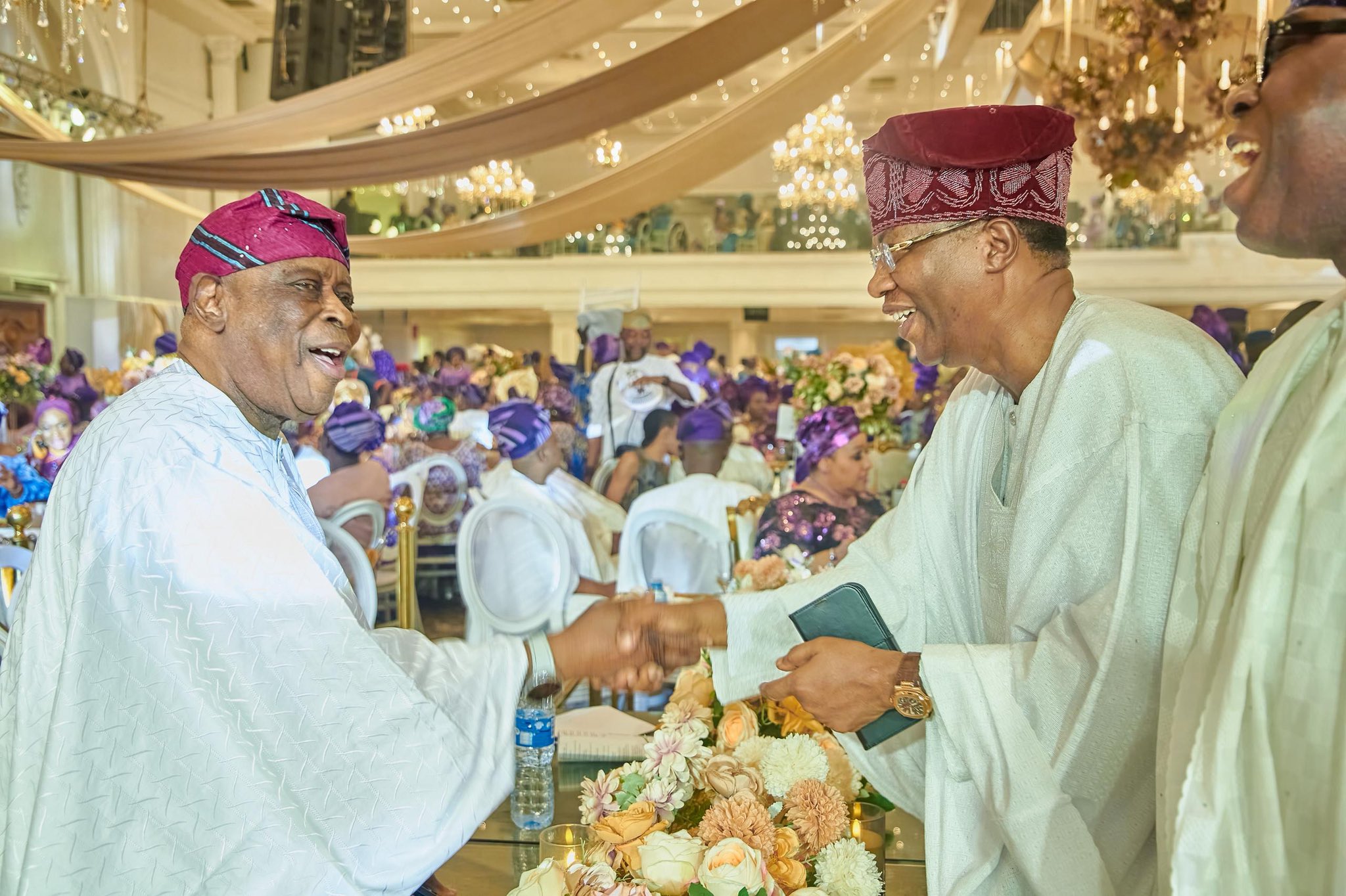
Former Governor of Ogun State and current senator representing Ogun East, Gbenga Daniel, has offered a candid reflection on his once bitter political rivalry with his successor, Ibikunle Amosun, describing the period as one of intense personal and political hardship.
Speaking during his 70th birthday thanksgiving service held at Abraham’s Tabernacle in Sagamu, Daniel recounted how his relationship with Amosun deteriorated over time, culminating in what he described as a difficult and trying experience during Amosun’s tenure as governor.
According to Daniel, the root of their political disagreement stemmed largely from Amosun’s strong ambition to become governor, which he said created tension between them long before the 2011 transition of power. He noted that Amosun was determined to achieve his political goal at all costs, leaving little room for compromise or mediation.
Daniel explained that his perceived lack of support for Amosun’s governorship aspiration contributed significantly to the breakdown in their relationship. He alleged that once Amosun assumed office in May 2011, he moved swiftly against him, initiating actions that he characterised as a “witch-hunt.”
In his remarks, Daniel did not mince words as he described his successor as an “enfant terrible,” suggesting that Amosun’s conduct in office was marked by aggression and hostility toward him. “He showed me hell,” Daniel said, reflecting on the challenges he faced in the aftermath of leaving office.
Despite the severity of their past differences, Daniel struck a reconciliatory tone, revealing that both leaders have since put their disagreements behind them. He noted that through the intervention of religious leaders and the passage of time, their relationship has improved significantly.
Today, according to him, both men are focused on contributing to the development of Ogun State and Nigeria as a whole. He expressed appreciation to Amosun for attending his birthday celebration, describing his presence as a sign of reconciliation and maturity.
The thanksgiving service attracted a wide array of prominent personalities from across the country. Among those in attendance was the General Overseer of the Redeemed Christian Church of God, Enoch Adeboye, as well as former President Olusegun Obasanjo, who was represented by his wife, Bola Obasanjo.
Also present were Governor Dapo Abiodun, represented by his deputy, Noimot Salako-Oyedele; Osun State Deputy Governor Kola Adewusi; and several traditional rulers, including the Olubadan of Ibadan, Rashidi Ladoja, the Alake of Egbaland, Adedotun Gbadebo, and the Akarigbo of Remoland, Babatunde Ajayi.
In his speech, Daniel used the occasion not only to reflect on the past but also to celebrate the journey that has defined his political career. He recalled how he and Amosun once shared a common political platform and worked closely together. During Daniel’s first term as governor between 2003 and 2007, Amosun represented Ogun Central in the Senate under the same political party.
However, their alliance began to unravel in the lead-up to the 2007 governorship election. Political ambitions and strategic differences drove a wedge between them, eventually leading Amosun to leave the party and contest against Daniel under a different platform. That bid was unsuccessful, as Daniel secured a second term in office.
The rivalry intensified in subsequent years, particularly during the 2011 governorship election. Amosun emerged victorious, defeating Gboyega Isiaka, who was widely supported by Daniel. Upon assuming office, Amosun initiated a probe into Daniel’s administration, a move that significantly escalated tensions between the two camps.
The investigation eventually led to legal proceedings, with the Economic and Financial Crimes Commission charging Daniel with alleged financial mismanagement amounting to N7 billion. The case lingered in court for years, placing Daniel under intense public and legal scrutiny.
However, after prolonged litigation, the charges were eventually dismissed, and Daniel was discharged and acquitted of all allegations. The outcome marked a turning point in his post-governorship trajectory, allowing him to re-establish his political standing and continue his public service career.
At the thanksgiving event, Daniel expressed gratitude for the overwhelming turnout, noting that the presence of friends, associates, and well-wishers was a testament to the goodwill he has built over decades of service. He said he was particularly encouraged by the support he received from the people, which he described as a reflection of his long-standing commitment to leadership and development.
Looking beyond personal reflections, Daniel also spoke about the future of Nigeria, expressing optimism about the country’s prospects. He called on citizens to support the administration of President Bola Ahmed Tinubu, whom he described as committed to repositioning the nation for growth and stability.
Delivering a sermon at the service, Pastor Enoch Adeboye described Daniel as an exceptional politician and a true embodiment of the Yoruba concept of “Omoluwabi,” which denotes integrity, character, and moral uprightness. He praised Daniel for maintaining a respectful relationship with the church and for not politicising religious institutions.
Adeboye noted that since relocating to Ogun State in 1983, he has observed Daniel’s conduct closely and could attest to his consistency in balancing politics with personal values. He added that individuals with such qualities are rare in public life, which informed his decision to personally attend the celebration despite a busy schedule.
Drawing from Psalm 90:12, Adeboye urged attendees to live consciously and responsibly, reminding them of the inevitability of accountability before God. He emphasised the importance of living a life rooted in faith, holiness, and service to humanity.
Governor Dapo Abiodun, in his remarks, commended Daniel for his contributions to governance and national development. He noted that Daniel’s tenure as governor laid critical foundations that continue to support growth and development in Ogun State.
Abiodun also acknowledged Daniel’s ongoing role as a senator, highlighting his contributions to legislative work and his dedication to representing the interests of his constituents. He described Daniel as a leader who has remained committed to public service even after leaving executive office.
As Daniel marked his 70th birthday, the event served as both a celebration of personal milestones and a reflection on the complexities of political life. His remarks on his past conflict with Amosun underscored the often turbulent nature of political relationships, while his message of reconciliation pointed to the possibility of healing and progress.
Ultimately, the occasion highlighted not only the legacy of a seasoned politician but also the enduring importance of dialogue, forgiveness, and collective commitment to development in Nigeria’s evolving political landscape.