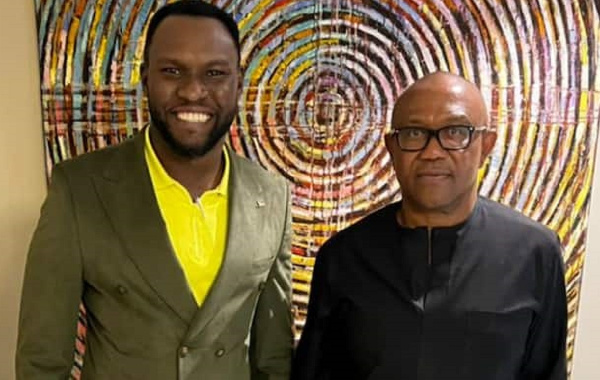
Former chieftain of the Labour Party and prominent supporter of Peter Obi, Engineer Isaac Balami, has disclosed that he committed more than one million US dollars of his personal funds to support Obi’s 2023 presidential campaign.
Balami made the revelation during an interview on Channels Television, where he provided a detailed account of his financial and logistical contributions. According to him, the scale of his involvement went far beyond routine political support, encompassing both direct funding and operational backing throughout the campaign period.
“If I convert what I withdrew from my personal account to support Obi, it is over a million US dollars,” Balami stated. He explained that his contributions included the donation of five Prado Land Cruiser vehicles to the campaign, provision of a bulletproof car, and the maintenance of three rooms at the Transcorp Hilton in Abuja for the duration of the campaign.
In addition to these high-value assets, Balami said he financed a range of other critical activities, including legal expenses related to the post-election proceedings at the Supreme Court of Nigeria. He also sponsored members of his team to travel across the country in support of campaign operations, insisting that his claims are verifiable through documented financial records.
“I am not just speaking generally; I can show account statements of what I spent,” he added, emphasising the transparency and scale of his financial commitment.
Beyond monetary contributions, Balami highlighted the extensive grassroots mobilisation efforts undertaken by his team. He revealed that more than 300,000 polling unit agents were deployed nationwide, forming a critical part of the campaign’s election-day strategy. According to him, these agents underwent structured training programmes designed to prepare them for electoral processes and ensure effective monitoring at polling units.
He argued that this level of organisation represented a significant investment in building a functional and responsive political structure capable of competing at the national level. However, Balami expressed disappointment over what he described as the eventual breakdown of that structure.
Despite the groundwork laid by his team, he alleged that the leadership of the Labour Party failed to effectively utilise or sustain the system that had been established. This, he claimed, had serious consequences on election day, particularly in relation to documentation and result collation.
One of his key concerns was the reported inability of polling agents to access essential electoral materials, specifically the EC8A forms, which are critical for recording results at polling units. According to Balami, this gap undermined the effectiveness of the agents and weakened the party’s ability to independently verify election outcomes.
He further alleged that due to these lapses, the legal team representing Obi’s campaign was compelled to rely on documents sourced directly from the Independent National Electoral Commission (INEC) during post-election litigation, rather than from the party’s own network of agents.
Balami’s comments have reignited discussions around the internal organisation of political campaigns in Nigeria, particularly the importance of coordination between leadership structures and grassroots operatives. Analysts note that while financial investment is a crucial component of campaign success, institutional coherence and effective management of resources are equally critical.
His revelations also shed light on the often-unseen contributions of individual supporters in major political campaigns, highlighting the personal risks and commitments involved. At the same time, they raise questions about accountability and the management of resources within party structures.
As debates continue over the conduct and outcome of the 2023 elections, Balami’s disclosures add another layer to ongoing conversations about electoral preparedness, party organisation, and the challenges of building sustainable political movements in Nigeria.