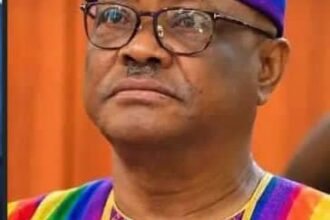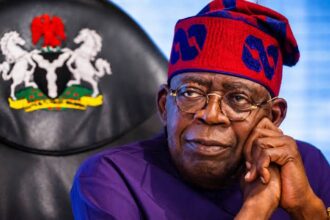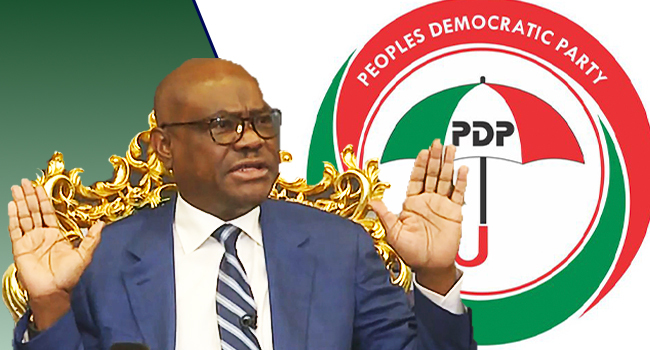
The Minister of the Federal Capital Territory (FCT), Nyesom Wike, has made it clear that he has not endorsed any candidate for the governorship of Rivers State or for any other elective office ahead of the 2027 general elections. According to him, the only political endorsement he has made—and continues to stand by—is his support for President Bola Ahmed Tinubu.
Wike stated this on Monday night while addressing a joint meeting of stakeholders drawn from both the All Progressives Congress and the Peoples Democratic Party. The meeting, held at his official residence in Life Camp, Abuja, brought together key political figures as early consultations begin to shape alignments ahead of the next electoral cycle.
Speaking candidly to the gathering, the former Rivers State governor said his position on the presidency has never been hidden. He stressed that his support for Tinubu remains firm and consistent, adding that any suggestion that he has secretly endorsed candidates for other positions is misleading.
“I have not endorsed anybody for governorship or any other office,” Wike told the stakeholders. “The only endorsement that exists—and which I have never denied—is for the President.”
His remarks appear aimed at dispelling growing speculation within political circles, particularly in Rivers State, where intense jockeying for influence has already begun. With the 2027 elections still some distance away, the race for succession and control of political structures in the state is gradually taking shape, often accompanied by rumours of alliances and endorsements.
Wike, however, warned aspirants and political actors against reading too much into such claims. He insisted that the era when individuals or sitting governors could impose candidates on the people of Rivers State is over.
According to him, political realities have evolved, and the electorate is now more assertive in determining leadership choices. He cautioned that any attempt to manipulate the process or impose candidates would ultimately fail.
“The mistakes of the past will not be repeated,” he said. “No governor, from anywhere, can sit down and impose a candidate on Rivers people. That era is gone.”
The minister also used the opportunity to acknowledge the role played by the Rivers State House of Assembly, particularly under the leadership of Martin Amaewhule. He noted that the Assembly’s actions in recent political developments have been significant and have contributed to shaping the current direction of the state’s politics.
While he did not go into specific details, his comments suggest a recognition of the legislature’s influence in ongoing political realignments within Rivers State.
Wike further urged members of the emerging coalition—comprising stakeholders from both APC and PDP backgrounds—to remain focused on the broader objective of advancing the interests of Rivers State. He emphasised that only those who demonstrate genuine commitment to the collective good would ultimately benefit from the political process.
In a political environment often driven by personal ambition, Wike cautioned against the rush for endorsements and the divisions such ambitions can create. He stressed that unity has been the foundation of the group’s current strength and must not be sacrificed.
“Our strength today is not because of money,” he said. “It is because we have chosen to work together. That unity is what has brought us this far.”
He warned that there are external forces closely watching the group’s activities and actively seeking ways to undermine their collaboration. According to him, the success of the coalition has made it a target for those who would prefer to see it fragmented.
“If we were not working together, if we were not united, it would be easy for them,” Wike stated. “But because we are united, people are uncomfortable. They will do anything to create division among us.”
The minister did not shy away from addressing internal concerns as well. He expressed disappointment in certain individuals who, after benefiting from appointments and opportunities facilitated by the group, have turned around to criticise its leadership.
Describing such actions as a reflection of poor character, Wike warned that betrayal and political opportunism would not be rewarded. He maintained that loyalty, discipline, and integrity remain essential for sustaining any meaningful political movement.
“It is unfortunate that some people, after benefiting, now choose to speak against the same structure that helped them,” he said. “That is not how to build trust or leadership.”
He also cautioned against attempts by individuals to advance themselves through deceit or manipulation, noting that such strategies rarely succeed in the long term. According to him, political success must be built on credibility and genuine relationships, not backdoor tactics.
Clarifying his stance once again, Wike dismissed reports suggesting that he has privately endorsed candidates for upcoming elections. He insisted that there is no difference between his public and private positions, and that any claim to the contrary is unfounded.
“I do not have one position in private and another in public,” he said. “What I say openly is what I stand by.”
He reiterated that, for now, the only endorsement recognised by the group is for the presidency, underscoring their collective support for Tinubu.
Wike also commended the efforts of council chairmen, Rivers elders, and leaders from both APC and PDP who played roles in organising the meeting. He noted that the successful turnout and absence of complaints about exclusion were strong indicators that the process had been inclusive and well-coordinated.
According to him, inclusiveness is critical to building trust and sustaining political cooperation, especially in a diverse and complex political landscape like Rivers State.
As the meeting concluded, Wike’s message remained clear: unity must be preserved, premature endorsements must be avoided, and the focus must remain on building a strong, credible political front ahead of 2027.
In a climate already heating up with political calculations and shifting alliances, his intervention serves as both a caution and a strategic signal—one that underscores the importance of discipline, clarity, and cohesion in navigating the road to the next general elections.