Nigeria and the United Kingdom have signed a £746 million export finance agreement to support the long-awaited redevelopment of Lagos’ Apapa and Tin Can Island port complexes, in a move both governments say will significantly boost trade, maritime infrastructure, and economic cooperation between the two countries.
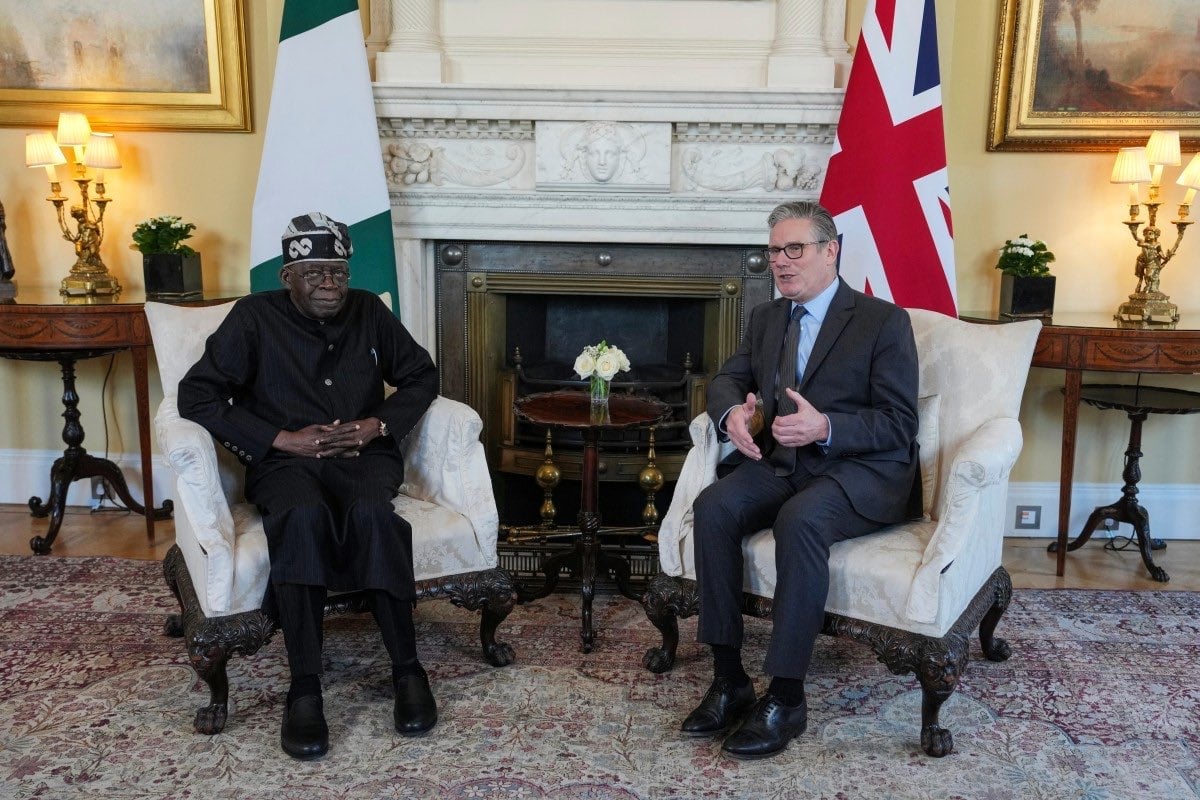
The agreement was announced by British Prime Minister Keir Starmer during a bilateral meeting with President Bola Ahmed Tinubu at 10 Downing Street on the second day of the Nigerian leader’s historic state visit to Britain.
Describing the engagement as a milestone in UK-Nigeria relations, Starmer said the deal demonstrates the growing strength of economic ties between the two nations and the potential for even deeper collaboration.
“Today is the opportunity to take that to another level with the agreements that we’ve been able to reach on exports, and I think that shows we can go even further than we’ve already gone,” the British Prime Minister stated.
The £746 million facility, backed by UK export finance, is expected to modernise and expand facilities at Apapa and Tin Can Island ports—two of Nigeria’s busiest maritime gateways. The redevelopment project is aimed at improving cargo handling capacity, reducing congestion, enhancing logistics efficiency, and strengthening Nigeria’s competitiveness in regional and global trade.
In his remarks, President Tinubu highlighted Nigeria’s ongoing economic reforms, stressing that the country is undertaking bold measures to stabilise and reposition its economy for long-term growth.
“We need more trade agreements and economic relationships that we build between nations. Nigeria is currently going through a very strong reform of the economy,” Tinubu said.
He noted that Nigeria, as the largest country in West Africa and one of the most populous nations on the African continent, faces complex security and economic challenges. Among these, he identified terrorism and instability in parts of West Africa, linking them partly to climate-related pressures.
“The largest country in West Africa, and on the continent, is challenged by terrorism coming from the conflict of climate change,” the President stated, suggesting that environmental degradation and resource competition are contributing to insecurity in the region.
Tinubu also acknowledged that both Nigeria and the United Kingdom are navigating global economic headwinds.
“Currently, the entire world is challenged. Nigeria is not immune. Britain is not immune,” he said, adding that the bilateral discussions focused on improving the economic welfare of citizens in both countries amid global volatility.
According to the President, the talks were centred on strengthening collaboration in trade, investment, and shared global challenges. He expressed optimism that Britain would take further steps to “accelerate the friendship, partnership and collaboration” between both nations.
Prime Minister Starmer described Tinubu’s visit as historic, noting that it marked the first inward state visit by a Nigerian leader to the United Kingdom in 37 years. He emphasised the longstanding ties between the two countries, rooted in history, culture, and strong people-to-people connections.
“The long and shared history between our countries is obvious and much valued, as is the people-to-people contact and engagement that enriches lives here in the United Kingdom,” Starmer said.
He added that the UK and Nigeria already cooperate closely in areas such as defence, security, and economic development, but insisted that both governments are committed to deepening the partnership further.
Beyond the export finance deal, discussions between the two leaders also covered broader trade and investment frameworks. Tinubu had earlier indicated that his engagements with the UK government would focus on expanding economic cooperation and addressing shared concerns, including security threats and climate change.
The Minister of Marine and Blue Economy, Adegboyega Oyetola, underscored the strategic importance of the port redevelopment project. He said modernising Apapa and Tin Can Island ports would reinforce Nigeria’s role as a leading maritime and logistics hub in West and Central Africa.
“This project will strengthen Nigeria’s position as a leading maritime hub in West and Central Africa,” Oyetola said, adding that improved port infrastructure would facilitate smoother trade flows, attract foreign investment, and support job creation.
The state visit, which began on Wednesday, followed an invitation from Their Majesties King Charles III and Queen Camilla, who received President Tinubu and the First Lady at Windsor Castle. The visit includes high-level engagements and the planned signing of a Memorandum of Understanding aimed at strengthening trade and investment ties.
President Tinubu was accompanied by a high-powered delegation comprising senior government officials and security chiefs. Among them were Senate President Godswill Akpabio; Attorney General and Minister of Justice, Prince Lateef Fagbemi; Minister of Solid Minerals, Dele Alake; Minister of Information and National Orientation, Idris Mohammed; and Minister of State for Foreign Affairs, Ambassador Bianca Ojukwu.
Also present were Minister of Finance and Coordinating Minister of the Economy, Wale Edun; Minister of Industry, Trade and Investment, Dr. Jumoke Oduwole; Minister of Culture and Creative Economy, Hannatu Musawa; Minister of Communications and Digital Economy, Bosun Tijani; Minister of Defence, Gen. Christopher Musa; National Security Adviser, Malam Nuhu Ribadu; and Director-General of the National Intelligence Agency, Mohammed Mohammed.
Analysts view the port redevelopment deal as a critical component of Nigeria’s broader infrastructure renewal drive. Apapa and Tin Can Island ports have long struggled with congestion, outdated facilities, and logistical bottlenecks, factors that have increased the cost of doing business and undermined trade efficiency.
By leveraging UK-backed export finance, Nigeria aims to accelerate the transformation of its maritime sector, improve revenue generation, and position Lagos as a competitive gateway for regional commerce.
As both leaders concluded their meeting, they reiterated their commitment to a forward-looking partnership anchored on trade expansion, economic resilience, and mutual prosperity. The £746 million agreement, they suggested, is not merely a financial arrangement but a strategic step toward deepening bilateral ties in an increasingly interconnected and uncertain global landscape.