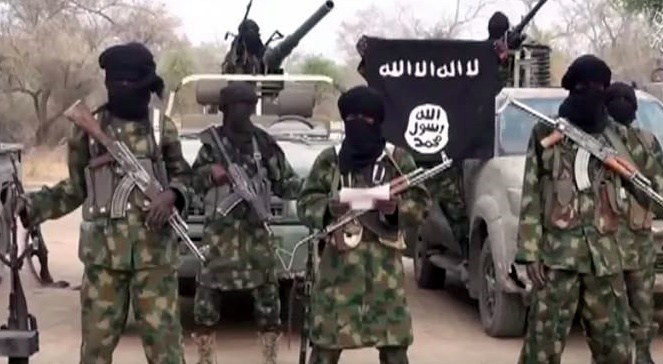
Nigeria has emerged as one of the countries with the sharpest rise in terrorism-related fatalities worldwide, even as global figures show a significant decline in overall terror deaths. This troubling development is contained in the 2026 edition of the Global Terrorism Index (GTI), which paints a sobering picture of the security landscape in parts of Africa, particularly Nigeria.
According to the report, Nigeria recorded the largest increase in terrorism fatalities in 2025, with deaths rising by 46 per cent to a total of 750. The document attributes a staggering 80 per cent of these fatalities to two extremist groups operating in the country: Islamic State West Africa Province (ISWAP) and Boko Haram. Their continued operations, particularly in the North-East, have sustained Nigeria’s position among the most affected nations globally.
The GTI further noted that terrorism remains highly concentrated globally, stating that “just under 70 per cent of deaths from terrorism occurred in only five countries: Pakistan, Burkina Faso, Nigeria, Niger, and the Democratic Republic of the Congo.”
It added that “Nigeria and the Democratic Republic of the Congo had the largest increases in deaths from terrorism, with rises of 237 deaths and 102 deaths, respectively.”
According to the report, Nigeria recorded two out of the 20 most fatal terrorist attacks in 2025, all of which occurred in Borno State and were carried out by the Islamic State West Africa Province (ISWAP) and Boko Haram.
The report said, “Gunmen attacked the village of Darajamal, Bama local government area, Borno state, on September 5, 2025, killing 58 villagers and 5 soldiers. 30 of the gunmen were reportedly killed by the Nigerian army after the attack.
“No organisation has claimed responsibility for the assault at the time of writing, although local media sources have attributed the attack to Islamic State West Africa Province (ISWAP).”
Also, on May 15, 2025, “Jihadists attacked the neighbouring villages of Mallam Karamti and Kwatandashi in Kukawa local government area, Borno state.
“According to local press reports, approximately one hundred civilians were rounded up and taken into the forest, with fifty-seven bodies later recovered and seventy individuals still missing. Media reports attribute the attack to Boko Haram’s JAS faction.”
The GTI, produced by the Institute for Economics & Peace, is a comprehensive study analysing the impact of terrorism across 163 countries, covering 99.7 per cent of the world’s population.
The report uses data from Terrorism Tracker and other sources to rank countries based on the impact of terrorism using a scale from 0 to 10.
According to the report, global terrorism trends showed a significant improvement in 2025.
“Deaths from terrorism fell by 28 per cent to 5,582, and incidents decreased by 22 per cent to 2,944, marking the lowest figures since 2007,” the report said.
However, the decline was not uniform across regions, as the report highlighted a worrying spike in Western countries, noting that “western terrorism fatalities rose sharply by 280 per cent to 57 in 2025, largely driven by antisemitism, Islamophobia and political terrorism.”
Sub-Saharan Africa continues to bear the brunt of global terrorism.
The GTI emphasised that six of the 10 most affected countries are located in the region, reinforcing its status as the global epicentre of terrorism.