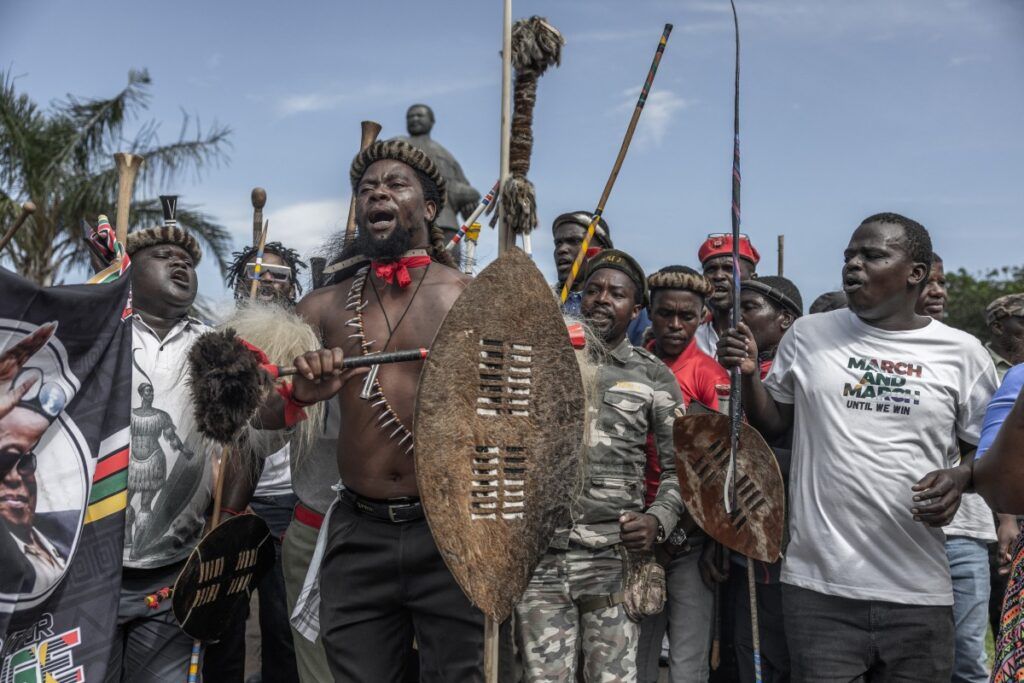
Tensions escalated in South Africa’s coastal city of Durban on Wednesday as police fired teargas and rubber bullets to disperse hundreds of protesters demanding stricter action against foreigners, including Nigerians and other African migrants.
The protest, which drew participants from various political groups and civil society organisations, quickly turned volatile as demonstrators marched through major streets, waving placards and chanting slogans against undocumented immigrants. Among the groups present was Operation Dudula, a controversial movement known for its strong anti-immigration stance.
Eyewitnesses reported that the protest began as a peaceful march but soon became confrontational as demonstrators attempted to move into areas where many foreign nationals operate businesses. Police intervened after some protesters reportedly tried to force their way into certain neighbourhoods and commercial hubs.
Security forces responded by deploying teargas and firing rubber bullets in an effort to control the crowd and prevent further escalation. The situation created panic in parts of the city, with residents and shop owners scrambling to secure their premises.
Several protesters were seen running for cover as clouds of teargas filled the air, while others stood their ground, continuing to chant and wave placards calling for the deportation of undocumented migrants.
Authorities have not yet confirmed the number of injuries or arrests, but emergency services were reportedly on standby as tensions remained high throughout the day.
The demonstration reflects a broader wave of anti-foreigner sentiment that has periodically surfaced in South Africa over the years. Protesters argue that undocumented immigrants are placing pressure on public services, taking jobs from locals, and contributing to crime — claims that have often been disputed by analysts and human rights groups.
Chants during the protest targeted migrants from several countries, with Nigerians frequently mentioned, highlighting the strain in relations between some South African communities and foreign nationals.
Members of Operation Dudula, which loosely translates to “push back,” have been at the forefront of such campaigns. The group has organised similar demonstrations in the past, often calling for businesses owned by foreigners to be shut down and undocumented migrants to be deported.
While supporters of the movement insist they are advocating for economic justice and law enforcement, critics have accused them of promoting xenophobia and vigilantism.
The protest caused significant disruption across parts of Durban, particularly in commercial areas where many migrant-owned businesses operate. Some shop owners reportedly closed early out of fear of looting or vandalism, while others stayed away entirely.
For many foreign nationals living in the city, the demonstration reignited fears of violence. South Africa has experienced several waves of xenophobic attacks in the past, some of which resulted in deaths, injuries, and the destruction of property.
Nigerian-owned businesses, in particular, have often been targeted during such unrest, prompting repeated diplomatic concerns between Nigeria and South Africa.
Residents in affected areas described an atmosphere of anxiety, with many choosing to remain indoors until the situation calmed.
South African police moved quickly to contain the situation, insisting that while citizens have the right to protest, violence and intimidation would not be tolerated.
A police spokesperson said security agencies were closely monitoring developments and would take necessary action to maintain order. The use of teargas and rubber bullets, officials said, was aimed at preventing the protest from spiraling into widespread unrest.
Authorities have repeatedly urged citizens to channel grievances through legal and democratic processes rather than resorting to actions that could incite violence.
Government officials have also acknowledged the underlying concerns around unemployment and economic hardship but warned against blaming foreign nationals for systemic challenges.s
South Africa continues to grapple with high unemployment rates, particularly among young people, as well as rising living costs and economic inequality. These conditions have contributed to frustration among many citizens, creating fertile ground for anti-immigrant rhetoric.
Analysts note that while migrants are often blamed for economic difficulties, the issues are more deeply rooted in structural factors such as slow economic growth, policy challenges, and global economic pressures.
Nevertheless, the perception that foreigners are competing for limited opportunities has remained a powerful narrative in some communities.
The targeting of Nigerians and other foreign nationals carries diplomatic implications, especially given the historically strong — though sometimes strained — relationship between South Africa and Nigeria.
Both countries are among Africa’s largest economies and have significant political influence on the continent. However, incidents of xenophobic violence have in the past triggered diplomatic tensions, with Nigeria expressing concern over the safety of its citizens.
There have also been calls for stronger bilateral engagement to address recurring issues and protect foreign nationals living in South Africa.
Civil society organisations and human rights groups have called for calm, urging both protesters and authorities to avoid actions that could escalate tensions further.
They emphasised the need for dialogue, community engagement, and policy-driven solutions to address concerns about immigration and economic inclusion.
Advocates have also stressed the importance of protecting the rights and dignity of all individuals, regardless of nationality, warning that violence or discrimination undermines social cohesion.
The events in Durban underscore a recurring challenge for South Africa — balancing legitimate concerns about economic opportunities and public services with the need to uphold human rights and maintain social harmony.
While protests over immigration are not new, each episode raises questions about how best to address underlying grievances without fueling division or violence.
As the situation continues to unfold, attention will likely turn to how authorities respond in the coming days and whether meaningful steps will be taken to prevent further escalation.
For now, the scenes in Durban serve as a stark reminder of the tensions that can arise when economic pressures, social anxieties, and political narratives intersect — and the urgent need for solutions that bring communities together rather than drive them apart.