United States President Donald Trump has deleted a controversial artificial intelligence-generated image that appeared to portray him in the likeness of Jesus Christ, following widespread criticism from Christian commentators and religious observers who described the depiction as inappropriate and “blasphemous.”
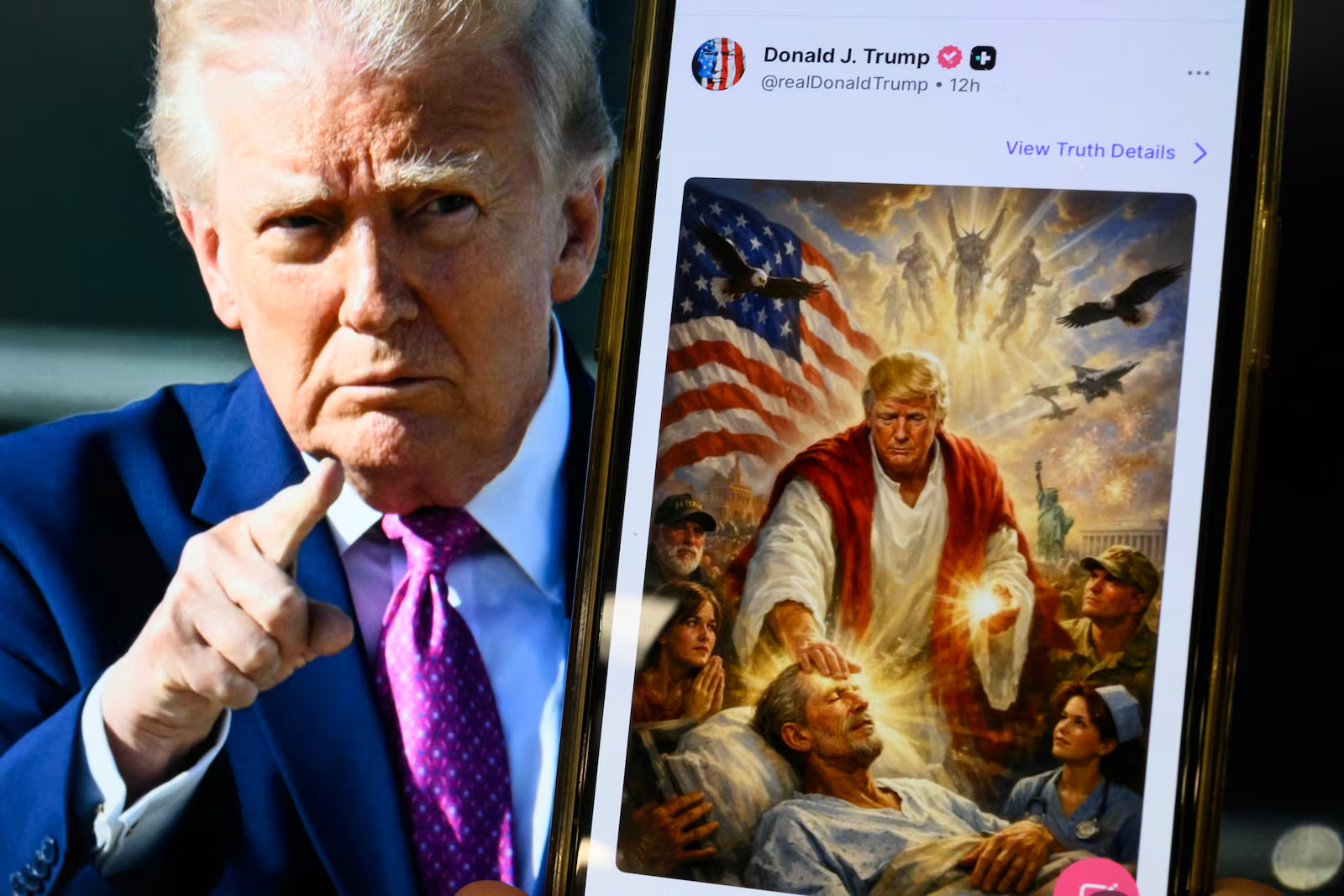
The image, which was shared on Trump’s social media platform, quickly drew attention for its striking visual elements and symbolic overtones. It showed the president dressed in a flowing white robe, with his hand placed on the forehead of a visibly ill man in what appeared to be a healing gesture. Critics noted that the pose and composition closely resembled classical Christian artwork depicting Jesus performing miracles, particularly the healing of the sick.
The imagery was further amplified by a dramatic background that incorporated a mix of religious, patriotic, and military symbols. Visible in the scene were the Statue of Liberty, a prominently displayed American flag, an eagle—often associated with U.S. national identity—and several fighter jets flying overhead. Additional figures in the image included a nurse, a woman in prayer, and what appeared to be a uniformed soldier, all contributing to a layered and symbolic portrayal that blended themes of faith, nationalism, and authority.
The post immediately sparked backlash, particularly among Christian groups who argued that the depiction crossed a line by equating a political figure with a central religious figure in Christianity. Many commentators described the image as disrespectful to religious sensibilities, warning that such portrayals risk trivialising deeply held beliefs.
The controversy was further intensified by the timing of the post. It came just hours after Trump had issued a strongly worded criticism of Pope Leo XIV, the leader of the Catholic Church. The Pope had recently voiced concerns about the United States’ policies, including its involvement in the ongoing conflict involving Israel and Iran, as well as its stance on migration.
Trump’s earlier remarks about the Pope had already generated significant debate, with critics accusing him of targeting a major religious figure in a manner that could deepen divisions between political and religious institutions. The subsequent posting of the AI-generated image added another layer of controversy, with some observers interpreting it as part of a broader pattern of confrontational rhetoric.
Amid the growing backlash, the image was eventually removed from Trump’s social media account. However, by that time, it had already circulated widely across various platforms, attracting reactions from both supporters and critics.
Speaking to reporters several hours after deleting the post, Trump sought to clarify his intention behind sharing the image. He downplayed its religious interpretation, stating that he did not see it as a depiction of himself as Jesus. Instead, he claimed that he believed the image portrayed him in a medical or humanitarian role.

“It’s supposed to be as a doctor making people better,” Trump said. “And I do make people better. I make people a lot better,” he added, defending the broader message he intended to convey.
Despite the clarification, the explanation did little to quell criticism from religious commentators, many of whom maintained that the imagery itself was inherently problematic regardless of the stated intent. They argued that the visual parallels to traditional depictions of Jesus were too strong to ignore and that public figures, particularly political leaders, should exercise caution when engaging with religious symbolism.
In addition to addressing the image, Trump also reaffirmed his earlier criticism of the Pope, indicating that he had no intention of retracting his statements or issuing an apology. According to the president, his remarks were justified, as he believed the Pope’s positions on certain issues were incorrect.
“I’m not going to apologise,” Trump told reporters, adding that “Pope Leo said things that are wrong.”
The exchange between the U.S. president and the head of the Catholic Church has drawn global attention, highlighting the increasingly complex relationship between political leadership and religious authority. Analysts note that while disagreements between political and religious figures are not uncommon, the tone and public nature of the current dispute have made it particularly notable.
The incident also underscores the growing role of artificial intelligence in shaping political communication. The use of AI-generated imagery by high-profile figures introduces new ethical and cultural considerations, especially when such content intersects with sensitive subjects like religion.
For many observers, the controversy raises broader questions about the boundaries of political expression in the digital age. It also reflects the challenges leaders face in navigating a media environment where content can spread rapidly and provoke strong reactions across diverse audiences.
As reactions continue to unfold, the episode serves as a reminder of the importance of sensitivity when dealing with religious imagery and the potential consequences of blending political messaging with deeply symbolic representations.