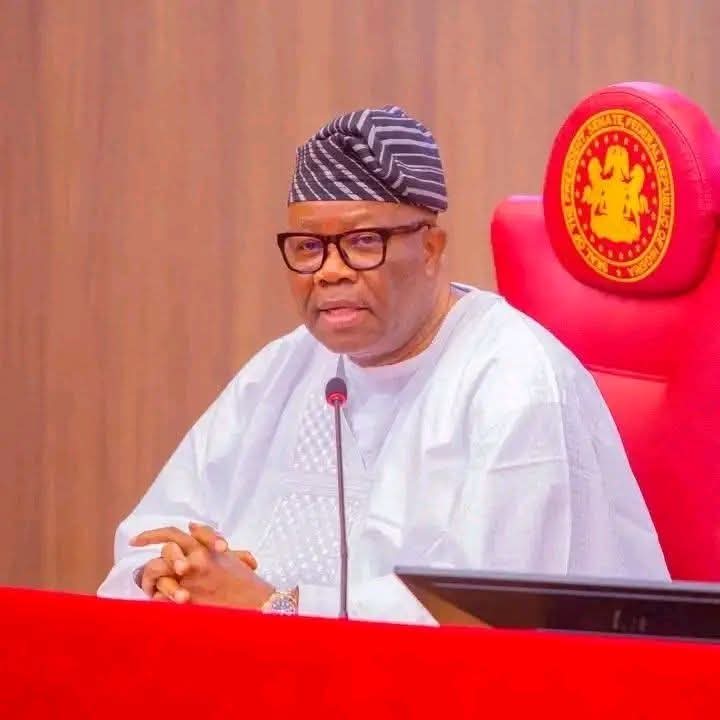
Senate President Godswill Akpabio has attributed the recent surge in insecurity across Nigeria to political activities ahead of the 2027 general elections, arguing that some actors are deliberately fueling unrest for strategic advantage.
Akpabio made the remarks on Tuesday, April 14, 2026, during the commissioning of the newly constructed headquarters of the Nigerian Revenue Service in Abuja. The high-profile event was attended by several top government officials, including President Bola Ahmed Tinubu, who formally inaugurated the complex.
Addressing the gathering, Akpabio asserted that the rise in security challenges is not coincidental but rather politically motivated. According to him, certain individuals and groups who are dissatisfied with the current administration have resorted to sponsoring instability as a means of undermining the government.
“Insecurity is increasing because elections are approaching,” he said. “There are people who do not know what else to do, so they resort to sponsoring insecurity. But immediately after the elections, within two weeks, you will see that the situation will normalize.”
The Senate President expressed confidence that the security situation would significantly improve once the electoral cycle concludes, suggesting that the current wave of violence is tied closely to political maneuvering rather than systemic failure.
Akpabio used the occasion to commend President Tinubu’s leadership, stating that the administration’s performance has unsettled opposition elements. He argued that the perceived progress under Tinubu has left critics struggling to mount a coherent political challenge, thereby pushing some toward disruptive tactics.
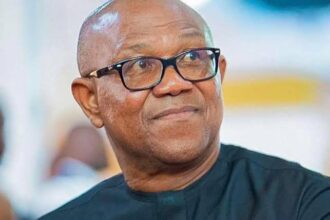
He further criticized opposition parties, describing them as fragmented and lacking direction. In a pointed remark, Akpabio referenced Peter Obi, the Labour Party’s presidential candidate in the 2023 elections, suggesting that the opposition has failed to maintain cohesion after the polls.
“Opposition is in disarray,” Akpabio said. “Someone secured over six million votes and then abandoned both the party and the mandate, moving around in search of another platform, while still blaming the ruling party.”
His comments reflect the intensifying political rhetoric as Nigeria gradually moves toward another election cycle, with early alignments, defections, and strategic positioning already shaping the landscape.
Beyond political commentary, Akpabio also appealed to Nigerians to exercise patience with the current administration, insisting that ongoing reforms and policies would yield positive results in due course.
“Let Nigerians be patient. The President is doing the right thing,” he said, urging citizens to remain supportive despite prevailing economic and security challenges.
The Senate President also took time to commend the Executive Chairman of the Federal Inland Revenue Service, Zacch Adedeji, for his efforts in transforming the country’s tax administration system. Akpabio described Adedeji as a rare figure in a role traditionally viewed with skepticism by the public.
“Even in biblical times, tax collectors were not liked,” he noted. “But Zacch Adedeji has changed that narrative. He is perhaps the first tax administrator that Nigerians genuinely appreciate, and that speaks volumes about his performance.”
The commissioning ceremony brought together key figures from across the executive and legislative arms of government. Among those present were Deputy Senate President Jibrin Barau, Speaker of the House of Representatives Tajudeen Abbas, and Deputy Speaker Benjamin Kalu.

Observers note that Akpabio’s remarks come at a time when Nigeria continues to grapple with multifaceted security challenges, including insurgency in the North-East, banditry in the North-West, and sporadic violence in other regions. His assertion that political interests are driving insecurity adds a new dimension to the ongoing national conversation about the root causes of violence and instability.
While some analysts may view his comments as a political interpretation of complex security dynamics, others argue that electoral cycles in Nigeria have historically been accompanied by heightened tensions, including the mobilization of non-state actors.
Nevertheless, Akpabio’s position underscores the need for vigilance as the country approaches another major electoral season. It also raises important questions about the intersection of politics and security, particularly the extent to which political competition may be influencing the current security landscape.
As Nigeria navigates this period, stakeholders across government, civil society, and the international community are expected to intensify calls for peaceful political engagement, strengthened security coordination, and accountability for any actions that threaten national stability.
The coming months will likely test the resilience of Nigeria’s democratic institutions, as well as the capacity of its security architecture to manage both political and non-political threats effectively.