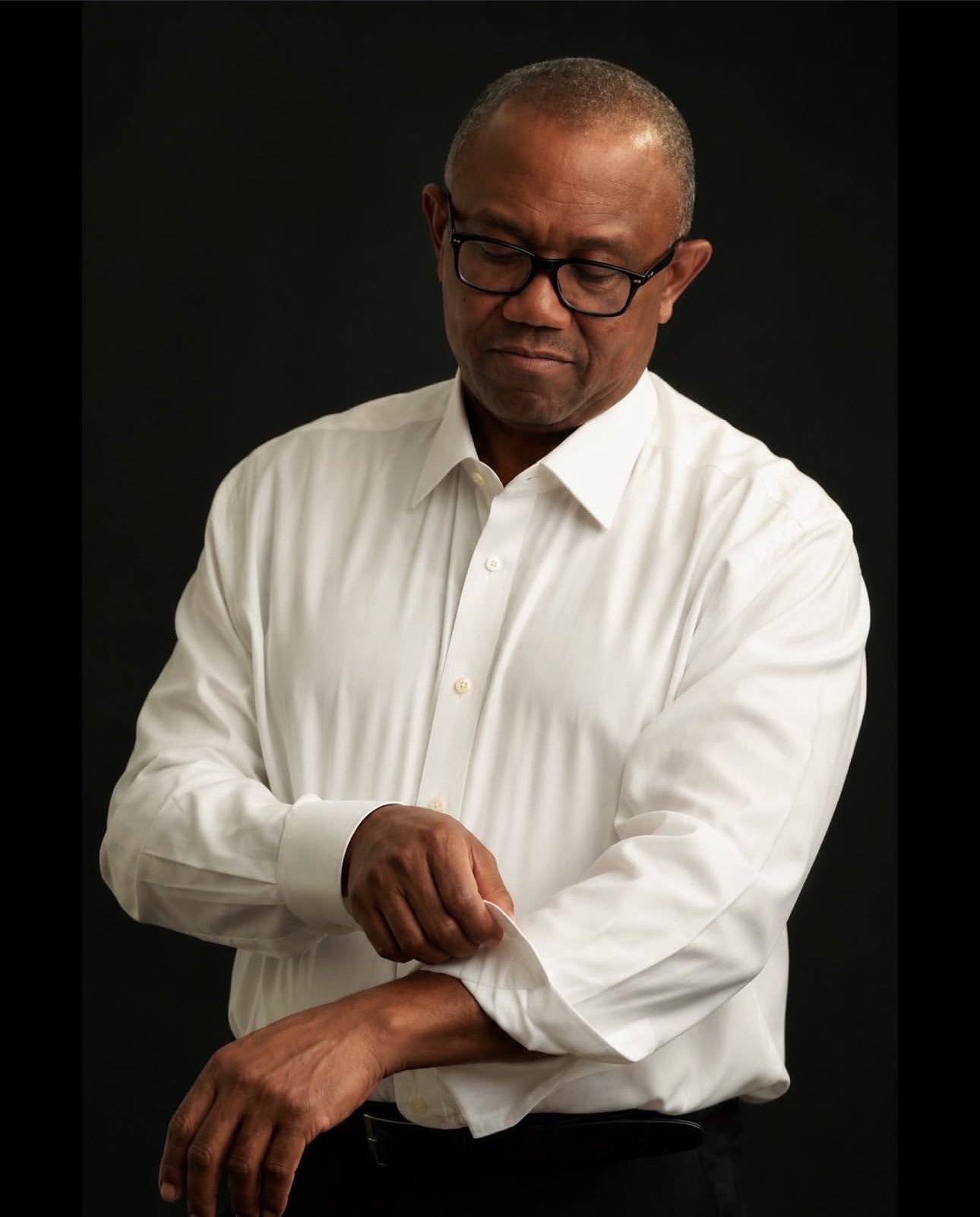
Former Anambra State Governor and presidential candidate of the Nigeria Democratic Congress (NDC), Peter Obi, has rejected claims by the Anambra State Government that his administration left behind significant inherited debts, including a ₦2 billion ecological loan, unpaid contractors’ liabilities and outstanding salaries, gratuities and pensions.
Obi described the allegations as false, insisting that his administration left the state in a financially responsible position when he handed over power.
His response followed claims attributed to the current Anambra State Government concerning the financial obligations allegedly inherited from his administration.
Obi said his administration had systematically cleared historical financial obligations, including gratuities and arrears accumulated over several years before he assumed office.
According to him, more than ₦35 billion was used to settle outstanding gratuities and related arrears during his tenure.
He maintained that at the point he handed over the administration, the state had no outstanding obligations in salaries, gratuities or pensions.
Obi also disputed claims that his administration owed contractors for projects that had been properly executed and certified.
“At the point of handover, the state owed nothing in salaries, gratuities, or pensions, nor did we owe anything to any contractor for projects duly executed and certified,” he stated.
Addressing specifically the controversy surrounding the alleged ₦2 billion ecological loan, Obi explained that the money was not a loan incurred by his administration but an ecological fund released shortly before the end of his tenure for a specific erosion-control project.
According to him, the funds were released approximately three months before he left office to address the Oko/Umuchiana erosion crisis.
Obi said he deliberately decided not to spend the money despite pressure to do so, insisting that the funds should remain available for the incoming administration because the project remained outstanding.
He explained that his decision was based on the principle that government is a continuum and that funds allocated for specific purposes should be preserved for those purposes.
“Despite pressure to spend the money, I refused, insisting that it should be left for my successor because government is a continuum and the funds were tied to a specific project,” he said.
Obi further claimed that the money remained intact in a First Bank account, which he identified as Account No. 2018779464, with a balance of more than ₦2.13 billion.
He stressed that funds specifically earmarked for particular projects were not included in the more than ₦75 billion in savings he said his administration left behind.
According to him, the distinction is important because the funds reserved for specific projects could not properly be regarded as part of the general savings available to the incoming administration.
Obi said the financial position of the state at the time of the handover could be verified through official records, including banking and government documents.
He challenged anyone who could establish that his administration left behind the liabilities being alleged by the state government to provide evidence.
“If anybody can establish anything to the contrary, I will stop campaigning,” Obi declared.
The former governor’s statement has added a fresh dimension to the continuing debate over the financial records inherited by successive administrations in Anambra State.
The dispute centres on whether the liabilities and funds referenced by the state government should be regarded as debts incurred by Obi’s administration or as funds and obligations associated with specific government programmes and projects.
Obi’s position is that his administration cleared inherited arrears, left no unpaid salaries, gratuities or pensions, and did not owe contractors for completed and certified projects.
He also maintained that the ecological funds were preserved rather than spent because they had been released for a designated erosion-control intervention.
The former governor therefore called for the relevant financial records to be examined to establish the facts surrounding the state’s finances at the time of the handover.