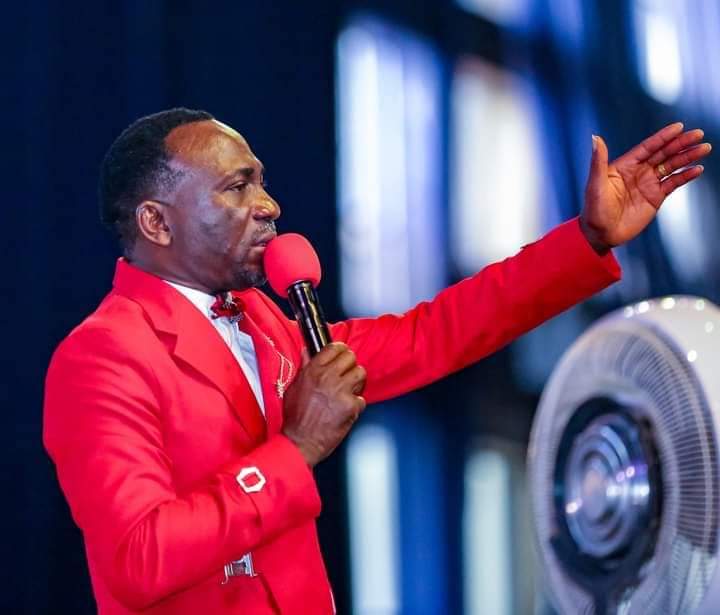
Senior Pastor of Dunamis International Gospel Centre, Paul Enenche, has called for a comprehensive census to determine the religious composition of Nigeria, particularly the actual number of Christians and Muslims in the country.
Enenche made the call during a church service on Sunday while reacting to recent comments by Islamic cleric Sani Yahaya Jingir concerning religion, population and political participation ahead of the 2027 general elections.
Jingir had urged Muslims to use their numerical strength to support Muslim candidates and advocated the continuation of a Muslim-Muslim presidential ticket. The cleric also claimed that Muslims constitute the majority of Nigeria’s population.
Reacting to the claim, Enenche rejected any suggestion that Christianity was subordinate to another religion in Nigeria. He argued that Christians are widely distributed across the country and questioned the basis for making claims about the religious population without reliable census data.
According to the pastor, the most credible way to resolve disagreements over Nigeria’s religious demographics would be to conduct a census that allows citizens to voluntarily identify their religious affiliation.
He said, “Christianity is not secondary, and no group of religious fanatics will ever make it secondary.”
Enenche further argued that Christians could be found in significant numbers across virtually every part of the country, making it necessary for claims about religious dominance or numerical superiority to be backed by verifiable data.
“If you think you’re superior, why didn’t you people allow census all this while? And if you want to settle the scores, do a census, let everybody tell you what they believe in, then you will be shocked,” he said.
The pastor’s comments come amid growing public debate over the role of religion in Nigerian politics, particularly as political parties and religious leaders begin positioning themselves ahead of the 2027 elections.
The debate over religious balancing in political leadership has remained contentious in Nigeria, with supporters of Muslim-Muslim tickets arguing that political competence should take precedence over religious considerations, while critics maintain that religious diversity and balance are important in a deeply pluralistic society.
Enenche also expressed concern about what he described as inflammatory statements from religious and political figures, warning that reckless rhetoric could heighten tensions and potentially trigger violence.
He criticised security agencies for allegedly failing to take sufficient action against individuals whose public comments could inflame religious sentiments.
“It’s time to call them to order,” he said, arguing that statements capable of provoking violence should not be ignored by the authorities.
The pastor urged security agencies to pay closer attention to inflammatory rhetoric, particularly during the politically sensitive period leading to the 2027 elections.
His remarks reflect the growing concern among political and religious stakeholders that heightened religious rhetoric could deepen divisions and threaten peaceful political participation.
Nigeria is constitutionally a secular state with a population made up predominantly of Christians and Muslims, alongside adherents of traditional religions and other faiths. However, the absence of recent official nationwide data specifically detailing religious affiliation has contributed to recurring disagreements over the numerical strength of the country’s major religious groups.
Enenche’s call for a religious census has therefore added another dimension to the ongoing debate, with the pastor insisting that claims about religious demographics should be settled through credible data rather than political or religious assertions.
As Nigeria moves towards the 2027 elections, the debate over religion and politics is expected to remain prominent. Stakeholders have continued to call for moderation, tolerance and responsible public communication to prevent political competition from degenerating into religious confrontation.
For Enenche, determining the actual religious composition of the country through credible data would provide a factual basis for discussions about religious representation and political influence.
He maintained that no religious group should be treated as inferior in Nigeria and urged authorities to ensure that public discourse does not become a platform for promoting division or inciting violence.