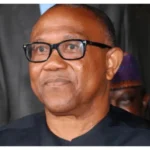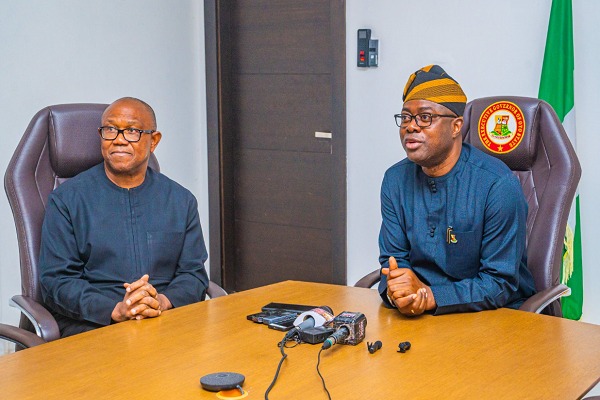
As political realignments gather momentum ahead of Nigeria’s 2027 general elections, former presidential candidate of the Labour Party, Peter Obi, has reiterated his commitment to building a more united, secure, and productive nation following a closed-door meeting with Oyo State Governor, Seyi Makinde, in Ibadan.
Obi, a central figure in the emerging coalition movement within the African Democratic Congress (ADC), spoke to journalists after spending nearly two hours in private discussions with Makinde at the Oyo State Secretariat. He described the engagement as part of a broader series of consultations aimed at shaping Nigeria’s political and economic future.
According to him, the meeting was not an isolated event but one of several ongoing dialogues involving key stakeholders across the country. These consultations, he noted, are designed to explore pathways toward national renewal and to build consensus around critical issues affecting governance, development, and social cohesion.
“We have come to consult and to continue discussions with His Excellency, the Governor, on issues that concern the future of our country,” Obi said. “My dear brother, the Governor, and I share a common belief that Nigeria must work for everyone, and that is the focus of our engagement.”
He emphasised that the discussions extended beyond routine political interactions, stressing that the primary objective was to develop a shared vision for a more functional and inclusive Nigeria. Obi maintained that while political collaboration is important, the ultimate goal remains the transformation of the country into a system that delivers tangible benefits to its citizens.
The former Anambra State governor underscored the need for a fundamental shift in national priorities, arguing that Nigeria’s progress depends on deliberate efforts to promote unity, strengthen institutions, and improve economic productivity. He said leaders must move beyond rhetoric and focus on practical solutions that address the everyday challenges faced by Nigerians.
Central to Obi’s message was the importance of inclusivity and equal opportunity. He reiterated his long-standing position that Nigeria must evolve into a society where success is determined by merit rather than personal connections or political patronage. According to him, creating such a system would not only enhance fairness but also unlock the country’s vast human potential.
He further highlighted the urgency of economic reform, particularly the need to transition from a consumption-driven economy to one anchored on production. Obi argued that sustainable development can only be achieved by investing in sectors that generate employment, add value to local resources, and stimulate industrial growth.
“This is about building a country people can be proud of,” he noted, adding that economic transformation must be at the heart of any serious political agenda going forward.
The Ibadan meeting comes less than 72 hours after a high-level opposition summit held in the city, which attracted prominent political figures and stakeholders from across Nigeria. The summit, widely seen as a platform for exploring coalition possibilities, underscored the growing urgency among opposition actors to consolidate efforts ahead of the next election cycle.
Obi’s visit to Makinde also follows his recent engagement with former President Goodluck Jonathan, further signalling a coordinated series of high-level consultations. Political observers interpret these meetings as part of a broader strategy to build alliances, harmonise interests, and present a unified front capable of challenging the ruling establishment in 2027.
While Obi did not disclose specific details of the discussions with Makinde, the tone of his remarks suggested alignment on key national issues, including governance reforms, economic stability, and national unity. Both leaders are widely regarded as influential voices within the opposition space, and their collaboration is likely to shape ongoing coalition talks.
Analysts note that the current phase of political engagement reflects an early but significant stage in the buildup to the 2027 elections. With multiple parties and factions exploring alliances, consultations such as the Obi-Makinde meeting are expected to play a critical role in determining the structure and viability of any potential coalition.
For Obi, the emphasis remains on substance over politics. He reiterated that the goal of these engagements is not merely to secure electoral advantage but to redefine governance in a way that prioritises the welfare of Nigerians. He stressed that any coalition must be built on shared values, clear policy direction, and a genuine commitment to national development.
As consultations continue across different regions and political blocs, the coming months are expected to witness intensified negotiations and strategic positioning. Whether these efforts will culminate in a cohesive opposition alliance remains uncertain, but the ongoing engagements signal a deliberate attempt to reshape Nigeria’s political landscape.
In the meantime, Obi’s message remains consistent: the future of Nigeria depends on unity, purposeful leadership, and a collective willingness to pursue reforms that will deliver long-term stability and prosperity for all citizens.