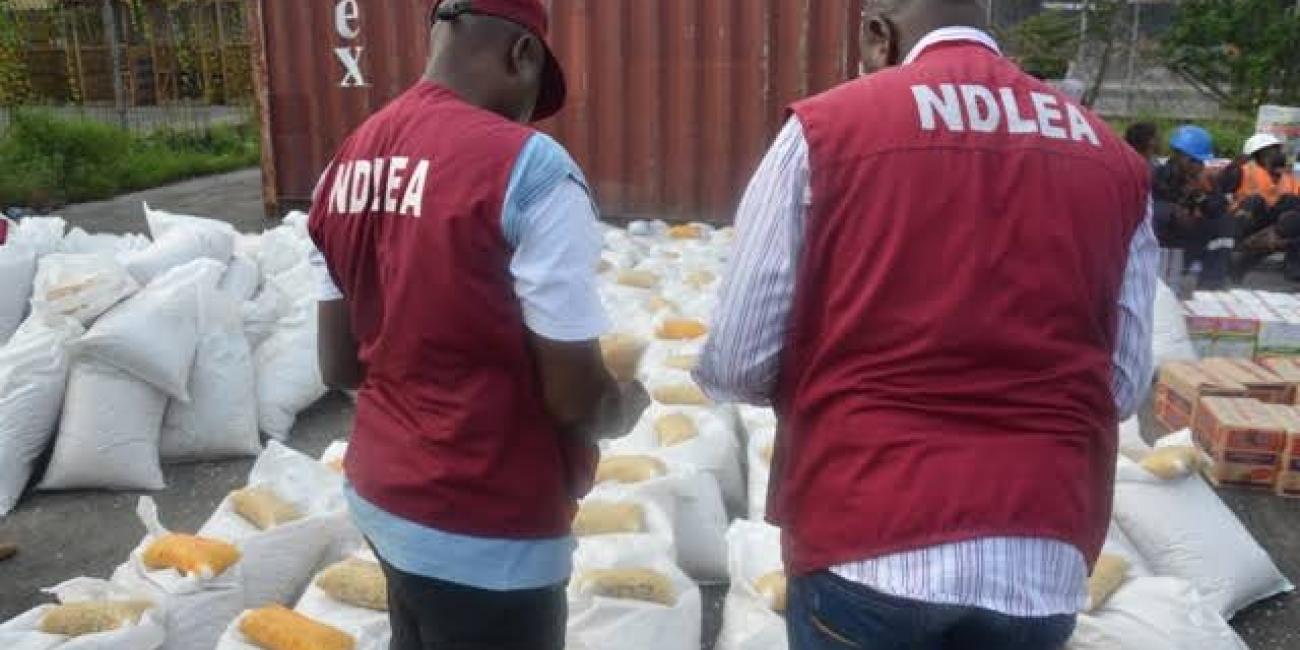
The agency disclosed that three South Africans had been arrested in separate operations involving substantial quantities of illicit substances, including heroin, cocaine and synthetic cannabis, popularly known as Loud.
The arrests, according to the NDLEA, point to a growing trend in which foreign nationals are allegedly being recruited by international drug trafficking organisations to facilitate the movement of prohibited substances through Nigeria to other destinations across the world.
The Assistant Director, Media and Advocacy of the agency, Francis Okogun, disclosed this on Thursday during a joint security briefing involving spokespersons of defence, security and law enforcement agencies at the Office of the National Security Adviser in Abuja.
Okogun, who represented the Director of Media and Advocacy, Femi Babafemi, said investigations had revealed that some foreign nationals were becoming increasingly involved in international drug trafficking networks operating within Nigeria.
He explained that while some of the suspects were allegedly facilitating the transportation of illicit drugs through Nigeria to other countries, others were involved in bringing prohibited substances into the country.
According to him, the agency considered the development particularly significant because of the potential damage it could cause to Nigeria’s international reputation.
He said, “On the arrest of South African nationals in connection with drug trafficking, it is important to clarify that the issue has attracted attention because of the negative impression it could create about Nigeria internationally.
“Our findings indicate that some foreign nationals are increasingly becoming involved in facilitating the movement of illicit drugs through Nigeria to other parts of the world. Some are also involved in bringing such substances into the country.”
Okogun disclosed that three South African nationals had been arrested during the period under review, with the quantity and variety of drugs recovered making the operations particularly noteworthy.
He listed the substances recovered as heroin, cocaine and synthetic cannabis, popularly known as Loud.
The NDLEA spokesman, however, noted that the agency was still investigating the circumstances surrounding the arrests, particularly the identities of those financing the operations and the international networks responsible for the shipments.
He explained that identifying the sponsors and intended destinations of the illicit substances remained a major challenge because drug trafficking suspects often conceal information about their international collaborators.
“As you know, drug traffickers rarely volunteer information about their sponsors or the final destinations of their consignments.
“We are therefore conducting painstaking investigations to establish the actual destinations of the drugs and identify the cartels responsible for the shipments,” he said.
The disclosure comes amid a series of arrests involving South African nationals at Nigerian international airports over alleged attempts to smuggle prohibited substances into the country.
In October 2026, NDLEA operatives arrested a South African woman, identified as Gebashe Sithandiwe Jessie, at the Port Harcourt International Airport over an alleged attempt to smuggle 32.74 kilogrammes of synthetic cannabis, popularly known as Thai Loud, into Nigeria.
The substance was reportedly concealed in her luggage before it was discovered by operatives during routine checks.
The arrest formed part of the agency’s intensified efforts to prevent international drug trafficking organisations from using Nigerian airports as entry and transit points for illicit substances.
In another operation, the NDLEA arrested a 38-year-old South African national, Will Jessica Ann, on July 6, 2026, at the Nnamdi Azikiwe International Airport in Abuja.
The suspect was allegedly found with 5.75 kilogrammes of heroin concealed in 14 large blocks inside her luggage.
According to the agency, she was arrested during the inward clearance of passengers arriving aboard a Qatar Airways flight from Doha to Abuja.
The NDLEA explained that the suspect initially denied travelling with checked-in luggage when questioned by operatives.
However, she reportedly admitted ownership of two bags after investigators established that the luggage tags corresponded with the claim tags attached to her passport.
The discovery led to further investigations into the source of the drugs, the intended recipients and the possible involvement of other members of an international trafficking network.
The agency said investigations into the separate arrests were ongoing, with particular attention being paid to identifying the individuals and organisations behind the shipments and determining their intended destinations.
The latest disclosure has further highlighted concerns about the activities of international drug trafficking syndicates and their alleged use of foreign nationals as couriers to move prohibited substances across national borders.
The NDLEA maintained that the arrests demonstrated the need for sustained surveillance, intelligence sharing and stronger cooperation among security agencies, particularly at the country’s international airports and other entry points.
The agency also reiterated its commitment to dismantling drug trafficking networks operating within Nigeria, identifying their international collaborators and preventing the country from being used as a transit corridor for illicit drugs.
It stressed that investigations would continue until those sponsoring and coordinating the operations were identified and brought to justice.