The conflict in the Middle East has taken another dramatic turn following reports that a senior Iranian military commander linked to the closure of the Strait of Hormuz has been killed in a missile strike. The development marks a significant escalation in a war already straining global security and economic stability.
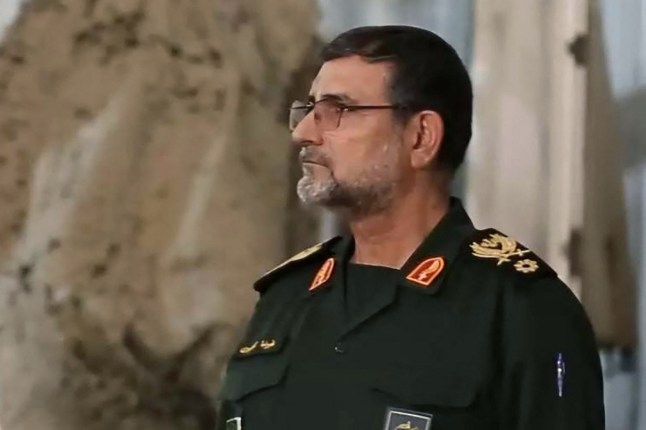
According to multiple reports, Alireza Tangsiri, commander of the naval arm of the Islamic Revolutionary Guard Corps (IRGC), was killed during a series of overnight missile strikes on March 25. The strike reportedly targeted a high-level meeting in the southern Iranian port city of Bandar Abbas, a strategic hub along the Persian Gulf.
Iranian authorities have yet to officially confirm Tangsiri’s death, but Israeli officials have openly claimed responsibility for the operation. The announcement came alongside a strong warning from Israel’s leadership that it would continue to pursue key Iranian figures involved in the ongoing conflict.
Israeli Prime Minister Benjamin Netanyahu described Tangsiri as a central figure in Iran’s military operations in the Gulf, stating that he had “a great deal of blood on his hands.” According to Netanyahu, the commander played a leading role in orchestrating the shutdown of the Strait of Hormuz—one of the world’s most critical oil transit routes.
The Strait of Hormuz, a narrow waterway through which roughly a fifth of global oil supplies pass, has become a focal point in the conflict. Under Tangsiri’s leadership, Iranian forces had reportedly intensified operations aimed at restricting maritime movement, including alleged attacks on commercial vessels and threats against oil infrastructure linked to the United States and its allies.
Israeli Defence Minister Israel Katz confirmed that the strike in Bandar Abbas was deliberate and targeted. He said the operation also resulted in the deaths of other senior naval officers, including intelligence chief Behnam Rezaei.
Katz described the strike as both a tactical and symbolic move, sending a clear message to Iran’s military leadership. “The IDF will hunt you down and eliminate you one by one,” he said, reinforcing Israel’s position that it would continue its military campaign until its strategic objectives are achieved.
Unverified images and videos circulating online appear to show a heavily damaged building in Bandar Abbas, believed to be the site of the meeting where Tangsiri and other officials were gathered. While the authenticity of the footage has not been independently confirmed, it has added to the growing sense of urgency and tension surrounding the conflict.
Tangsiri had been a prominent figure in Iran’s military strategy, particularly in maritime operations. In recent weeks, he reportedly oversaw efforts to halt shipping traffic through the Strait of Hormuz, effectively disrupting global supply chains and contributing to rising energy prices worldwide.
His last public communication, shared on social media, reportedly included updates on vessels denied passage through the strait, as well as warnings directed at U.S.-linked oil facilities in the region. Analysts say his actions played a significant role in escalating the economic impact of the conflict, with ripple effects felt across international markets.
The reported killing comes at a time when diplomatic efforts to de-escalate the crisis remain fragile. The United States, which has been involved in indirect peace discussions, is said to be navigating a delicate balance between military support for Israel and maintaining channels for negotiation.
Sources familiar with the talks indicated that there were concerns about targeting certain Iranian political figures, including Foreign Minister Abbas Araghchi and Parliament Speaker Mohammad Bagher Qalibaf. It was reportedly argued that eliminating key diplomatic figures could derail any possibility of dialogue, leaving no viable counterparts for negotiations.
At the same time, Iran has maintained a firm stance against engaging in talks under current conditions. Speaking on state television, Araghchi reiterated that Tehran was not participating in any negotiations with Washington and remained committed to continuing its resistance.
“Our policy at this moment is to continue our resistance,” he said. “We do not intend to negotiate.”
Iran has also outlined its own conditions for any future peace agreement, including a permanent end to hostilities and compensation for damages caused during the war. The conflict has already resulted in significant casualties, with estimates suggesting that more than 2,000 people have been killed, including senior figures within Iran’s leadership.
Among those reportedly lost earlier in the conflict was Iran’s Supreme Leader, Ayatollah Ali Khamenei, a development that has further intensified the stakes and deepened the political vacuum within the country’s power structure.
The broader implications of the conflict continue to unfold. The disruption of the Strait of Hormuz has had a direct impact on global oil markets, pushing prices higher and fueling concerns about inflation in economies already facing uncertainty.
Meanwhile, regional tensions remain high, with neighboring Gulf states watching closely as the situation evolves. Iran has warned that it could extend its attacks to energy infrastructure across the region if provoked further, raising fears of a wider confrontation.
Observers say the killing of Tangsiri could mark a turning point in the conflict, potentially triggering retaliatory actions from Iran while also reshaping the dynamics of its military command. At the same time, it underscores the increasingly targeted nature of modern warfare, where high-ranking officials are directly in the crosshairs.
Despite ongoing military operations, the path to de-escalation remains unclear. With both sides maintaining hardline positions and trust between parties at a low point, the risk of further escalation continues to loom.
For now, the region remains on edge, as the world watches closely to see whether diplomacy can regain footing or whether the conflict will deepen further, with consequences that extend far beyond the Middle East.