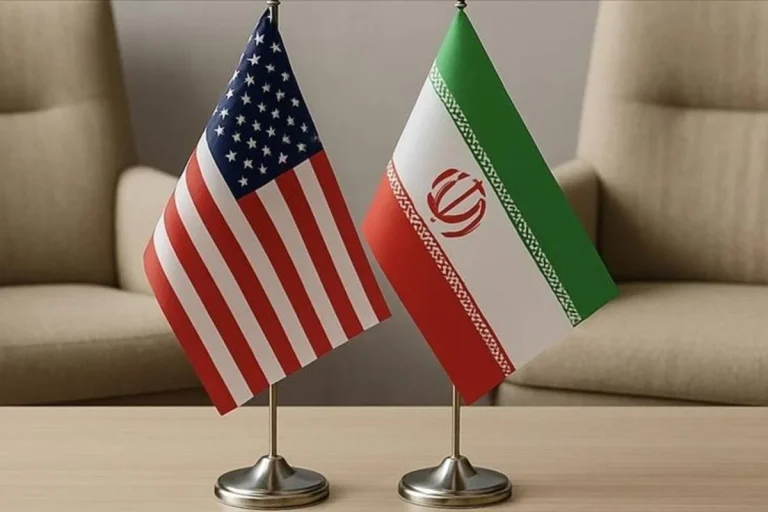
Iran and the United States have exchanged fresh attacks in the Middle East, deepening an increasingly dangerous military confrontation as Tehran retaliates against American strikes on Iranian oil tankers and maintains its grip over the strategic Strait of Hormuz.
Iran’s Islamic Revolutionary Guard Corps (IRGC), the country’s most powerful military force, said on Wednesday that it had launched attacks against American military and maritime targets in response to US action against Iranian vessels.
The latest escalation came after US forces destroyed five Iranian oil tankers a day earlier, further intensifying a confrontation that has already disrupted maritime traffic through the Strait of Hormuz and raised fears of a wider regional conflict.
The Revolutionary Guards said they had targeted 20 US vessels attempting to pass through the strategic waterway, although the details and extent of any damage were not immediately independently verified.
The Strait of Hormuz, which connects the Persian Gulf with the Gulf of Oman, is one of the world’s most important energy corridors. Under normal circumstances, roughly one-fifth of global oil and liquefied natural gas supplies pass through the waterway.
However, the conflict has brought maritime traffic through the strait to an almost complete standstill, with Iran asserting control over passage and requiring vessels to obtain permission and pay transit fees before proceeding.
The confrontation has consequently generated fresh concerns about the global energy market, with oil prices climbing sharply as traders assessed the possibility of prolonged disruption to supplies from the crude-rich Middle East.
Brent crude, the international benchmark, rose to $99.46 per barrel in Asian morning trading, while West Texas Intermediate, the main US oil benchmark, reached $94.45 per barrel.
The price movements underscored the economic consequences of the escalating military confrontation, particularly for countries that depend heavily on Middle Eastern oil and gas supplies.
The latest Iranian attacks also extended beyond the maritime confrontation.
The Revolutionary Guards said they had launched a missile attack against the US air base at Al-Azraq in Jordan, describing the action as a “punitive operation” carried out in retaliation for the destruction of Iranian oil tankers.
Iranian state media, citing the Revolutionary Guards, reported that the strikes damaged maintenance and repair facilities, deployment areas and shelters used by fighter aircraft at the base.
Jordan’s military, however, said its forces had intercepted 18 missiles launched from Iran toward the kingdom.
The reported attack followed a warning from Tehran that it would retaliate against US strikes on its oil tankers and target vessels associated with Washington’s regional allies.
The Revolutionary Guards reportedly warned crews aboard oil tankers operating off the coasts of Kuwait and Bahrain to leave their vessels, saying the ships could be targeted.
The warning has heightened concerns that the conflict could spread beyond direct US-Iranian military engagements and affect commercial shipping and energy infrastructure across the Gulf region.
Washington has defended its destruction of the Iranian oil tankers, arguing that the action followed Iranian attacks against American military assets.
The US military said it had ordered the crews of the targeted tankers to abandon their vessels before the ships were struck.
US Secretary of State Marco Rubio, speaking during a visit to Colombia on Tuesday, said Iran would continue to face consequences if it attempted to attack American naval forces.
“Iran continues to try to hit US naval ships,” Rubio said, adding that each such attempt would result in the loss of Iranian tankers.
The comments represented a strong indication that Washington had no immediate intention of easing its military pressure on Tehran.
The United States and Iran have now become locked in a prolonged confrontation, with each side taking measures intended to weaken the other’s military and economic position.
Iran has used its geographical advantage over the Strait of Hormuz to restrict maritime traffic, while the United States has intensified pressure on Iran’s oil exports and ports.
Iranian media reported on Tuesday that a US missile had struck a tanker near Kharg Island, an important Iranian oil-exporting hub.
The report said there were no casualties from the incident.
Iranian military officials had previously warned that US attacks against Iranian oil tankers would trigger retaliation against American military facilities throughout the region.
The chief of staff of Iran’s army, Ali Abdollahi, had reportedly warned that Iran would strike US bases in the Middle East if Washington attacked Iranian oil tankers.
The latest exchange suggests that both sides are increasingly prepared to target assets considered strategically important to their opponents.
The confrontation also reflects the importance of Iran’s control over the Strait of Hormuz. Since the outbreak of the war in February, Tehran has asserted authority over vessels seeking to transit the waterway, effectively disrupting one of the world’s most significant maritime energy routes.
Any prolonged closure or severe restriction of the strait could have major consequences for international energy markets, transportation costs and consumer prices.
The confrontation has also extended to unmanned military technology.
Iran’s Revolutionary Guards said on Tuesday that they had seized what they described as one of the most modern unmanned American submarine drones operating in the Strait of Hormuz.
The US military disputed the Iranian account, saying the underwater drone had malfunctioned and describing it as an older model that did not contain sensitive information.
The conflicting claims could not immediately be independently verified, but the incident added another layer to the growing military confrontation between the two countries.
Iranian state television also reported that the Revolutionary Guards had attacked two US destroyers using ballistic missiles. The US military had not immediately commented on the claim.
The latest escalation has increased fears that the conflict could develop into a broader regional war involving US military facilities, commercial shipping and countries allied with Washington.
The threats against tankers operating near Kuwait and Bahrain are particularly significant because both countries are important players in the Gulf’s energy infrastructure and maintain close security relationships with the United States.
Any attacks on commercial vessels could disrupt global shipping and further increase insurance and transportation costs.
For the international oil market, the Strait of Hormuz remains the central concern. With a substantial proportion of global oil and gas supplies normally passing through the waterway, continued restrictions could create shortages and drive prices significantly higher.
The approach of oil prices toward the $100-per-barrel mark has already raised concerns among governments and businesses about the broader economic impact of the conflict.
For Iran, maintaining control over the strait provides a powerful means of exerting pressure on the United States and its allies. For Washington, efforts to restrict Iran’s oil exports and weaken its economic capacity are central to its campaign against Tehran.
The opposing strategies have created a dangerous stalemate in which military retaliation and economic pressure continue to reinforce each other.
With neither side showing signs of backing down, the destruction of Iranian oil tankers and Iran’s subsequent attacks on US military and maritime interests have opened another potentially dangerous phase of the conflict.
The immediate concern for the international community is whether the latest exchanges remain limited to military targets or develop into attacks on commercial shipping and critical energy infrastructure.
Such an expansion could transform the US-Iran confrontation from a regional military crisis into a major global economic shock, particularly if the Strait of Hormuz remains effectively closed to normal international traffic.
For now, Tehran and Washington remain locked in a cycle of retaliation, while oil markets, shipping companies and governments around the world watch closely for signs of further escalation.