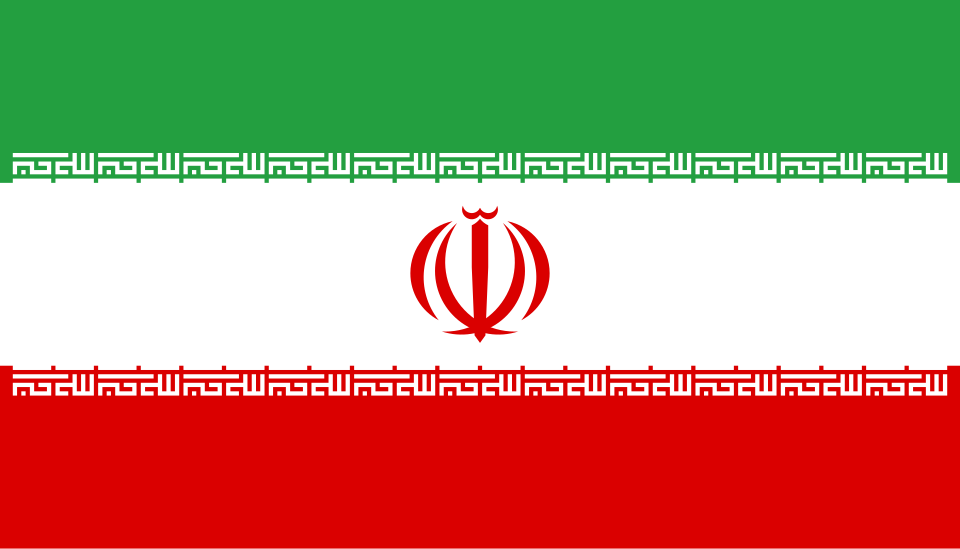
Tensions between Iran and the United States escalated dramatically on Wednesday after Iran’s Revolutionary Guards announced a series of retaliatory attacks targeting a U.S. military base in Jordan and 21 other locations across the Gulf region.
According to Iranian state media, the strikes were launched in response to recent American military operations near the Strait of Hormuz, one of the world’s most strategically important waterways. The attacks reportedly targeted facilities linked to the United States in Jordan, Kuwait and Bahrain, marking one of the most significant military confrontations between Tehran and Washington in recent months.
The latest developments have raised fears of a broader regional conflict and increased concerns about the security of global energy supplies, given the central role of the Gulf region in international oil exports.
Iranian authorities said the operation was carried out as a direct response to U.S. military actions around the Strait of Hormuz. The strategic waterway serves as a vital route for global crude oil shipments, with a substantial percentage of the world’s energy exports passing through it daily.
The United States military confirmed that it had conducted a large-scale operation against Iranian military positions in the area. According to U.S. officials, the strikes targeted Iranian air defence systems, surveillance radar installations and ground-control facilities situated near the strait.
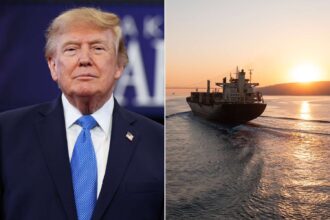
The American operation followed an incident in which President Donald Trump claimed that Iranian forces had shot down a U.S. Apache attack helicopter on Tuesday. The incident further intensified already strained relations between the two countries.
Speaking in an interview with ABC News, President Trump defended the military response and signaled Washington’s determination to retaliate forcefully.
“I believe the response should be very strong, very powerful, and that’s what this one is,” Trump said while discussing the operation.
Reports indicated that the American offensive lasted approximately four hours and involved coordinated strikes against nearly 20 Iranian military targets. The operation was described as one of the most extensive U.S. actions against Iranian positions since the latest phase of hostilities began.
Iranian media reported that several locations were affected by the American bombardment, including Qeshm Island and the coastal city of Sirik, both of which are located near the Strait of Hormuz. The areas are considered strategically important due to their proximity to critical maritime routes and military installations.
Following the U.S. strikes, Iranian authorities moved quickly to demonstrate their willingness to respond militarily. The Revolutionary Guards announced that multiple targets linked to the United States across the Gulf region had been attacked as part of what Tehran described as a defensive and retaliatory operation.
The reported strikes included attacks directed at a U.S. military installation in Jordan as well as facilities located in Kuwait and Bahrain. While details regarding the extent of damage and possible casualties remained unclear, the attacks signaled a major escalation in the confrontation between the two countries.
Authorities in Bahrain confirmed that projectiles were launched toward areas within the kingdom. However, Bahrain’s Defence Force said its air defence systems successfully intercepted and destroyed several incoming threats before they could reach their intended targets.
Military officials in Bahrain stated that the intercepted projectiles were believed to have been aimed at civilian areas, underscoring concerns about the potential humanitarian consequences of the conflict if hostilities continue to intensify.
In addition to the military strikes, Iran reportedly tightened restrictions around the Strait of Hormuz, further heightening international concerns over maritime security and energy transportation. Any disruption to traffic through the narrow waterway could have significant implications for global oil markets and international trade.
The renewed exchange of military actions has also cast fresh uncertainty over diplomatic efforts aimed at reducing tensions in the region. Analysts warn that the latest developments could undermine attempts by international mediators to secure a lasting ceasefire and encourage negotiations between the two adversaries.
The impact of the confrontation was immediately felt in global financial markets. Oil prices climbed during early trading in Asia as investors reacted to the growing possibility of disruptions to energy supplies from the Gulf region.
At the same time, gold prices fell to their lowest level in nearly 11 weeks, reflecting shifting investor sentiment and uncertainty about the broader economic implications of the conflict.
Security experts have described the latest round of attacks and counterattacks as one of the most serious confrontations between the United States and Iran in recent months. The situation has raised concerns among regional governments and international observers who fear that continued escalation could draw additional countries into the conflict.
As both nations continue to exchange threats and military actions, the prospect of a negotiated settlement appears increasingly uncertain. With strategic military assets, vital shipping routes and regional stability at stake, the latest confrontation has once again placed the Middle East at the center of global attention.