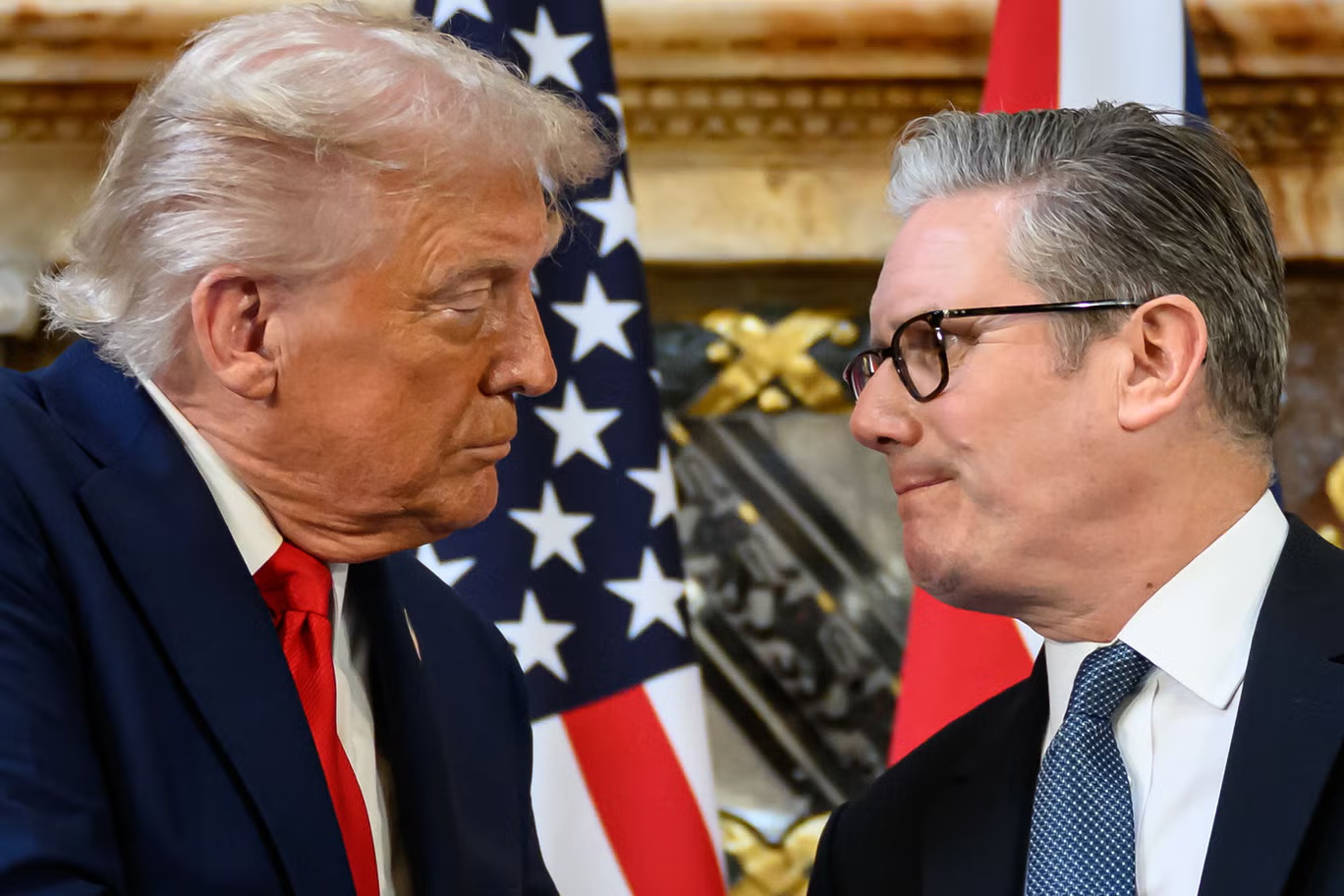
Former United States President Donald Trump has launched a scathing attack on Britain, accusing the country of failing to stand with the United States during escalating tensions with Iran and warning that Washington may no longer be willing to provide the same level of support to its traditional allies.
In a series of remarks that have drawn sharp reactions across diplomatic and political circles, Trump criticised the United Kingdom’s reluctance to participate in coordinated military actions against Iran. His comments reflect a broader strain in transatlantic relations and underscore longstanding tensions over burden-sharing, military cooperation, and geopolitical priorities between the US and its European partners.
Trump’s criticism was particularly pointed, as he suggested that Britain’s absence during key military operations signaled a lack of commitment to the alliance. “We won’t be there to help you any more, just like you weren’t there for us,” he declared, framing the issue as one of reciprocity and mutual obligation. The statement represents a stark departure from the traditional US posture of unwavering support for NATO allies, especially the United Kingdom, which has historically been one of Washington’s closest partners in global security matters.
The remarks come in the context of heightened tensions surrounding Iran, with the United States reportedly taking a leading role in strategic military operations aimed at curbing Tehran’s regional influence and nuclear ambitions. While details of the operations remain sensitive, Trump’s rhetoric suggests that Washington believes it has borne a disproportionate share of the burden in confronting Iran.
In a further escalation of his criticism, Trump directed his comments at countries that declined to participate in strikes against Iran, telling them bluntly to “get your own oil.” This statement appeared to reference the strategic importance of the Strait of Hormuz, a critical maritime chokepoint through which a significant portion of the world’s oil supply passes. By suggesting that other nations should take responsibility for securing their own energy interests, Trump signaled a shift toward a more transactional approach to international security—one in which US involvement is contingent on reciprocal contributions.
The Strait of Hormuz has long been a flashpoint in global geopolitics, with tensions periodically flaring due to its strategic significance. Any disruption in the flow of oil through the strait can have far-reaching consequences for global energy markets and economic stability. Trump’s assertion that the US had “done the hard part” implies that American forces may have taken decisive action to secure the passage, leaving other nations to manage the aftermath.
Trump also reignited his personal and political feud with British Prime Minister Keir Starmer, accusing him of refusing to support what he described as the “decapitation of Iran”—a phrase widely interpreted as referring to efforts aimed at dismantling Iran’s leadership structure or military command. Trump’s use of such language has been criticised as inflammatory, raising concerns about the potential for further escalation in an already volatile region.
According to Trump, Britain’s decision not to participate in these operations demonstrated a lack of resolve. He urged the UK to “start learning how to fight for yourself,” a remark that has been interpreted by analysts as both a critique of British defence policy and a broader commentary on Europe’s reliance on American military power.
The comments have sparked debate among policymakers and analysts about the future of the so-called “special relationship” between the United States and the United Kingdom. For decades, the two nations have maintained close cooperation on intelligence, defence, and foreign policy, often acting in concert on major international issues. However, Trump’s remarks highlight the fragility of this relationship in the face of shifting political dynamics and differing strategic priorities.
Critics of Trump’s stance argue that his rhetoric undermines longstanding alliances and could embolden adversaries by creating divisions among Western powers. They contend that collective security arrangements, such as those under NATO, depend on trust, coordination, and a shared commitment to mutual defence—principles that may be jeopardised by a more unilateral approach.
Supporters, however, see Trump’s comments as a necessary recalibration of US foreign policy. They argue that American taxpayers have long shouldered an outsized share of the costs associated with global security and that allies should be expected to contribute more actively to joint efforts. From this perspective, Trump’s remarks are consistent with his broader “America First” doctrine, which emphasises national interests and seeks to renegotiate international commitments perceived as imbalanced.
The reaction in Britain has been mixed, with some officials expressing concern over the tone and substance of Trump’s comments. While the UK government has not formally responded in detail, sources suggest that there is unease about the potential implications for defence cooperation and diplomatic relations.
Observers note that Britain’s decision not to participate in certain military actions may have been influenced by a range of factors, including legal considerations, parliamentary approval processes, and strategic calculations about the risks of escalation. The UK has traditionally taken a cautious approach to military intervention, particularly in the Middle East, where past engagements have had complex and often controversial outcomes.
The broader international community is also closely watching the developments, as tensions with Iran continue to pose a significant challenge to global stability. The prospect of a fragmented Western response could complicate efforts to manage the crisis and increase the likelihood of miscalculation or unintended escalation.
Trump’s remarks also raise questions about the future role of the United States in global security. By suggesting that allies may need to fend for themselves, he appears to be advocating for a more limited and conditional form of engagement—one that prioritises direct national interests over collective action.
Such a shift could have far-reaching implications, not only for US-UK relations but also for the broader architecture of international alliances. If other countries interpret Trump’s comments as indicative of a long-term policy direction, they may begin to reassess their own defence strategies, potentially leading to increased military spending and a reconfiguration of global power dynamics.
As the situation continues to evolve, the immediate focus remains on managing tensions with Iran and ensuring the stability of critical energy supply routes. However, Trump’s comments have injected an additional layer of complexity into an already volatile geopolitical landscape, raising fundamental questions about the nature of alliances, the distribution of responsibilities, and the future of international cooperation in an increasingly uncertain world.